

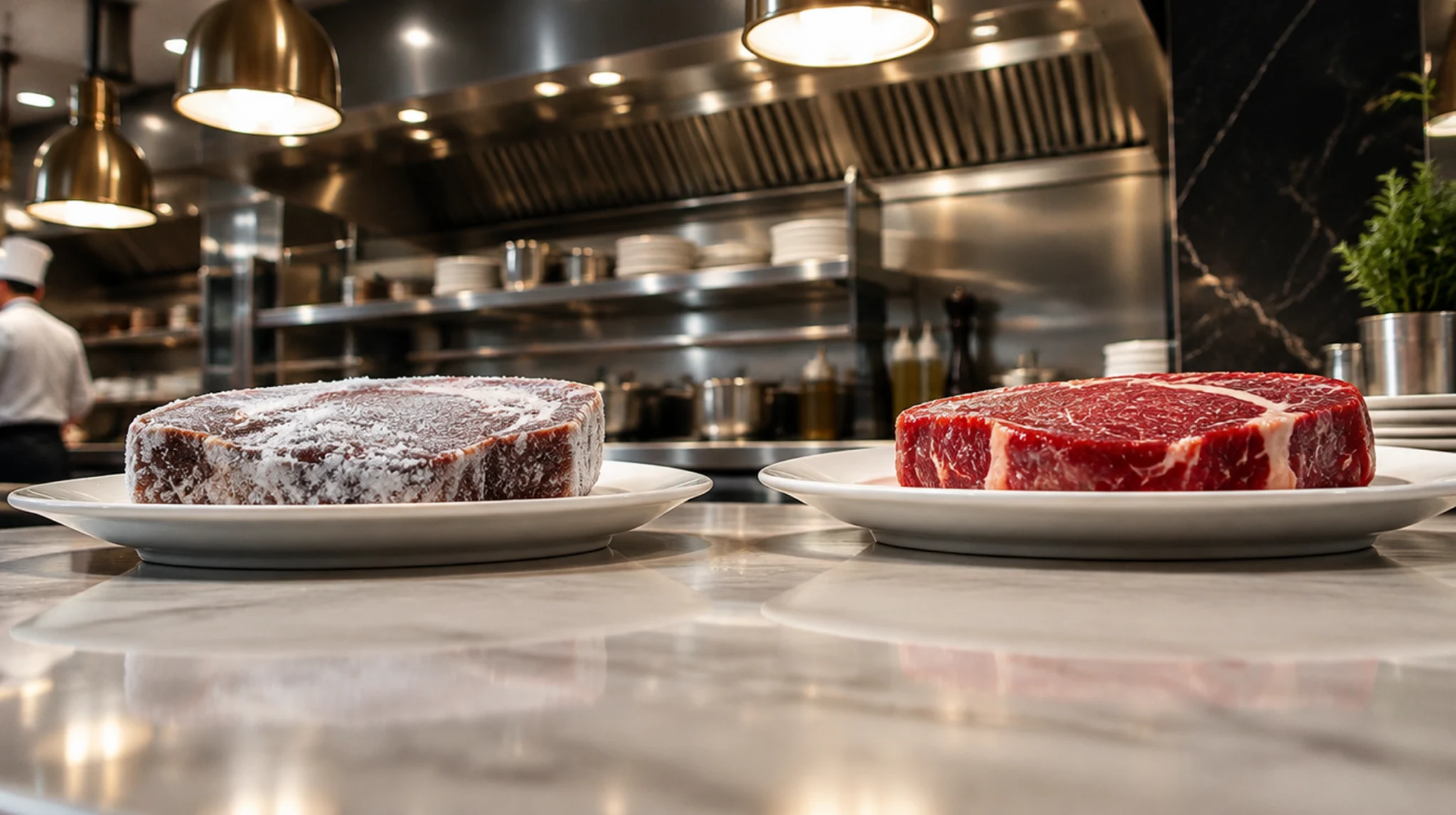
A steak special sounds simple until you’re deciding how much to order. Buy too much fresh steak, and you’re racing the clock to sell it. Keep frozen portions on hand, and you have more flexibility, but will they deliver the same quality once they hit the grill?
It’s a fair question for independent restaurants, where every portion has to earn its place on the menu. We looked at what freezing can change, how to protect the quality of your steak, and when fresh or frozen might make more sense for your kitchen.
Frozen vs. Fresh Steak: What’s the Difference?
The difference is straightforward: fresh steak has been kept chilled, while frozen steak has been held at freezing temperatures and needs to be thawed before service. That distinction alone won’t tell you which steak will eat better.
A well-cut steak that was frozen promptly, packaged tightly, and thawed properly can still deliver the flavor and tenderness guests expect. A fresh steak can disappoint, too, if it sits too long in the cooler or arrives below your standards. For restaurants, the more useful question is how each product fits your menu, storage space, and expected covers.
Freezing can affect texture. As the water naturally present in meat freezes, it forms ice crystals; some moisture may then leave the steak as it thaws. Good packaging and careful handling help limit quality loss.
How to Freeze and Thaw Steak the Right Way
Start with steak you’d be happy to serve fresh. Freezing preserves the product you put away; it doesn’t improve an older cut. Wrap each portion tightly or use packaging that keeps air away from the meat, then label it so your team can rotate inventory. Keep the freezer at 0°F or below. Air exposure can cause freezer burn, which dries out parts of the steak and hurts its eating quality.
For service, plan ahead and thaw steak in the refrigerator at 40°F or below. If you need it sooner, keep it in a leakproof package and thaw it in cold water, changing the water every 30 minutes; cook it promptly afterward. Never leave steak on the counter to thaw. A frozen center may feel cold while the outside has warmed enough for bacteria to grow.

Benefits of Frozen Steak for Restaurants
Frozen steak gives your kitchen more flexibility when demand is hard to predict. You can keep portions available for a weekend rush, a private event, or a steak special without relying entirely on the next delivery. It can also help your team avoid ordering more fresh product than you’re likely to sell.
Portioning before freezing makes prep and inventory counts easier. Your cooks can pull what the forecast calls for, provided they leave enough time for safe thawing. The payoff depends on disciplined rotation: even properly frozen steak can lose quality during extended storage. USDA’s 4 to 12 month freezer guidance for steaks is a quality range, not a target for how long a restaurant should hold its best menu cut.

Benefits of Fresh Steak for Restaurants
Fresh steak works well when you have reliable sales volume and want product ready to prep without a thawing step. It gives your chef the chance to assess each cut as it comes in and make immediate decisions about trimming, portioning, and menu use.
The tradeoff is a shorter planning window. Fresh steaks generally have a 3 to 5 day refrigerated storage window under USDA guidance, so accurate forecasts and good inventory rotation matter. If steak sales swing widely from one service to the next, buying exclusively fresh can leave you with more product to move than expected.
How to Choose Quality Frozen Steak
Treat frozen steak like any other important menu purchase: begin with the cut, grade, portion size, and supplier standards your kitchen needs. Then look at how the product arrives. Packaging should be intact and protect the steak from air exposure. Heavy frost inside the package, torn wrapping, or obvious dry, discolored patches can signal quality problems worth discussing with your supplier. Freezer burn affects quality, even though it does not, by itself, make the meat unsafe.
Ask about portion consistency and how the steak is packaged for your operation. A case price only tells part of the story. You also need to know whether the product holds up through thawing, cooks consistently, and meets the standard guests expect when they order steak.

Frozen Steak: For Better or For Worse?
With Independence Day right around the corner and summer menus aflame with grilled steaks, we decided to take a hard look at our freezers. A common question and myth is whether freezing and defrosting will change the overall quality of the steak. So, we asked the experts to find out the truth about frozen steak.
Question:
Does the freezing and defrosting process significantly affect the overall quality of steak?
The Analysis:
In a small comparison published by Doing Science To Stuff, two similar ribeye steaks were weighed before storage. One was frozen and thawed; the other was kept refrigerated. Both steaks were weighed at four points: initially, after the frozen steak was thawed, after preparation for cooking, and after cooking and resting. The refrigerated steak was also placed in the water bath during the thawing step.
The Result:
|
Measurement point |
Fresh steak |
Frozen, then thawed steak |
|
Initial weight |
385.2 g |
389.0 g |
|
After thawing step |
384.2 g |
388.1 g |
|
Prepared for cooking |
389.6 g |
392.8 g |
|
After cooking and resting |
351.8 g |
358.0 g |
|
Total weight lost from initial to final measurement |
8.67% |
7.97% |
Both steaks gained a little weight during preparation because oil and salt were added.
Click here to see the original fresh vs. frozen ribeye comparison and measurements.
Conclusion:
In this two-steak test, the frozen steak did not lose more weight than the fresh steak. Tasters described the steaks as having nearly identical texture and juiciness, although they found the fresh steak had a stronger beef flavor. It’s an interesting comparison, but too small to prove that freezing will have the same effect on every cut or in every kitchen.
Frequently Asked Questions
Does freezing steak affect its quality?
It can, especially if the steak is exposed to air, stored too long, or thawed poorly. Freezing forms ice crystals in the meat, and some moisture can be lost during thawing. Tight packaging and good freezer practices help protect flavor and texture.
Is frozen steak as good as fresh steak?
It can be. Start with a quality cut and pay attention to packaging, storage, and thawing. For your menu, the best test is how the steak performs on the grill and on the plate, not whether it arrived fresh or frozen.
How do you thaw frozen steak safely?
Thaw it in the refrigerator at 40°F or below. For faster thawing, place it in a leakproof package in cold water, change the water every 30 minutes, and cook it promptly once thawed. Don’t thaw steak on the counter.
Why do restaurants use frozen steak?
Frozen steak can help restaurants keep portions on hand, plan around changing demand, and reduce the pressure to sell every cut within a short refrigerated window. It works best when the team has a clear rotation and thawing plan.
Does Freezing Steak Cause It to Lose Weight?
Some moisture may leave a steak as it thaws, so weight loss is possible. In the ribeye comparison described above, the team found no noticeable weight difference. Because that test involved only two steaks, restaurants should track their own thaw and cooking yields when comparing products or costs.