

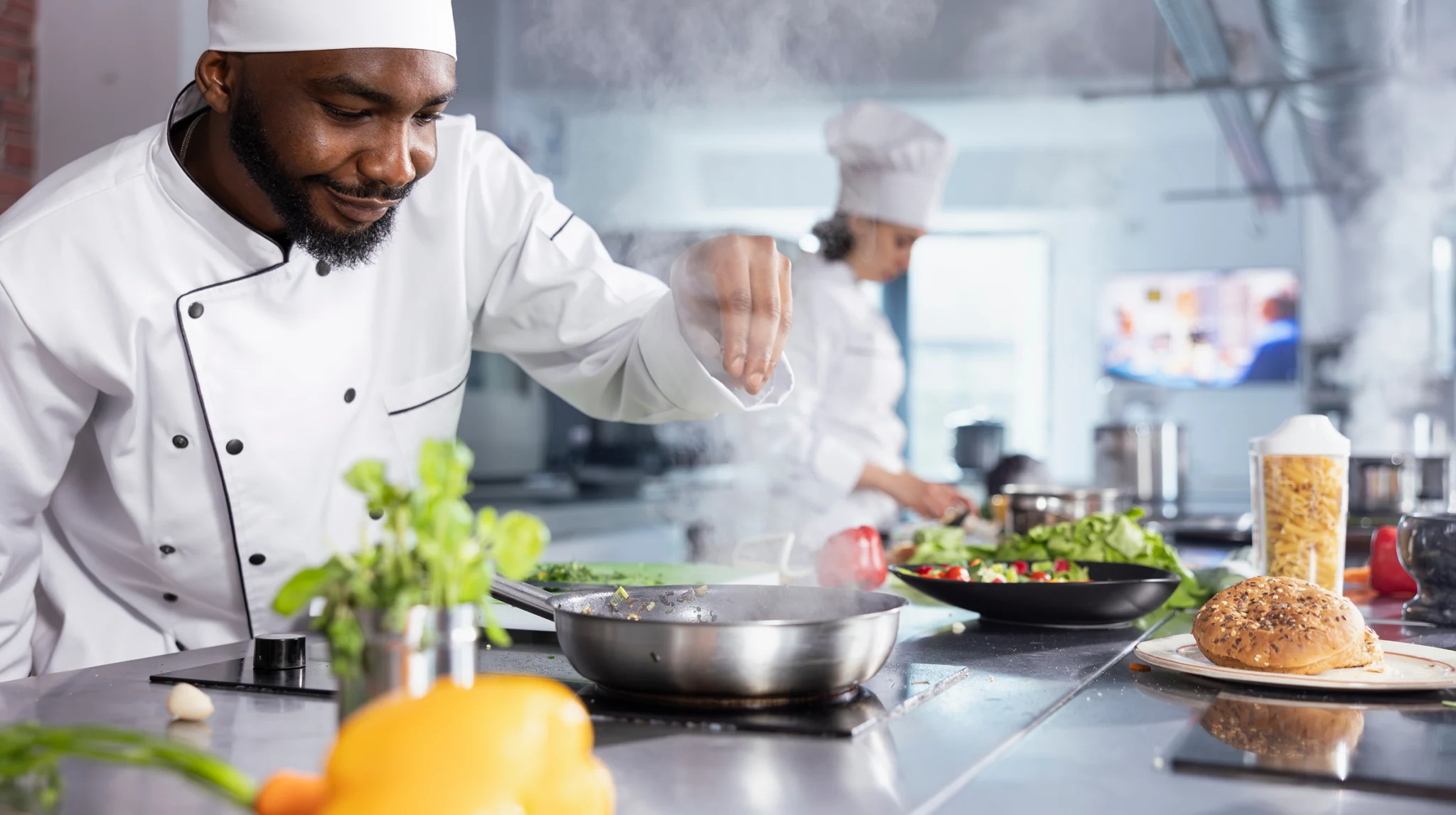
A scratch kitchen sounds pretty straightforward: food made in-house using fresh or basic ingredients rather than relying entirely on ready-made products. But for restaurant operators, deciding how much of the menu to make from scratch is rarely that simple.
Scratch cooking can give restaurants more control over flavor, quality, ingredients, and menu differentiation. It can also require more prep time, skilled labor, storage space, equipment, and consistency from one shift to the next. When labor is already one of the biggest challenges facing independent restaurants, making everything from scratch may not always make operational or financial sense.
That’s why many restaurants find a balance between scratch and semi-scratch cooking. By deciding which menu items are worth the additional prep and where high-quality prepared ingredients can save time, operators can create the fresh, distinctive dishes guests want without adding unnecessary complexity to the kitchen.
Scratch vs. Semi-Scratch (Speed Scratch)
A traditional scratch kitchen prepares most dishes and components in-house from basic ingredients. That could mean cutting potatoes for fries, preparing sauces and dressings, portioning proteins, chopping produce, making dough, or creating spice blends from individual seasonings.

Semi-scratch, sometimes called speed scratch, takes a more flexible approach. Instead of starting every component from its most basic form, the kitchen uses select prepared or partially prepared products as a starting point and adds its own ingredients, techniques, or finishing touches.
For example, a restaurant might use a high-quality mayonnaise as the base for a signature aioli, purchase pre-cut frozen fries and finish them with a house seasoning, or use prepared dough for a menu item rather than mixing and proofing it from scratch.
The goal isn’t necessarily to replace scratch cooking. It’s to be strategic about where scratch preparation adds value. If guests notice and appreciate a house-made component, the additional labor may be worthwhile. If a prepared ingredient delivers comparable quality while saving significant prep time, speed scratch can help the kitchen operate more efficiently.
Benefits of a Scratch Kitchen
For many independent restaurants, scratch cooking is part of what makes the menu memorable. Creating dishes and components in-house gives chefs greater control over the finished product and more opportunities to develop flavors guests can’t easily find somewhere else.
A scratch kitchen can offer several advantages:
- More control over ingredients: Operators can decide exactly what goes into a recipe and make adjustments based on quality, availability, dietary needs, or menu goals.
- Greater menu differentiation: House-made sauces, seasonings, sides, baked goods, and other signature components can give guests something unique to associate with your restaurant.
- More flexibility: Recipes can be adjusted as menus change, seasonal ingredients become available, or customer preferences evolve.
- A stronger perception of freshness: Made-in-house dishes can support the fresh, authentic experience many guests look for when choosing an independent restaurant.
- Opportunities to use ingredients across the menu: Thoughtful cross-utilization can turn one prepared ingredient or component into multiple menu applications, helping reduce waste and improve inventory efficiency.
The key is making sure the benefits guests experience justify what it takes to produce those items behind the scenes.
The Challenges: Labor, Cost & Consistency
The more your kitchen makes from scratch, the more work typically happens before a dish ever reaches the line. Washing, chopping, measuring, mixing, portioning, cooking, cooling, and storing ingredients all require employee time. Multiply those steps across an entire menu, and prep can quickly become a significant labor expense.

Scratch cooking can also make consistency harder to maintain. A sauce made by three different employees needs to taste and perform the same way every time. Portion sizes need to remain consistent, prep yields need to be monitored, and recipes need to be followed accurately. Without strong recipes, training, and portion controls, small variations can turn into higher food costs or an inconsistent guest experience.
Waste is another consideration. Raw ingredients may require trimming or produce unusable portions, while overproduction of house-made components can leave restaurants with food that must be discarded before it is sold.
This is where operators should look beyond ingredient cost alone. A raw product may have a lower case price than its prepared counterpart, but that doesn’t automatically make it less expensive to serve. Prep labor, usable yield, waste, equipment, storage, cooking time, and consistency all contribute to the true cost of a menu item.
Understanding those tradeoffs can help restaurants determine what deserves to remain truly scratch-made and where a labor-saving alternative could make more sense.
Cost Savings in a Scratch Kitchen? Yes, it’s possible.
Diners, it seems, are flocking to the comfort of kitchens that serve a variety of delicious food, so long as it doesn’t feel heavily processed. However, as Thrillist explains, “…the rise of the Golden Age “scratch kitchen” (in which everything is made in-house), long a point of pride for fine-dining kitchens, isn’t usually financially realistic in the more casual kitchens.” While many chefs may work to bake their own bread or cure their own meats in-house, the fact is scratch kitchens are expensive, labor intensive, and not often worth the financial expenditure.
At Dining Alliance, we focus on ensuring restauranteurs cost-savings opportunities that excite your front of house while saving you labor costs in your back of house. So how do you keep that scratch kitchen feeling without spending excess time on labor? Here are a few ways to keep the focus on the food and the money towards your bottom line.

1. Everyone Loves Hand Cut Fries
Lower your labor costs with precut fries that not only give you back valuable kitchen space but provide 40% more yield than fresh cut fries. Lamb Weston’s Hand Cut Fries offer both house cut and shoestring fries that have a faster preparation then fresh fries since they take 1.5 minutes less time to cook and use less oil than fresh fries. Interested in finding exactly how much money you could save? Explore then fresh vs frozen calculator to see your possible savings in real time.
2. Make your very own dipping sauce
Who doesn’t drool over a great aioli or house made dressing? From dips to sauces, many restaurants find customers clamoring back to have their one-of-a-kind house-made sauces. In reality, we know that a true scratch sauce comes with a lot of labor, kitchen space, and room for emulsification error. Now, what if you could have the same great flavor and save yourself the stress and time consumption from behind the scenes? Save yourself the time, headache on labor and start with something great. Unilever mayo can do magic as your base- just add in your own signature spices give your own restaurants dipping flare!
3. Add your own spice
Nothing says delicious like a unique seasoning sprinkled across hot & crispy fries or mixed into your signature dish. Create your very own with McCormick spices, or take advantage of the blend their Chefs put together for you. Plus, the flavor pairings of McCormick spices with McCain French fries, onion rings, and mozzarella sticks can help you take your menu to the next level.
Final Thoughts
Running a scratch kitchen doesn’t have to be an all-or-nothing decision. The better question is where making something from scratch creates enough value to justify the additional labor, time, and operational complexity.
Keep the components that define your menu and give guests a reason to come back. For everything else, look for opportunities to use quality labor-saving products as a foundation and make them your own through seasonings, sauces, preparation techniques, or presentation.
A strategic mix of scratch and speed-scratch preparation can help independent restaurants protect the personality of their menus while creating a kitchen that’s easier and more cost-effective to operate. Dining Alliance can also help operators identify savings opportunities across the products they’re already purchasing, making it easier to protect margins without sacrificing the food their guests love.
Frequently Asked Questions
What does “made from scratch” mean in a restaurant?
Made from scratch generally means a restaurant prepares a dish or component in-house using basic or minimally prepared ingredients rather than purchasing the finished item ready to serve. What qualifies as scratch-made can vary by restaurant, and many kitchens combine scratch preparation with prepared ingredients depending on the menu item.
What is a semi-scratch or speed-scratch kitchen?
A semi-scratch or speed-scratch kitchen combines prepared or partially prepared products with in-house cooking and customization. A restaurant might start with a prepared sauce, frozen potato product, or other labor-saving ingredient and add its own flavors or preparation techniques. This approach can reduce prep work while still allowing the restaurant to create distinctive menu items.
Are scratch kitchens more expensive to run?
They can be. Scratch cooking often requires additional prep labor, skilled employees, equipment, storage, and time. Ingredient costs may sometimes be lower, but operators should consider total preparation costs, including labor, waste, yield, and consistency, when comparing scratch-made and prepared products.
Is a scratch kitchen worth it?
A scratch kitchen can be worth it when house-made preparation improves quality, differentiates the menu, or creates an experience guests value. However, not every ingredient needs to be prepared from scratch. Many restaurants benefit from using a combination of scratch and speed-scratch methods to balance food quality with labor and food costs.