

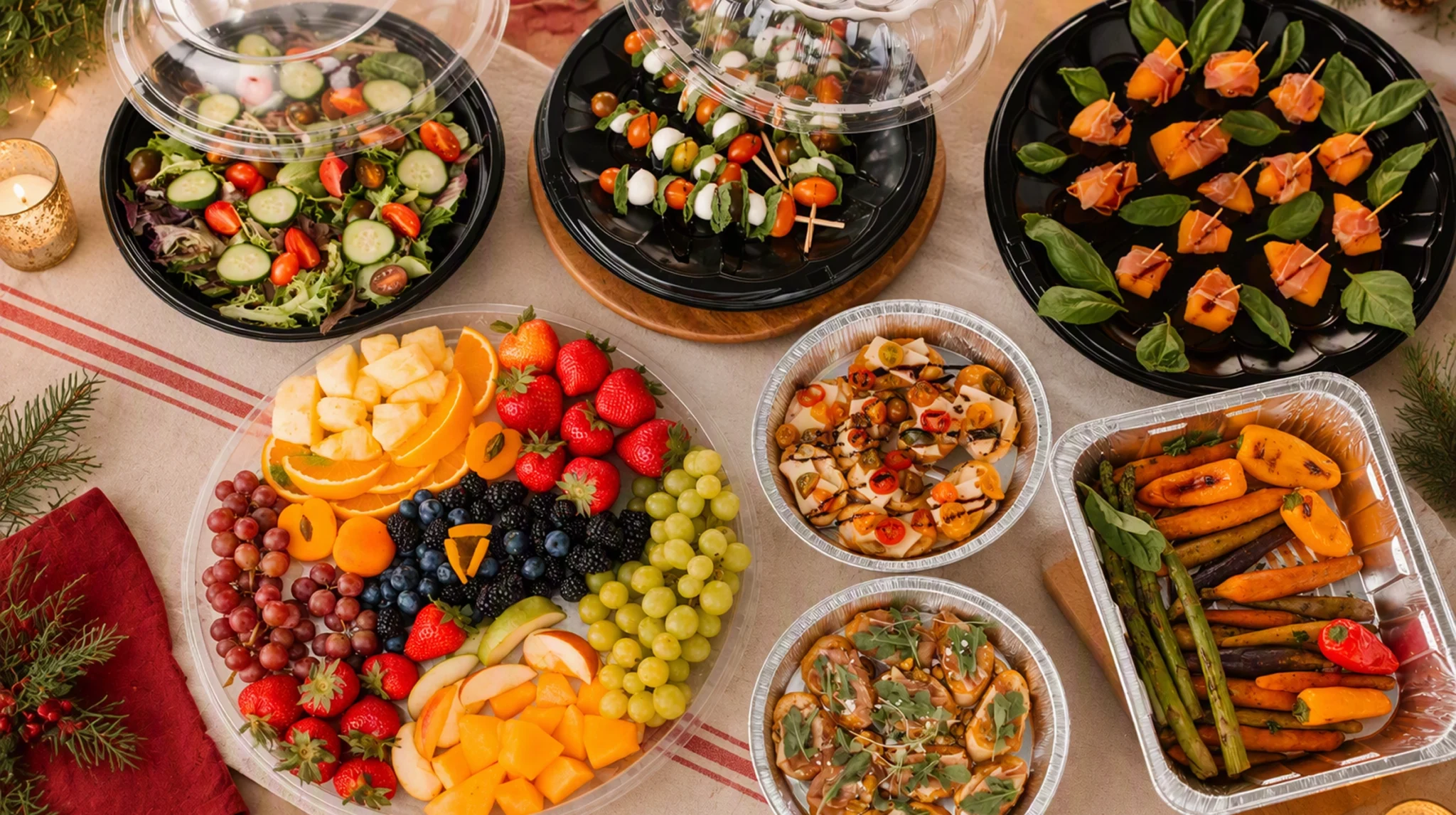
Running a restaurant is a lot of work. Between managing your staff, keeping food costs in check, and making sure customers leave happy, you’ve already got plenty on your plate. But what if you could bring in more business without having to completely change the way your restaurant operates?
That’s where catering comes in.
Think about it. You’ve already got a kitchen, a menu people love, and a team that knows how to make great food. Why not put all of that to work for office lunches, birthday parties, holiday gatherings, and other events happening in your community?
Adding a catering menu can help bring in extra revenue, introduce your restaurant to new customers, and give your business another way to grow.
Of course, there’s a little more to it than making bigger portions of your most popular dishes. You’ll need to think about pricing, packaging, staffing, and how you’re going to get those orders out the door.
Here’s what to consider before adding catering to your restaurant.
More Customers Means More Revenue
Every restaurant could use a little extra business, especially when things slow down.
Catering gives you another way to bring in sales without relying entirely on customers walking through your doors.
Maybe there’s an office down the street that orders lunch for its employees every Friday. Or a family planning a graduation party that doesn’t want to spend the entire day cooking. Those are customers who could be ordering from your restaurant.
And here’s something else to think about. When you cater an event for 40 people, you’re not just feeding the person who placed the order. You’re introducing your food to everyone at that event.
Some of those people might become regular customers. Others might remember your restaurant when they’re planning their own gathering.
Catering can also help fill slower hours. If your dining room is usually quiet in the afternoon, a few scheduled catering orders could give your kitchen something productive to work on during that time.
But before you start taking every large order that comes your way, make sure the numbers work.
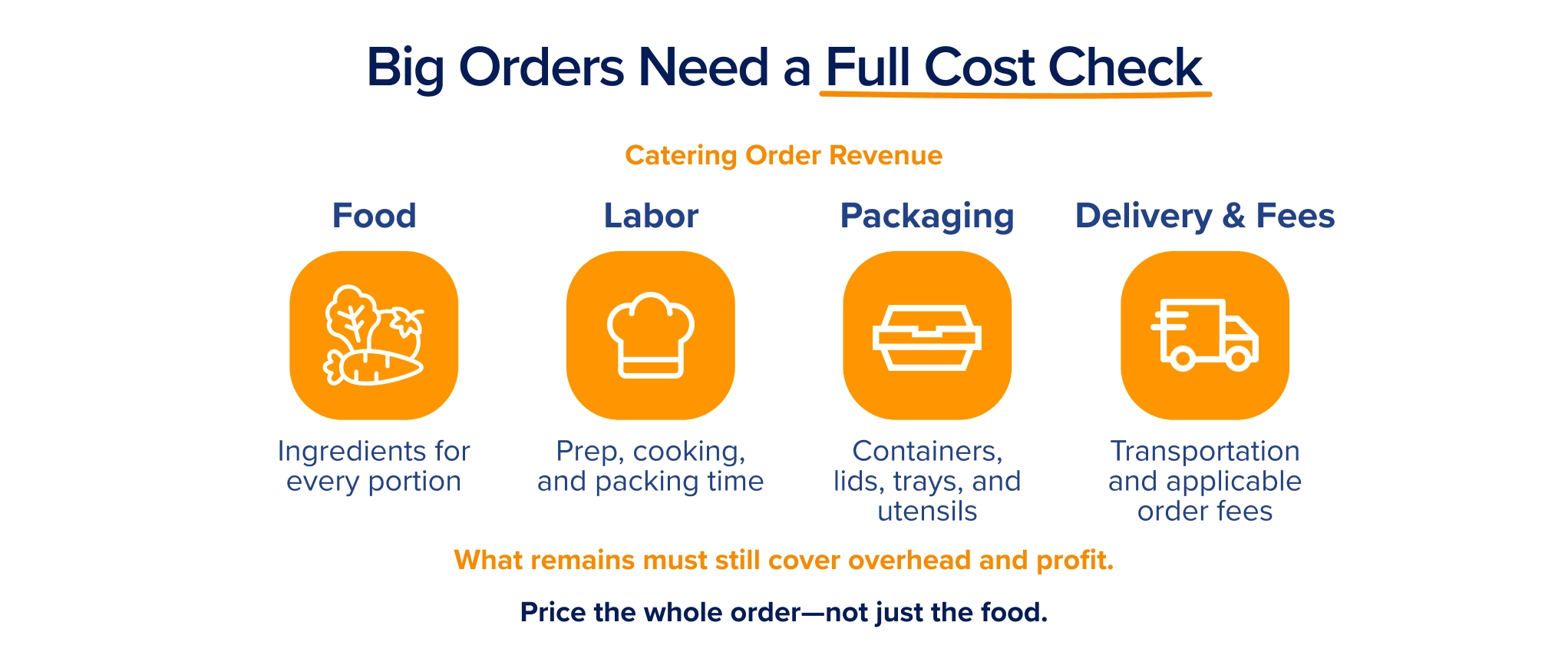
You’ll need to account for food, labor, packaging, and delivery costs. A $500 catering order sounds great, but how much are you actually keeping after everything is paid for?
The goal isn’t just to sell more food. It’s to make those extra sales worthwhile for your business.
Increase Brand Awareness with a Catering Menu
Let’s say your restaurant caters lunch for a local business. There are 30 employees in the office, and half of them have never eaten your food before.
That’s 15 people who now know what your restaurant has to offer.
Pretty good exposure for one order, right?
Catering gets your food in front of people who might not have found your restaurant otherwise. And if they like what they eat, there’s a good chance they’ll remember you the next time they’re looking for somewhere to grab lunch or dinner.
You can help them remember by adding a few branded touches to your catering orders.
It doesn’t have to be anything fancy. A sticker with your restaurant’s logo, a small stack of takeout menus, or a business card tucked into the order can go a long way.
And don’t forget about presentation.
Nobody wants to open a catering order and find spilled dressing, crushed sandwiches, or food that’s shifted all over the place during delivery.
The containers and serving supplies you use matter just as much as you might think. Good packaging helps food arrive looking the way it did when it left your kitchen.
When customers have a good experience, they’re more likely to order again. They may even recommend your restaurant to someone else planning an event.
That’s the kind of word-of-mouth marketing you can’t put a price on.
Know Your Catering Menu Strategy
Before you start putting together a catering menu, take a look at what’s already selling well in your restaurant.
What do your regulars order again and again? Which dishes can your kitchen make in larger batches without slowing everything else down?
Start there.
You don’t need to reinvent your menu just because you’re offering catering.
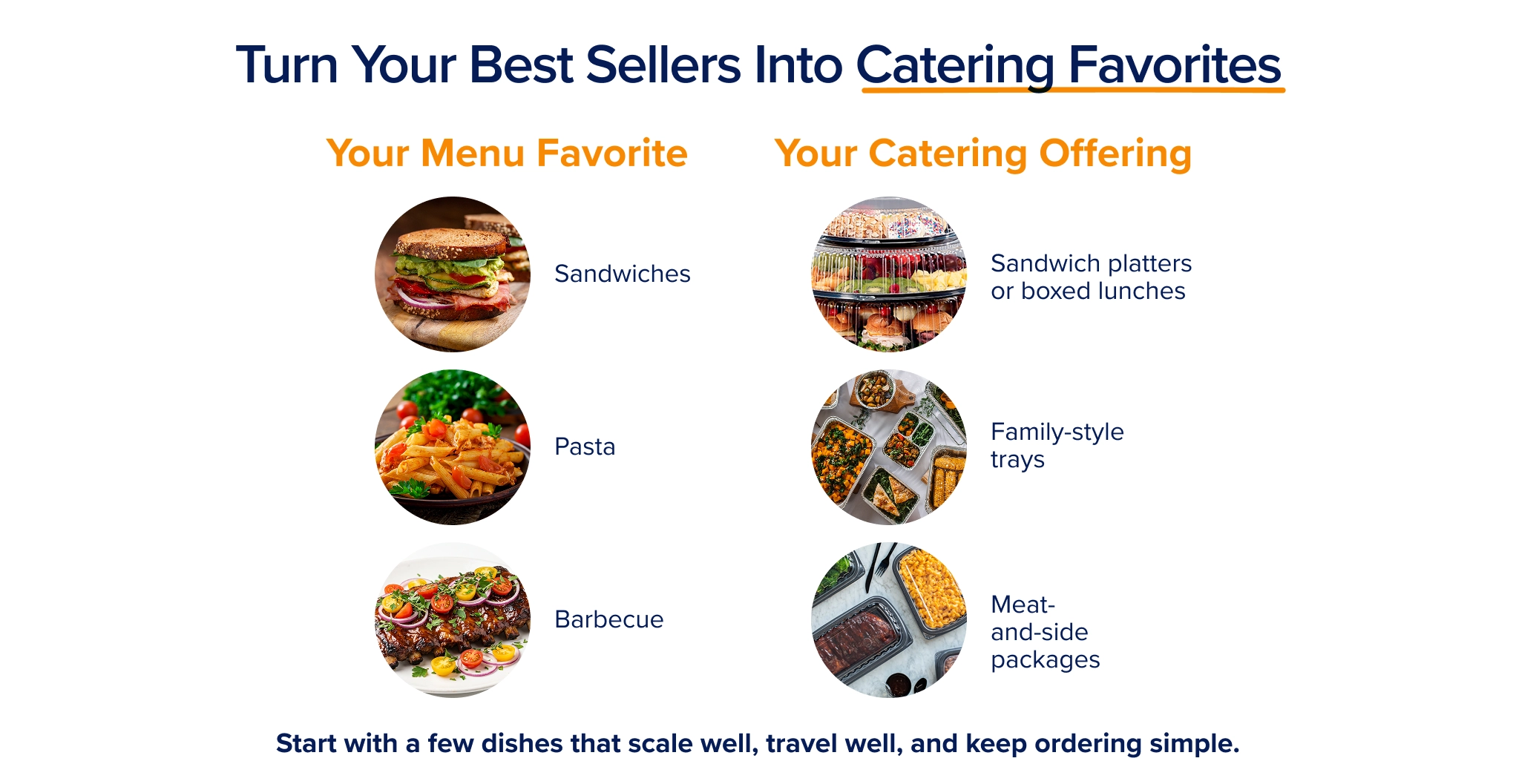
If your restaurant is known for sandwiches, consider sandwich platters or boxed lunches. If pasta is your specialty, family-sized trays might make sense. And if you’ve got a barbecue restaurant, offering meat-and-side packages could be a natural fit.
The trick is choosing dishes that are easy to prepare in larger quantities and still taste great after they’ve been packaged and transported.
You’ll also want to keep your catering menu manageable.
Offering too many options can make ordering complicated for customers and create extra work for your kitchen. A smaller menu with a few solid choices is often easier for everyone.
Think about portion sizes, too. Will you offer packages that feed 10, 20, or 50 people? Will customers order individual meals or larger trays to share?
Make those details clear so customers know exactly what they’re getting.
And give your kitchen enough time to prepare. Setting advance ordering requirements can help prevent those last-minute catering requests from throwing off your regular service.
Make the Most of Holiday Luncheons and Family-Style Meals
Once you’ve got your catering menu figured out, think about the occasions that could bring customers your way. Holiday luncheons and family gatherings are a great place to start.
Between parties, shopping, and travel, your customers already have plenty to juggle. Cooking for a crowd might be the last thing they want to add to the list.
That’s an opportunity for your restaurant.
Local offices, schools, and community groups may be looking for an easy way to treat their teams. Boxed lunches, sandwich platters, or a few trays of your best sellers can help them put together a holiday luncheon without the extra work.
Family-style meals offer that same convenience at home. Customers get a complete meal they can put on the table and share, without spending the day in the kitchen. Depending on your menu, a family-style package might include:
- A main dish, like pasta, roasted chicken, or sliced brisket
- Two or three sides
- A salad or vegetable
- Rolls or bread
- A dessert to finish things off
You don’t need a whole new menu to make this work. Start with dishes your kitchen already does well, then group them into packages that make sense for holiday gatherings. Meals that feed 6, 10, or 20 can keep ordering simple for customers and prep manageable for your team.
A little planning can help keep those extra orders from overwhelming your regular service, too:
- Choose dishes that hold up well after packaging and transport.
- Set clear order deadlines for holiday dates so you can plan ingredients and staffing.
- Offer scheduled pickup windows to keep busy days running smoothly.
And think about what happens once the food leaves your kitchen. Customers hosting a luncheon or family gathering want food that’s securely packaged and easy to set out. Sturdy trays, bowls, secure lids, and aluminum steam table pans can help make that handoff easier—and give customers one less thing to worry about.
Don’t Overlook Your Catering Supplies and Packaging
You’ve got the menu figured out. Now comes the part that’s easy to forget until you’re packing up a big order.
What are you going to put everything in?
Catering requires more than your usual takeout containers. Depending on what you’re serving, you might need large trays, serving bowls, secure lids, utensils, tongs, or aluminum steam table pans.
And you definitely don’t want to realize you’re out of something when you’ve got a large order waiting to go out.
Think about how your food will travel and how customers will serve it once it arrives.
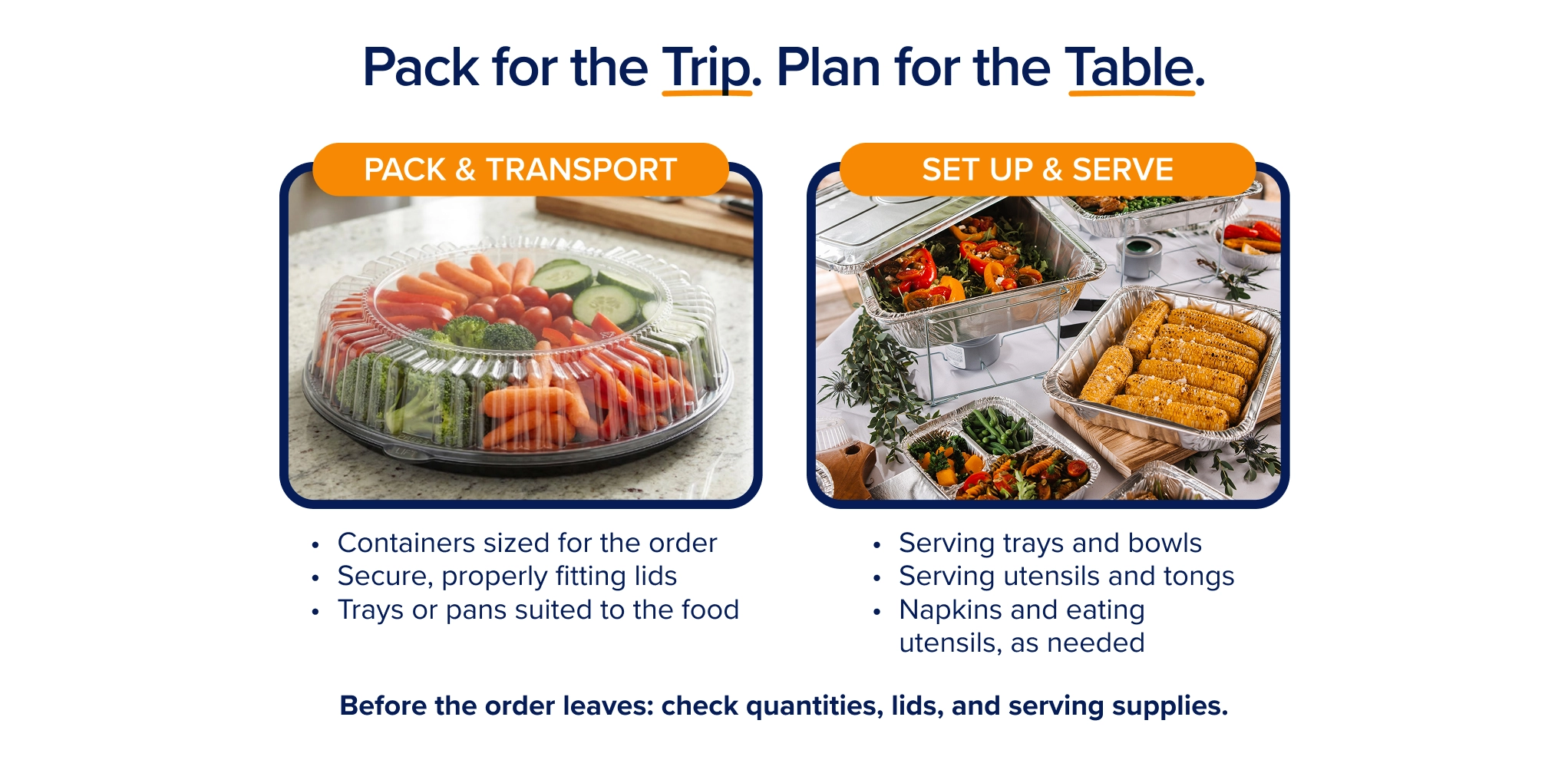
Will the containers hold up during delivery? Are the lids secure? Can customers easily set everything out without having to transfer food into their own dishes?
These might seem like small details, but they can make a big difference.
For example, aluminum steam table pans can be useful for preparing, storing, and transporting larger portions. Serving trays and bowls help customers set up their food, while sturdy containers and lids can make transportation a lot less stressful.
Having dependable supplies on hand also makes things easier for your staff. They’re not scrambling to find containers or trying to make packaging work for food it wasn’t designed to hold.
This is one area where Dining Alliance and Pactiv can help.
Pactiv offers a range of catering and foodservice packaging products, including serving utensils, trays, bowls, containers, lids, and aluminum steam table pans.
Through Dining Alliance, independent restaurants can explore eligible Pactiv products and earn CashBack rebates on qualifying purchases.
That means you can stock up on supplies your catering operation needs while taking advantage of opportunities to save.
And when you’re already keeping an eye on every dollar going out the door, those opportunities are worth a look.
Keep Catering Costs Under Control
More orders are great. More profit is even better.
But if you’re not paying attention to what catering actually costs your restaurant, those larger orders might not be bringing in as much money as you think.
Start with your food costs.
If you’re selling a catering package that feeds 20 people, you need to know how much food goes into that order and what you’re paying for those ingredients.
Then add labor. How much time does your team spend preparing and packing everything?
Don’t forget about packaging, either. Containers, lids, trays, and serving utensils all cost money. And if you’re delivering the order, you’ll need to account for that expense, too.
Once you know your costs, you can set prices that make sense for your restaurant.
It’s also worth looking at where you’re buying your catering supplies.
Are you purchasing the same products regularly? Could you save money by taking advantage of manufacturer rebates or other purchasing programs?
Dining Alliance helps independent restaurants find savings on food and non-food purchases, including eligible catering supplies from manufacturers like Pactiv.
Members can earn CashBack rebates on qualifying Pactiv products, which can help offset some of the expenses that come with running a catering operation.
You don’t have to change everything about how you purchase supplies to start looking for ways to save.
Sometimes it’s simply a matter of making sure you’re getting the most out of the products you’re already buying.
Make Catering Easy for Your Customers
Most people order catering because they don’t want to deal with cooking for a crowd.
They’re already planning a meeting, party, or event. The last thing they need is a complicated ordering process.
Make it easy for them.
Put your catering menu somewhere customers can find it, whether that’s on your website, your social media pages, or right inside your restaurant.
Include your pricing, portion sizes, and how much advance notice you need.
If you offer delivery, let customers know. If orders need to be picked up, make that clear, too.
And when someone places an order, double-check the details.
How many people are they feeding? What time do they need the food? Do they need serving utensils or anything else to set up the meal?
A quick conversation upfront can save everyone a headache later.
You’ll also want to think about the experience customers have when they open their order.
If they’ve ordered several trays of food for a company lunch, they should be able to set everything out without much trouble.
That’s another reason having the right packaging and serving supplies matters.
When the food arrives on time, looks good, and is easy to serve, you’ve made your customer’s job a whole lot easier.
And that’s exactly what they’re hoping for when they order catering.
Need Help Getting Started?
If you’ve been thinking about adding catering to your restaurant, you don’t have to go all in right away.
Start small.
Pick a few dishes that are already popular with your customers. Figure out how to package them for larger groups, set your pricing, and see how things go.
You might start by offering boxed lunches to nearby offices or family-style meals for weekend gatherings.
As more orders come in, you’ll get a better idea of what customers want and what works best for your kitchen.
Just make sure you’ve got the supplies and staff to handle those orders without putting extra pressure on your regular service.
And remember, you don’t have to figure out the purchasing side of things on your own.
Dining Alliance helps independent restaurants save on the food and supplies they use every day. From meat, produce, and dairy to packaging and other non-food essentials, there are opportunities to keep more money in your business.
If you’re getting ready to grow your catering operation, Pactiv’s selection of catering packaging and serving supplies is a good place to start.
Through Dining Alliance, you can explore eligible Pactiv products and earn CashBack rebates on qualifying purchases.
Ready to bring in more catering business while keeping your costs in check?
Explore Pactiv’s catering collection through Dining Alliance and see how you can save on the supplies your restaurant needs.
Not a Dining Alliance member yet? Sign up for free and start exploring your savings opportunities today!