

For independent restaurant operators, building a loyal customer base is more important than ever. In an industry where 50% of restaurants struggle with repeat customers, loyalty programs can be a game-changer. In fact, 41% of sit-down restaurant diners consider loyalty programs when choosing where to eat. Additionally, 61% of delivery customers say loyalty program membership is an important factor when choosing a restaurant for delivery. If your restaurant isn’t optimizing for customer retention, you could be missing out on a steady revenue stream and a competitive edge.
Even better? Loyalty programs have proven to work—3 in 4 limited-service operators say loyalty programs helped increase traffic in 2024. So, how can independent restaurants build a loyalty program that keeps customers coming back?
Let’s explore key strategies and actionable steps to help you maximize repeat visits and customer engagement.
1. Define Your Loyalty Goals
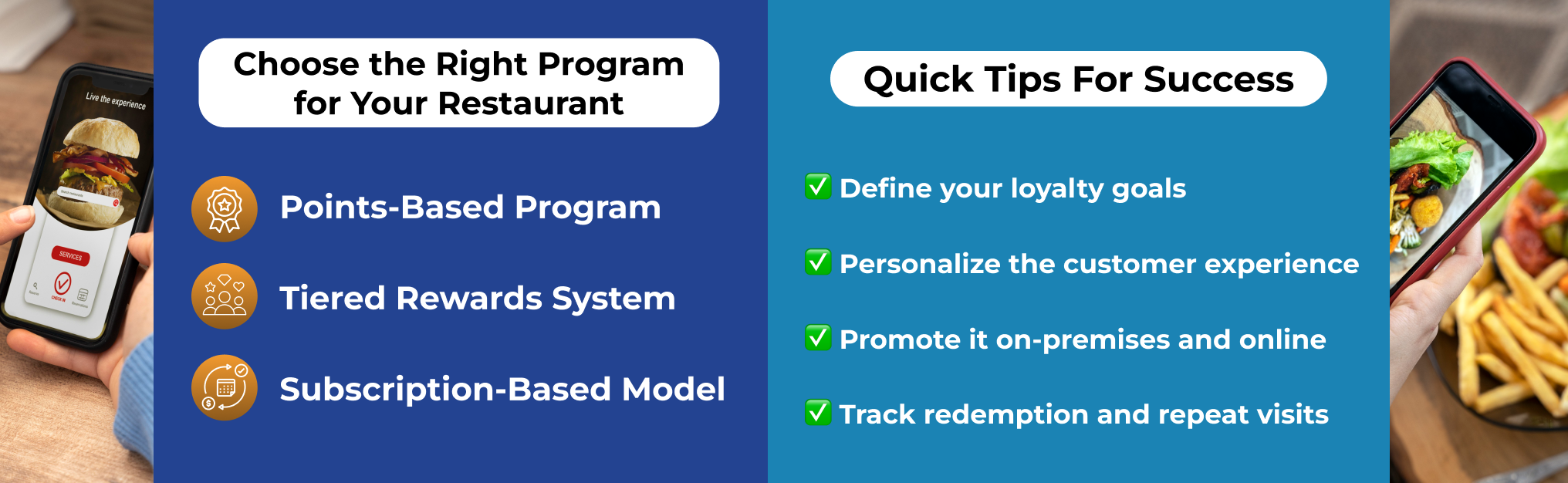
Before launching a loyalty program, you need to define what success looks like for your restaurant. Ask yourself:
- Do you want to increase visit frequency?
- Are you looking to boost average ticket size?
- Is your goal to gather valuable customer data for personalized marketing?
A clear goal ensures your loyalty program aligns with your business needs and delivers measurable results.
2. Choose the Right Type of Loyalty Program
There’s no one-size-fits-all approach to loyalty programs. Consider these models and how they fit your restaurant’s operations:
Points-Based Program
Customers earn points for every dollar spent, which they can redeem for discounts or free items. This model works well for quick-service and casual dining restaurants looking to encourage frequent visits.
Example: A taco shop offers 1 point per $1 spent, and after 100 points, customers get a free meal.
Tiered Rewards System
This structure incentivizes higher spending by unlocking bigger perks as customers move up tiers. It’s ideal for restaurants with high-margin items or specialty offerings.
Example: A steakhouse offers a “Silver” level for first-time visitors, “Gold” for those who visit five times, and “Platinum” for those who dine 10+ times, with perks like priority reservations or complimentary appetizers.
Subscription-Based Model
For a monthly fee, customers receive exclusive discounts, priority access to special events, or free delivery. This model is gaining traction with restaurants looking to build steady revenue.
Example: A pizza shop offers a $9.99/month subscription where members get a free side with every order and priority seating on busy weekends.
3. Personalize Your Customer Experience
Loyalty isn’t just about discounts—it’s about making customers feel valued. Personalized experiences can drive deeper engagement and encourage repeat visits. And don’t forget—the customer experience doesn’t end when they leave your restaurant. Managing your restaurant’s online reputation is essential for retaining loyal guests and attracting new ones. Tools like ReviewTrackers can help you monitor and respond to reviews, showing your customers that their feedback matters.
Ways to personalize:
- Tailored Rewards: Use customer data to offer rewards based on past orders (e.g., a free dessert for a customer who frequently orders sweet treats).
- Exclusive Perks: Celebrate birthdays or anniversaries with special offers.
- VIP Treatment: Give your best customers early access to new menu items or invite them to exclusive tastings.
4. Leverage Technology to Simplify Loyalty Management
Many independent restaurants worry about the complexity of managing a loyalty program, but technology can streamline the process. Consider these tools:
- POS-Integrated Loyalty Systems: Automate tracking and redemptions through your existing point-of-sale system.
- Mobile Apps & Digital Punch Cards: Encourage customers to engage digitally for convenience.
- SMS & Email Marketing: Send reminders, special offers, and updates to keep customers engaged.
5. Promote Your Loyalty Program Effectively
A great loyalty program for independent restaurants won’t drive results if customers don’t know about it. Make sure to:
- Train Your Staff to mention the program at checkout.
- Use In-Restaurant Signage to promote the benefits.
- Leverage Social Media & Email to showcase exclusive rewards and success stories.
6. Measure and Optimize
Once your program is live, track its performance to see what’s working and what needs improvement. Key metrics to monitor:
- Redemption Rates: Are customers using their rewards?
- Repeat Visit Frequency: Are members dining more often?
- Customer Spending Habits: Are members spending more per visit?
Adjust your program based on insights. If a perk isn’t enticing enough, try different offers or promotions.
How Dining Alliance Can Help Restaurants Win Repeat Customers
Building a loyalty program is just one part of the equation. To truly maximize profitability, independent restaurant operators need access to cost-saving solutions that enhance the value they provide to customers.
Dining Alliance helps independent restaurants optimize their offerings by:
- Reducing Costs on Ingredients & Supplies: Lower overhead costs mean you can reinvest in customer perks.
- Providing Supplier Access & Exclusive Deals: Gain an edge by securing competitive pricing on top-tier products.
- Delivering Insights & Purchasing Data: Make informed decisions about menu pricing, loyalty perks, and inventory.
Loyalty pays off—literally. With the right strategy, independent restaurants can turn one-time visitors into lifelong customers. By implementing a well-structured loyalty program, personalizing experiences, leveraging technology, and optimizing operations with Dining Alliance, you can create a thriving business with a dedicated customer base.
Ready to build a stronger, more loyal customer base? Click here to partner with Dining Alliance today and let us help you drive repeat business while maximizing savings!