


Independent restaurant operators are still under serious cost pressure. Food, labor, and operating expenses continue to climb, and margins are getting tighter. According to the National Restaurant Association, 95% of operators said food costs were a significant challenge in 2025, and 42% said they were not profitable.
The gap between independent operators and large chains is real. But it’s not unfixable.
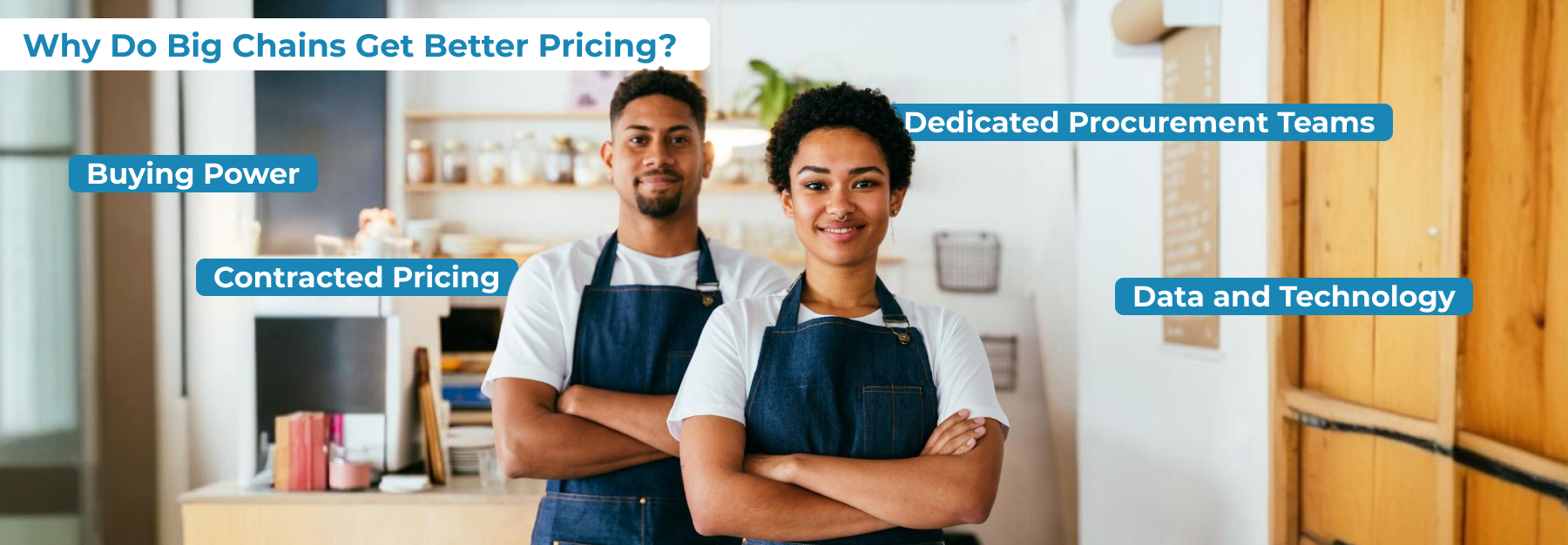
Why Do Big Chains Get Better Pricing?
Big chains aren’t just lucky. They’ve built systems that give them a consistent edge when it comes to purchasing.
- Buying Power: They purchase in high volumes, giving them leverage to negotiate lower prices.
- Contracted Pricing: They lock in pricing to protect against market volatility.
- Dedicated Procurement Teams: They have teams focused solely on managing costs and supplier relationships.
- Technology and Data: They use real-time data to track spend, identify trends, and optimize purchasing decisions.
For independent operators, competing with that might sound unrealistic. But the gap isn’t as wide as it used to be.
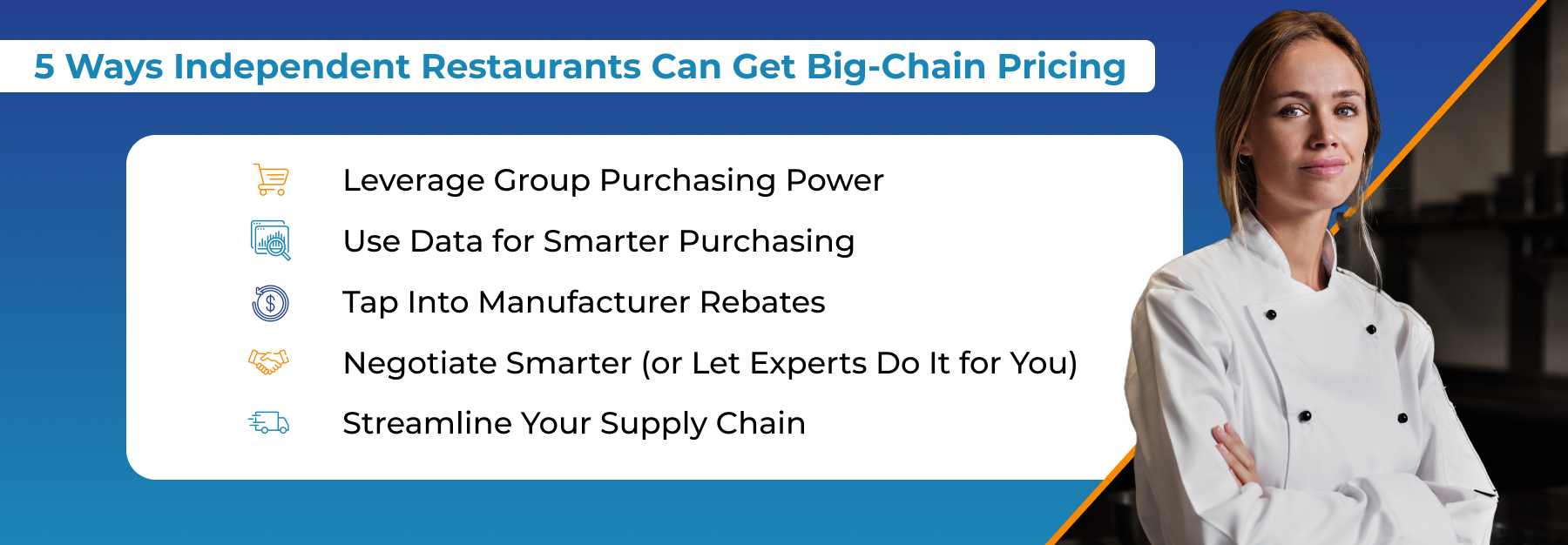
5 Ways Independent Restaurants Can Get Big-Chain Pricing
If you want to stop overpaying and start running a tighter operation, here’s where to focus:
1. Leverage Group Purchasing Power
You don’t need to buy in bulk to get better pricing.
Group purchasing organizations (GPOs) bring independent operators together, creating the collective volume needed to unlock pricing typically reserved for chains. That means access to pre-negotiated contracts on food, supplies, and services.
Pro Tip: Look for a GPO that provides visibility into your savings, not just access to contracts. If you can’t see it, you can’t optimize it.
2. Use Data to Make Smarter Purchasing Decisions
A lot of independent operators still rely on habit when it comes to ordering. The problem? Costs are changing too fast for guesswork.
In fact, most operators are still dealing with rising costs year over year, which makes visibility more important than ever.
Smarter operators are:
- Monitoring price fluctuations on key ingredients
- Comparing suppliers regularly
- Tracking rebates and contract compliance
- Adjusting orders based on actual usage
Pro Tip: When you have clear purchasing data, you stop reacting to costs and start managing them.
3. Tap Into Manufacturer Rebates
Here’s where a lot of money gets left on the table.
Big chains aren’t just getting lower prices. They’re also earning money back through manufacturer rebates. Many independent operators don’t realize those same opportunities exist for them.
That matters even more right now because customers are paying closer attention to value, which puts pressure on operators to control costs without constantly raising prices.
Rebates give you a way to protect your margins without sacrificing your menu.
Pro Tip: Make sure rebates are automatically tracked and processed. If it’s manual, it’s easy to miss.
4. Negotiate Smarter (or Let Experts Do It for You)
Large chains don’t accept the first price they’re given—and neither should you.
The difference is, they have the time, expertise, and data to back it up.
If negotiating with suppliers isn’t something you can prioritize, working with a partner that reviews invoices, compares pricing, and flags discrepancies can make a measurable impact.
Pro Tip: Price discrepancies and overcharges happen more often than operators think. Reviewing invoices regularly is one of the easiest ways to protect your margins.
5. Streamline Your Supply Chain
Complex supply chains create unnecessary costs.
The more vendors, deliveries, and inconsistencies you manage, the harder it becomes to control spend.
Operators who take a more strategic approach tend to:
- Consolidate vendors where it makes sense
- Order more intentionally to reduce waste
- Use preferred suppliers to increase purchasing power
- Align purchasing with real demand
With traffic fluctuating and consumer spending tightening, simplifying your operation isn’t just about efficiency—it’s about staying profitable.
Pro Tip: Work with a partner like Dining Alliance to optimize your supply chain and identify areas for cost reduction.
The Bottom Line: You Don’t Have to Overpay
Independent restaurants may not have the size of a big chain, but that doesn’t mean they have to overpay.
The operators who are winning right now aren’t necessarily the biggest. They’re the ones who are more strategic about how they buy.
With group purchasing, better data, access to rebates, smarter negotiations, and a more streamlined supply chain, independent restaurants can unlock the same pricing advantages—without adding complexity.
Dining Alliance helps independent operators maximize savings, streamline purchasing, and gain access to pricing usually reserved for larger chains.
Ready to see how much you could be saving? Fill out the form below to get started.
Interested in Learning More? FILL OUT THE CONTACT form below: