

Opening a restaurant comes with a lot to manage, and building your restaurant supply list is a big part of it.
Most operators start with the obvious equipment like ovens, refrigerators, and cookware. Then the smaller operational stuff starts piling up fast. Gloves, labels, prep tools, takeout containers, cleaning supplies, shelving, and backup smallwares all matter once service gets busy.
A strong restaurant supply list is not just about filling a kitchen. It is about setting up an operation that can handle the dinner rush without constantly running into avoidable problems.
For independent operators, having the right setup from the beginning usually makes everyday operations feel a whole lot less chaotic later on.
What Is a Restaurant Supply List?
A restaurant supply list is basically the master list of everything a restaurant needs to actually function once the doors open. Not just the flashy kitchen equipment either. It covers the everyday operational stuff restaurants constantly use, replace, clean, store, prep with, and reorder.
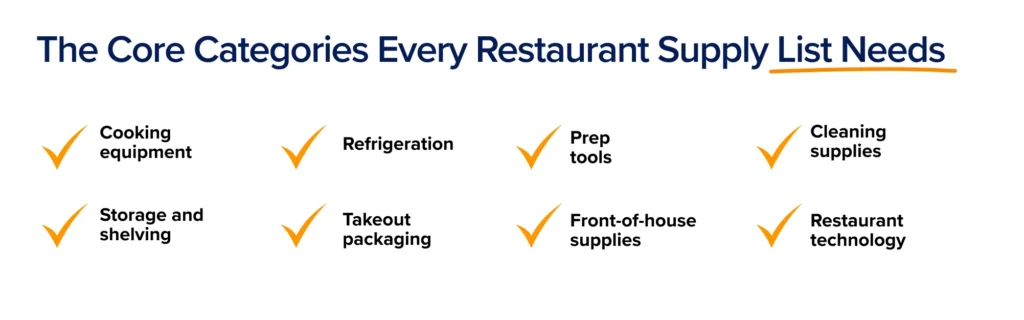
For most operators, a restaurant supply list usually includes things like:
- Cooking equipment like fryers, ovens, ranges, and grills
- Refrigeration and freezer equipment
- Prep tools and food prep stations
- Pots, pans, utensils, and smallwares
- Cleaning chemicals and janitorial supplies
- Food safety tools and compliance items
- Shelving, storage containers, and labeling supplies
- Takeout containers and disposable packaging
- Front-of-house supplies for dining rooms and bars
- POS systems and restaurant technology
A lot of new operators focus heavily on equipment at first, which makes sense because those purchases are expensive. But the smaller recurring supplies are usually what sneak up on people later. Gloves disappear. Containers run out faster than expected. Someone always breaks sheet pans or loses tongs during a rush.
That is why building a restaurant supply list early matters. It gives operators a better picture of what they actually need to budget for before service starts getting hectic.
The Complete Restaurant Supply Checklist
1. Cooking Equipment
Your cooking line is the heart of the kitchen, so this part of the restaurant supply list usually takes up a large portion of the budget.
Ranges, Ovens, and Cooktops
Depending on your concept, operators may need:
- Gas ranges
- Electric cooktops
- Convection ovens
- Pizza ovens
- Combination ovens
- Salamanders
- Induction burners
The right setup depends heavily on menu volume and kitchen flow. A small café has very different needs than a burger concept or busy breakfast operation.
Fryers, Griddles, and Charbroilers
Many restaurants rely heavily on:
- Deep fryers
- Flat-top griddles
- Charbroilers
- Panini presses
- Clamshell grills
These pieces of equipment often become major production centers during peak service hours.
Microwaves, Steamers, and Specialty Cooking Equipment
Additional specialty equipment may include:
- Commercial microwaves
- Steamers
- Rice cookers
- Sous vide systems
- Holding cabinets
- Smokers
- Warming drawers
Many independent operators add specialty equipment slowly over time instead of purchasing everything up front.
2. Refrigeration and Freezer Equipment
Refrigeration usually ends up becoming one of the most important parts of a restaurant supply list pretty quickly. If cold storage is not organized well or equipment cannot keep up during busy periods, operators feel it fast. Prep slows down, inventory gets cramped, and food safety risks become harder to manage.
Walk-In Coolers and Walk-In Freezers
A lot of restaurants eventually realize they need more cold storage space than they originally planned for. Especially once inventory levels increase, delivery frequency changes, or prep volume grows.
Depending on the operation, cold storage setups may include:
- Walk-in coolers
- Walk-in freezers
- Remote refrigeration systems
- Shelving designed for cooler and freezer storage
One thing operators talk about all the time is how fast walk-ins fill up once business starts picking up. Cases start stacking anywhere they fit, organization gets messy, and suddenly nobody can find anything during a rush.
Reach-In Refrigerators and Prep-Top Refrigeration
Reach-ins and prep refrigeration help keep frequently used ingredients close to the line so staff are not constantly walking back and forth across the kitchen.
Restaurants commonly use:
- Reach-in refrigerators
- Reach-in freezers
- Sandwich prep units
- Pizza prep tables
- Undercounter refrigeration
Even small layout decisions here can make a difference during service. Saving a few extra steps over hundreds of tickets adds up more than people think.
Ice Machines and Beverage Coolers
Ice tends to become one of those things nobody thinks about until the machine cannot keep up.
Restaurants may also need:
- Ice machines
- Draft beer coolers
- Back-bar refrigeration
- Beverage merchandisers
- Wine coolers
Bars, coffee shops, cafés, and high-volume beverage programs usually burn through ice surprisingly fast, especially during weekends, events, or summer rushes. Operators who underestimate ice production usually figure it out the hard way at the worst possible time.
3. Food Prep Equipment
Prep efficiency can make or break labor productivity.
Prep Tables and Cutting Boards
Basic prep station supplies include:
- Stainless prep tables
- Cutting boards
- Ingredient bins
- Prep sinks
- Speed racks
Color-coded cutting boards are commonly used to help support food safety procedures.
Mixers, Slicers, Blenders, and Food Processors
Depending on the menu, operators may need:
- Commercial mixers
- Meat slicers
- Immersion blenders
- Food processors
- Vegetable choppers
- Cheese shredders
Many independent restaurants underestimate how much labor these tools can save.
Scales, Thermometers, and Measuring Tools
Small measuring tools matter more than people think.
Typical items include:
- Portion scales
- Infrared thermometers
- Probe thermometers
- Measuring cups
- Measuring spoons
- Timers
These tools help maintain consistency, portion control, and food safety standards.
4. Smallwares, Cookware, and Servingware
Smallwares are often the most overlooked section of a restaurant supply list.
Pots, Pans, Sheet Pans, and Bakeware
Most kitchens require:
- Sauce pots
- Stock pots
- Fry pans
- Sheet pans
- Hotel pans
- Baking trays
Operators usually need more backup inventory than expected because smallwares wear out quickly.
Knives, Tongs, Spatulas, and Hand Tools
Common kitchen tools include:
- Chef knives
- Paring knives
- Tongs
- Spatulas
- Ladles
- Peelers
- Whisks
- Can openers
Losing small tools during service happens constantly, so extras are important.
Plates, Bowls, Glassware, and Flatware
Servingware usually becomes a bigger conversation than operators expect because it affects both presentation and replacement costs. Something might look great on the table, but if it chips constantly during service, that gets expensive fast.
Most restaurants stock a mix of:
- Dinner plates
- Appetizer plates
- Bowls
- Water glasses
- Cocktail glasses
- Silverware
- Serving trays
A lot of independent operators end up looking for that middle ground where the servingware still feels on-brand for the restaurant but can also survive a busy Saturday night without half of it ending up broken in the dish pit.
5. Warewashing and Cleaning Equipment
Cleaning equipment is not exactly the exciting part of building a restaurant supply list, but operators know pretty quickly how important it is once service starts getting busy. A kitchen can have great food and solid staff, but if dish flow backs up or cleaning routines fall apart, everything starts getting harder.
Three-Compartment Sinks and Hand-Wash Stations
Every kitchen needs designated areas for cleaning, sanitizing, and hand washing. Health inspectors pay close attention to this stuff, but honestly, so does the flow of the kitchen during a rush.
Most restaurants end up needing things like:
- Three-compartment sinks
- Dedicated hand sinks
- Mop sinks
- Soap dispensers
- Paper towel stations
Hand sinks especially become one of those things staff use constantly throughout the day, so placement matters more than people think.
Commercial Dishwashers and Glass Washers
The dish area can either keep service moving or completely slow it down.
Depending on the operation, warewashing equipment may include:
- High-temp dishwashers
- Low-temp dishwashers
- Glass washers
- Drying racks
A smaller café might be totally fine with a simpler setup, while a high-volume restaurant burning through plates and glassware all night usually needs equipment that can keep pace without creating backups.
Cleaning Chemicals, Sanitizers, and Janitorial Supplies
Then there is the long list of cleaning supplies restaurants constantly reorder without even thinking about it until something runs out.
That usually includes:
- Sanitizer
- Degreaser
- Floor cleaner
- Glass cleaner
- Mop buckets
- Brooms
- Gloves
- Trash liners
These are the kinds of purchases that quietly become part of the weekly routine. Nobody notices them much until the kitchen runs out of sanitizer during dinner service and suddenly everybody is scrambling.
6. Safety, Ventilation, and Compliance Equipment
Safety equipment is one part of a restaurant supply list that operators should never cut corners on.
Hoods, Exhaust, and Fire Suppression
Restaurants commonly require:
- Vent hoods
- Exhaust systems
- Make-up air systems
- Fire suppression systems
Ventilation requirements vary based on cooking equipment and local regulations.
First-Aid Kits, Fire Extinguishers, and Wet-Floor Signs
Basic safety supplies include:
- First-aid kits
- Fire extinguishers
- Wet-floor signs
- Cut-resistant gloves
- Burn kits
These items support both employee safety and compliance.
Food Safety and HACCP Tools
Food safety tools may include:
- Temperature logs
- HACCP checklists
- Digital monitoring systems
- Food labeling systems
Food safety processes become much easier when operators standardize procedures early.
7. Storage and Shelving
Storage probably does not sound like the most exciting part of a restaurant supply list, but disorganized storage can create nonstop headaches once the kitchen gets busy. When ingredients are stacked everywhere, labels are missing, or staff cannot quickly find products during prep, it slows everything down.
A good storage setup usually makes the kitchen feel calmer, cleaner, and easier to manage overall.
Dry-Goods Storage and Wire Shelving
Most restaurants need a mix of shelving and dry storage space for ingredients, paper products, cleaning supplies, and backup inventory.
That can include:
- Metro shelving
- Dunnage racks
- Dry storage shelving
- Utility carts
Operators usually learn pretty quickly that cheap shelving does not hold up well in busy kitchens. Strong shelving also helps with airflow and makes cleaning underneath and around products a lot easier.
Food Storage Containers and Labeling Supplies
Storage containers turn into one of those things restaurants somehow never seem to have enough of.
Common storage supplies include:
- Cambros
- Food storage bins
- Labels
- Expiration stickers
- Tape dispensers
Clear labeling helps staff rotate inventory correctly and cuts down on the mystery-container situation everybody has seen sitting in the back of a cooler at some point.
Walk-In Organization and Inventory Bins
Walk-ins can either stay organized for a week or slowly turn into complete chaos depending on how inventory gets managed.
A lot of operators use things like:
- Inventory bins
- Ingredient racks
- FIFO systems
- Mobile shelving
As restaurants get busier, organization becomes more important because staff need to grab products quickly without digging through stacked cases or moving half the cooler around just to find one item.
8. Front-of-House Equipment and Supplies
Front-of-house supplies impact both operations and guest experience.
Tabletop: Plateware, Glassware, Flatware, Linens
Dining room supplies include:
- Napkin holders
- Salt and pepper shakers
- Linens
- Condiment caddies
- Serving utensils
Operators often keep backup tabletop inventory for breakage and rush periods.
Menus, Menu Boards, and Tabletop Marketing
Restaurants may also need:
- Printed menus
- QR menus
- Digital menu boards
- Table tents
- Promotional signage
Menu presentation can influence guest ordering behavior.
Bar Equipment and Glassware
Bar setups often include:
- Cocktail shakers
- Speed rails
- Bar mats
- Pour spouts
- Wine keys
- Specialty glassware
Cocktail programs usually require more specialized tools than operators initially expect.
9. Disposables, Packaging, and Takeout Supplies
For a lot of restaurants, takeout and delivery supplies have become just as important as dine-in supplies. Operators are not only thinking about how food tastes anymore. They are also thinking about how well it travels, whether containers hold heat, and if drinks survive the drive without leaking all over somebody’s passenger seat.
Takeout Containers and To-Go Boxes
Most restaurants go through a surprising amount of packaging every week, especially if delivery orders are a big part of the business.
That usually includes things like:
- Hinged containers
- Soup containers
- Pizza boxes
- Portion cups
- Sauce containers
Operators learn pretty quickly that cheaper packaging is not always worth it if food arrives soggy, crushed, or leaking by the time it reaches the customer.
Cups, Lids, Sleeves, and Beverage Supplies
Drink packaging adds up fast, too, especially for cafés, coffee shops, smoothie concepts, or restaurants with a strong beverage program.
Restaurants commonly stock:
- Cold cups
- Hot cups
- Lids
- Straws
- Cup carriers
One busy weekend can wipe through way more cups and lids than expected, which is why a lot of operators keep extra inventory tucked away somewhere in storage.
Napkins, Cutlery, Bags, and Tray Liners
Then there is the long list of smaller disposable items restaurants constantly reorder without thinking much about it until they are suddenly gone.
That usually includes:
- Napkins
- Disposable cutlery
- Carryout bags
- Tray liners
- Gloves
Individually, these items may not seem expensive, but over time, they become a steady operational cost that restaurants have to keep an eye on.
Third-Party Delivery and Branded Packaging
Restaurants using third-party delivery apps often add a few extra packaging supplies into the mix, too.
That may include:
- Tamper-evident seals
- Branded stickers
- Delivery bags
- Customized packaging
For independent restaurants, branded packaging can help create a better customer experience and make orders feel a little less generic when they arrive at the door.
Sustainable and Eco-Friendly Packaging Options
A lot of operators are also paying closer attention to sustainable packaging now because customers notice it more than they used to.
Some restaurants are switching to:
- Compostable containers
- Recyclable cups
- Fiber packaging
- Eco-friendly cutlery
The challenge is usually balancing sustainability goals with durability, pricing, and how well the packaging actually performs during delivery.
10. Restaurant Technology and POS
Technology is now part of nearly every restaurant supply list.
POS, KDS, and Online Ordering
Core restaurant technology often includes:
- POS systems
- Kitchen display systems
- Online ordering platforms
- Handheld ordering devices
Technology can help improve speed, visibility, and reporting.
Inventory and Procurement Software
Many operators use software for:
- Inventory tracking
- Purchasing visibility
- Food cost analysis
- Invoice management
Better purchasing visibility can help independent restaurants make more informed decisions.
Surveillance, Networking, and Back-Office Tech
Additional technology may include:
- Security cameras
- Wi-Fi systems
- Office computers
- Printers
- Routers
Reliable networking becomes critical for modern restaurant operations.
11. Cuisine-Specific Specialty Equipment
Not every restaurant supply list looks the same because every kitchen runs differently. The equipment needed for a pizza shop is obviously going to look very different from what a sushi restaurant or coffee concept needs to get through service.
A lot of operators build around the basics first, then add specialty equipment as the menu evolves or volume increases.
Pizza and Italian
Pizza concepts usually need equipment that can handle dough production and high-volume baking throughout the day.
That may include:
- Dough mixers
- Pizza ovens
- Dough presses
- Proofing cabinets
Some operators also end up adding extra refrigeration near prep areas because dough and topping storage can take up more room than expected.
Sushi and Asian Concepts
Asian concepts often rely on specialized cooking equipment that supports speed, consistency, and presentation.
Restaurants may use:
- Rice cookers
- Woks
- Sushi cases
- Teppanyaki equipment
For sushi especially, refrigerated display and ingredient organization become a big part of day-to-day prep.
BBQ and Smoke
BBQ restaurants usually have a completely different production flow compared to other restaurant concepts because of the longer cook times and larger protein prep.
That often means equipment like:
- Smokers
- Holding cabinets
- Wood storage
- Meat prep stations
A lot of barbecue operators also plan heavily around holding capacity because products may need to stay consistent through long service windows.
Bakery, Café, and Coffee
Bakery and coffee concepts tend to need equipment that supports prep throughout the entire day, not just during rushes.
That may include:
- Espresso machines
- Dough sheeters
- Proofers
- Bakery display cases
Coffee equipment alone can become a major investment depending on beverage volume and menu complexity.
Bar and Cocktail Programs
Bars usually end up needing more specialty equipment than people realize at first glance.
That can include:
- Ice wells
- Glass chillers
- Draft systems
- Cocktail tools
Once a cocktail program gets busy, things like ice access, glass storage, and bar layout start affecting the speed of service pretty quickly.
Restaurant Supply List vs Equipment List: What’s the Difference?
A restaurant equipment list focuses mostly on major kitchen equipment like ovens, fryers, refrigerators, and prep stations.
A restaurant supply list is broader.
It includes equipment, but also covers recurring operational items like:
- Cleaning chemicals
- Food storage containers
- Disposable packaging
- Servingware
- Gloves
- Labels
- Towels
- Smallwares
Most restaurants manage both one-time equipment purchases and recurring supply replenishment at the same time.
How to Build Your Restaurant Supply List
1. Define Your Concept and Menu
Your menu determines almost everything on your restaurant supply list.
A coffee shop has completely different operational needs than a wing concept or sushi restaurant.
2. Map Your Kitchen and Service Flow
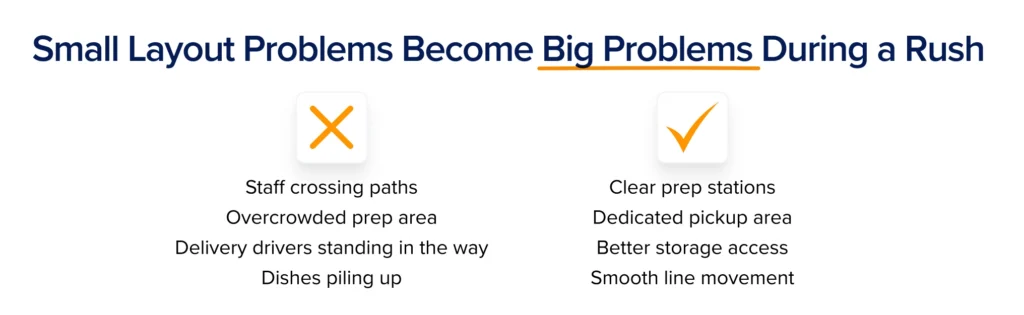
Before ordering equipment or finalizing your restaurant supply list, it helps to think through how people are actually going to move through the space once service starts.
That includes things like:
- Where prep happens
- How staff access storage
- Movement around the cook line
- Dishwashing flow during busy periods
- Where delivery drivers or takeout pickups will wait
A kitchen can look great on paper and still become chaotic once service gets busy. If staff are constantly crossing paths or fighting for space during a rush, things slow down quickly.
3. Set a Realistic Supply Budget
Many operators underestimate startup supply costs.
Beyond major equipment, small recurring purchases can add up fast.
4. Choose Suppliers and Decide on a Buying Channel
Most independent restaurants do not rely on just one supplier anymore. Usually, it turns into a mix depending on pricing, product availability, delivery schedules, and, honestly, sometimes just whoever can actually get the product in stock that week.
Restaurants commonly buy supplies through:
- Broadline distributors
- Specialty suppliers
- Online vendors
- Wholesale clubs
- Group purchasing organizations
Some operators use broadline distributors for the majority of their orders, then fill in gaps with local suppliers or online purchases when needed. Others lean more heavily into purchasing groups to help access pricing programs and supplier deals that would be harder to negotiate independently.
It usually takes a little trial and error before operators figure out the supplier setup that works best for their restaurant.
It also helps to think beyond the first order. If finding dependable suppliers already feels like a whole separate job, this guide on reliable and affordable restaurant suppliers is a good next read for comparing options without starting from scratch.
5. Separate One-Time Purchases From Recurring Orders
Some items are purchased once.
Others become weekly or monthly operational expenses.
Separating those categories helps operators forecast spending more accurately.
6. Build Par Levels for Consumables
Most operators have at least one story about realizing something important ran out right in the middle of service. Usually, it is never something dramatic either. It is gloves. Or lids. Or napkins. Somehow, those are always the things that disappear at the worst possible time.
That is why restaurants build par levels for the supplies they go through constantly.
For a lot of operations, that includes items like:
- Gloves
- Containers
- Cleaning chemicals
- Beverage cups
- Napkins
Par levels basically help staff know when it is time to reorder before inventory gets dangerously low. Once restaurants get busier, keeping track of those smaller consumable items becomes way more important than people expect because running out of them can slow down service surprisingly fast.
7. Order, Receive, and Establish Your Reorder Cadence
Strong receiving processes can help reduce inventory problems and ordering mistakes.
Many operators establish weekly reorder schedules to improve consistency.
How Much Does a Restaurant Supply List Cost?
Typical Pre-Opening Supply Budget by Restaurant Type
Startup costs vary heavily depending on concept size and complexity.
Small cafés may spend significantly less than full-service restaurants with bars, large kitchens, or delivery operations.

Ongoing Supply Costs as a % of Sales (Benchmarks)
Recurring supply costs often include:
- Chemicals
- Disposable packaging
- Smallwares
- Cleaning products
- Replacement tools
These expenses can fluctuate depending on sales volume and concept type.
New, Used, or Leased: How to Decide
Many independent operators mix purchasing strategies.
Some equipment may be purchased new, while other pieces are leased or bought used to reduce startup costs.
The right approach depends on budget, risk tolerance, and expected equipment lifespan.
Where to Buy Restaurant Supplies
Direct Distributors
Broadline distributors often provide consistent ordering and delivery schedules.
Group Purchasing Organizations (GPOs)
Many independent restaurants use organizations like Dining Alliance to access pricing programs, supplier discounts, and purchasing support that may otherwise be difficult to secure independently.
Wholesale Stores
Warehouse clubs can help operators quickly restock emergency items and smaller purchases.
Online Marketplaces
Online suppliers can provide access to specialized products and comparison pricing.
Common Restaurant Supply List Mistakes to Avoid
Over-Ordering
Too much inventory creates clutter, waste, and unnecessary spending.
Buying Low Quality Equipment
Cheap equipment can lead to expensive repairs and downtime later.
Relying on a Single Supplier
Supplier diversification can help reduce operational risk during shortages or disruptions.
Ignoring Lead Times
Some restaurant equipment can take weeks or months to arrive.
Planning ahead matters.
No Plan for Replenishment and Reorders
Running out of gloves, containers, or cleaning supplies during service creates operational headaches fast.
Final Thoughts
Building a restaurant supply list is about more than checking boxes.
The right supplies, equipment, and operational systems can improve workflow, reduce stress during service, support food safety, and help protect profitability long term.
For independent restaurant operators, purchasing decisions affect everything from labor efficiency to guest experience.
A well-built restaurant supply list helps create a stronger foundation before the doors even open.