

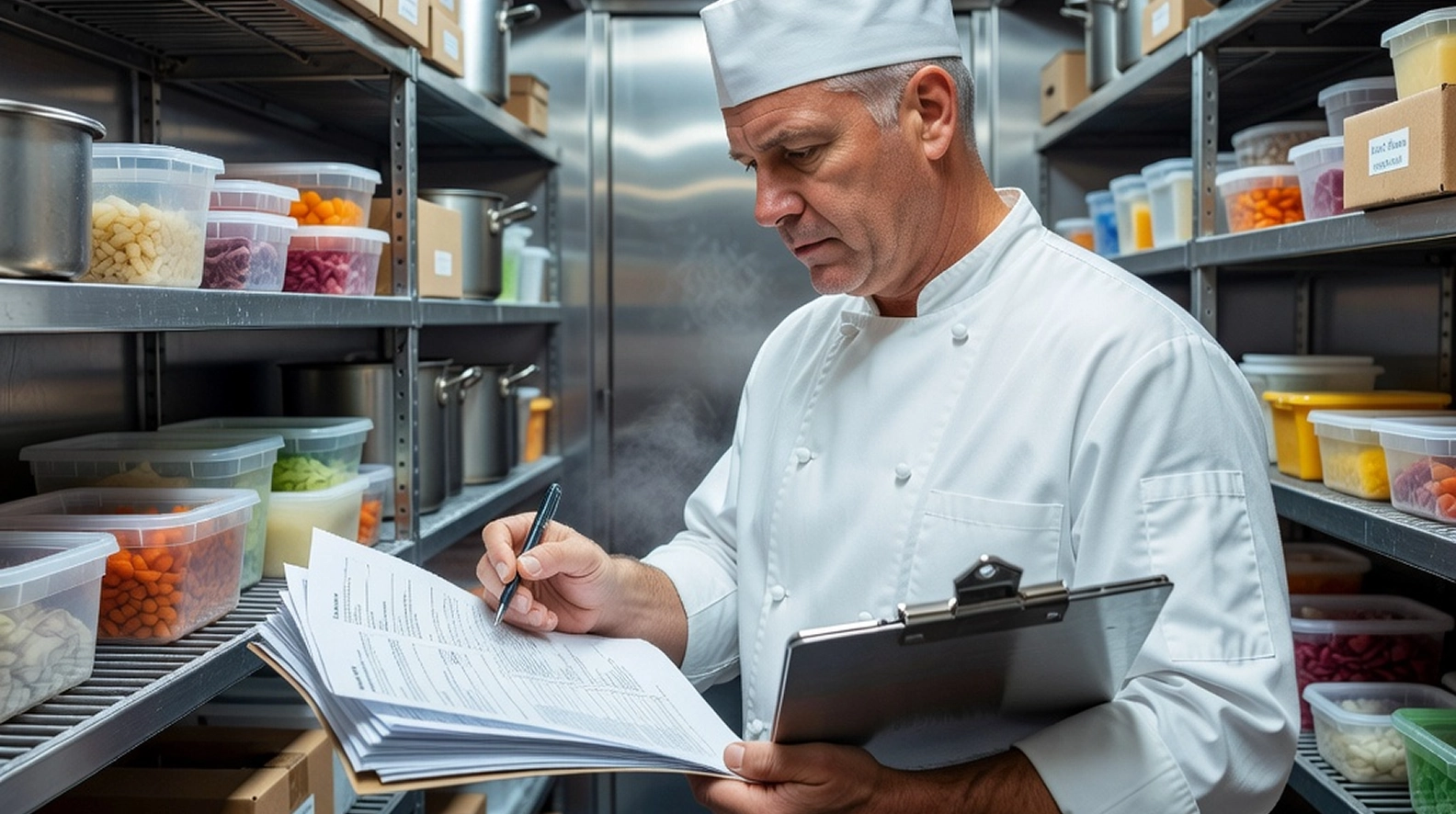
Food service management impacts nearly every part of a restaurant’s profitability, from food costs and labor to guest satisfaction and operational consistency. For independent restaurant operators, strong management systems are often the difference between surviving and scaling.
Running an independent restaurant is a lot different than it was a few years ago. One week you are dealing with higher food costs, the next you are trying to cover shifts because two employees quit, and somewhere in the middle of all that your delivery orders suddenly spike on a Friday night. When the operational side of the business is disorganized, even small issues can start eating away at profitability pretty fast.
The good news? Most profitability issues inside a restaurant are manageable when operators build stronger systems, create better visibility into their business, and stay consistent with daily execution.
What Is Food Service Management?
Food service management is basically everything that keeps a restaurant operating smoothly outside of just cooking the food.
It covers all the behind-the-scenes responsibilities that operators deal with every day, including:
- Ordering product
- Managing inventory
- Scheduling staff
- Watching food and labor costs
- Handling vendor issues
- Training employees
- Maintaining food safety standards
- Keeping service running efficiently
For independent restaurant operators, all of those responsibilities usually overlap constantly.
You might start the morning checking inventory, spend lunch helping on the line because someone called out, then end the night reviewing invoices wondering why fryer oil suddenly costs more again. That is the reality for a lot of independent restaurants right now.
When food service management is organized, the restaurant usually runs smoother overall. When it is not, small problems tend to pile up quickly.
Why Food Service Management is Different for an Independent Restaurant?
Independent restaurants operate differently than large national chains.
Chains often have dedicated departments handling procurement, analytics, labor forecasting, menu engineering, and compliance. Independent operators usually handle many of those responsibilities themselves or with a very small management team.
That creates unique challenges:
- Smaller purchasing power
- Tighter margins
- Limited labor resources
- Less operational support
- Greater dependence on local market conditions
- More variability in vendor pricing
At the same time, independent restaurants often have more flexibility to move quickly, adapt menus faster, build stronger guest relationships, and create unique dining experiences.
Strong food service management helps independents compete more effectively without needing the massive infrastructure of a national chain.
The 7 Core Areas of Food Service Management
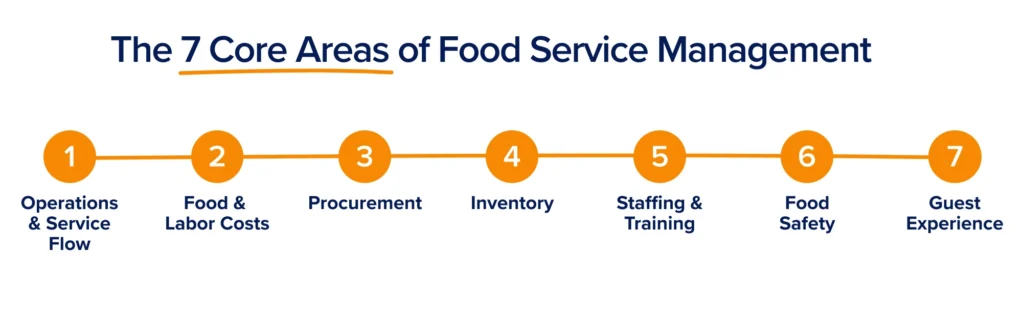
1. Operations and Daily Service Flow
Daily operations are what guests actually experience.
Even great menus struggle when kitchens fall behind, communication breaks down, or service becomes inconsistent during busy periods.
Strong operators focus heavily on:
- Prep organization
- Line communication
- Opening and closing procedures
- Kitchen workflows
- Ticket timing
- Table pacing
- Clear responsibilities during service
Many operational problems are not caused by effort. They come from inconsistent systems.
When daily service flow improves, restaurants usually see better labor efficiency, faster ticket times, and more consistent guest experiences.
2. Food and Labor Cost Control
Food and labor are typically the two largest controllable expenses in a restaurant.
That is why successful operators monitor them constantly instead of reviewing them only at the end of the month.
Common areas operators watch closely include:
- Portion consistency
- Recipe costing
- Overtime hours
- Waste levels
- Prep yields
- Schedule efficiency
- Menu mix performance
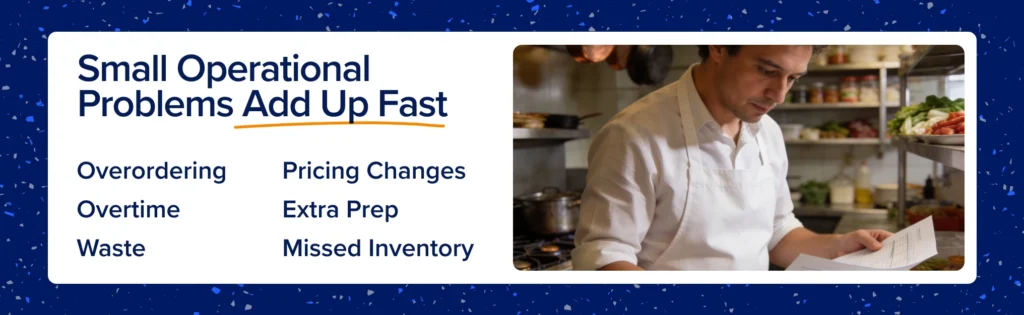
Small operational leaks add up quickly.
A little overportioning on proteins or unnecessary overtime across multiple weeks can quietly erode profitability without operators realizing how much margin is disappearing.
3. Procurement and Supplier Management
A lot of independent restaurant operators do not realize how much money slips away during the purchasing process until they finally sit down and review invoices line by line.
One week chicken is one price. The next week it quietly jumps. A substitute gets sent without anyone catching the cost difference. A manager orders from a secondary vendor during a rush because they ran out of product. None of it feels huge in the moment, but over time those small purchasing decisions start stacking up.
That is why procurement matters so much.
Most independent restaurants juggle multiple suppliers at once between food distributors, produce vendors, beverage companies, paper goods providers, cleaning products, and specialty items. Trying to manage all of that without clear visibility can get messy fast.
Operators who stay on top of purchasing usually spend time:
- Comparing invoice pricing regularly
- Cleaning up bloated order guides
- Limiting unnecessary vendor overlap
- Watching for frequent substitutions
- Asking questions when pricing suddenly changes
- Looking for rebate or savings opportunities
In a lot of restaurants, purchasing problems are not caused by one terrible decision. It is usually a collection of small inconsistencies happening quietly in the background.
The operators who manage food costs best are often the ones paying attention to those details consistently instead of only reacting once margins already start tightening.
4. Inventory and Waste Management
Inventory problems rarely stay small for long.
Overordering ties up cash flow. Underordering creates service disruptions. Waste quietly damages margins every day.
Many operators improve inventory management by focusing on:
- Weekly inventory counts
- Clear pars
- FIFO rotation
- Waste tracking
- Better forecasting
- Tight order guides
Waste logs are especially valuable because they help identify patterns instead of relying on assumptions.
Sometimes the issue is spoilage. Sometimes it is overproduction. Sometimes it is inconsistent prep habits.
The numbers usually tell the story.
5. Staffing, Scheduling, and Training
Restaurant labor challenges are not going away anytime soon.
Independent operators continue dealing with hiring difficulties, turnover, training inconsistencies, and burnout across both front and back of house.
Strong management teams usually prioritize:
- Clear onboarding systems
- Cross-training employees
- Consistent communication
- Fair scheduling practices
- Leadership development
- Retention-focused culture
Scheduling also matters more than many operators realize.
Overstaffing hurts margins. Understaffing hurts service quality and employee morale.
Finding the right balance takes constant adjustment.
6. Food Safety, Sanitation, and Compliance
Food safety tends to get the spotlight only when something goes wrong, but most operators know the real work happens in the small daily habits nobody posts about online.
A cooler running a few degrees too warm. Raw product stored in the wrong spot during a busy shift. Sanitizer buckets that did not get changed often enough. A rushed employee forgetting to relabel prep containers before dinner service starts. Those are the kinds of things that can quietly create larger problems later.
For independent restaurants, food safety is not just about passing inspections. It protects the reputation of the business, the consistency of the operation, and guest trust.
Most restaurants build routines around things like:
- Temperature checks throughout the day
- Cleaning responsibilities for each shift
- Ongoing employee food safety training
- Proper storage and labeling procedures
- Preventing cross-contamination during prep
- Verifying supplier standards and deliveries
- Keeping traceability records organized
The operators who stay ahead of food safety issues usually are not scrambling the night before an inspection. They build these habits into everyday operations so the standards stay consistent even during the middle of a slammed Friday night dinner rush.
7. Guest Experience and Marketing
Operations and guest experience are closely connected.
A restaurant may have great marketing, but if guests experience long ticket times, inconsistent food quality, or poor service, retention becomes difficult.
Independent operators often build stronger guest loyalty by focusing on:
- Hospitality training
- Online review management
- Consistent food quality
- Speed of service
- Community engagement
- Loyalty programs
- Seasonal menu innovation
Repeat guests are often far more profitable than constantly trying to attract new traffic.
Why Effective Food Service Management Directly Impacts Profitability?
The True Cost of Poor Management
Most restaurant profitability problems are not caused by one catastrophic issue.
They usually come from dozens of smaller operational problems happening repeatedly over time.
Examples include:
- Overordering inventory
- Poor labor scheduling
- Invoice discrepancies
- High food waste
- Inefficient prep systems
- Inconsistent portioning
- Staff turnover
- Slow service
Individually, they may not seem devastating.
Combined together, they create constant margin pressure.
The Compounding Value of Small Daily Improvements
The opposite is also true.
Small operational improvements compound over time.
A restaurant that slightly improves inventory accuracy, reduces overtime, tightens recipe costing, and minimizes waste often sees meaningful profitability improvements over several months.
Many successful operators focus less on massive operational overhauls and more on improving consistency little by little every week.
Top Food Service Management Skills Every Independent Operator Needs
Cost Control and P&L Literacy
Operators do not need accounting degrees, but they do need to understand their numbers.
That includes:
- Prime cost
- Food cost percentage
- Labor percentage
- Profit margins
- Sales trends
- Cost variance
Restaurants move fast. Operators who understand their financial data can usually react faster when issues appear.
People Leadership and Delegation
Restaurants run on people.
Operators who communicate clearly, delegate effectively, and build strong team culture often see better retention and smoother operations.
Trying to control every detail personally usually leads to burnout.
Vendor and Supplier Negotiation
Supplier relationships matter more than ever.
Independent operators who actively review pricing, compare vendors, and negotiate strategically often create long-term savings opportunities.
Even small purchasing improvements can create a meaningful financial impact over time.
Data-Driven Decision Making
Gut instinct still matters in restaurants.
But relying only on instinct can create blind spots.
Operators increasingly use reporting and operational data to make decisions around:
- Menu performance
- Labor scheduling
- Purchasing trends
- Inventory usage
- Guest behavior
The clearer the visibility, the easier it becomes to identify operational opportunities.
Food Service Management KPIs Every Independent Restaurant Should Track
Prime Cost Percentage
Prime cost combines food and labor costs.
For many restaurants, prime cost is one of the most important operational metrics because it represents the majority of controllable expenses.
Food Cost Percentage and Cost Variance
Tracking food cost percentage helps operators understand how efficiently inventory is being used.
Variance tracking can also reveal:
- Waste
- Theft
- Portion issues
- Pricing increases
- Inventory inaccuracies
Labor Cost Percentage and Sales-Per-Labor-Hour
Labor efficiency matters.
Many operators monitor labor percentage alongside sales-per-labor-hour to better understand staffing productivity and scheduling performance.
Table Turn Rate and Average Check
These metrics help operators evaluate revenue efficiency.
Faster turns and stronger average checks can improve profitability without necessarily increasing restaurant traffic.
Customer Retention and Online Review Score
Repeat guests are extremely valuable for independent restaurants.
Review trends, guest feedback, and retention patterns often reveals operational strengths and weaknesses quickly.
How to Reduce Food and Labor Costs Through Better Management
Tighten Your Order Guide and Recipe Costing
A lot of restaurants slowly accumulate extra products over time without really noticing it. Different sauces for one special, duplicate ingredients from different vendors, random items that barely get used anymore. Before long, inventory gets harder to manage and food waste starts creeping up.
Taking time to clean up the order guide and recheck recipe costs can help operators get a better handle on where money is actually going.
Use a GPO or Buying Group to Lower Supplier Pricing
Many independent operators do not have the same buying power as larger chains, which makes controlling costs harder during periods of inflation.
That is one reason a lot of restaurants join groups like Dining Alliance. Access to negotiated pricing, rebate opportunities, and supplier programs can help operators lower costs without constantly switching vendors or cutting menu quality.
Engineer Your Menu Around High-Margin, Reliably Sourced Items
Some menu items look great on paper but become operational headaches during busy service.
Maybe the ingredients fluctuate constantly in price. Maybe the prep takes too long. Maybe the product is hard to source consistently.
A lot of operators eventually realize that simpler menu items with steady margins and smoother execution often perform better than overly complicated dishes that slow the kitchen down.
Optimize Scheduling Against Forecasted Sales
Labor gets expensive fast when scheduling is based on guesswork.
Most operators eventually notice patterns in the business. Maybe Tuesdays stay slow unless there is an event nearby. Maybe delivery orders spike during certain games or weekends.
Using past sales trends to build schedules usually creates a better balance between labor costs and service quality.
Build a Daily Line Check and Waste Log
The little operational issues are usually the ones that quietly hurt margins the most.
Extra fries are getting dropped late at night. Prep made in excess that never gets used. Product expiring in the walk-in because nobody realized it was there.
Daily line checks and simple waste tracking help operators spot those patterns before they turn into larger cost problems.
Common Food Service Management Challenges (and How to Solve Them)
Staff Turnover and the Hiring Squeeze
Restaurant labor remains one of the industry’s biggest challenges.
Operators are increasingly focusing on retention strategies, culture, training, and flexible scheduling to stabilize staffing.
Inflation and Rising Food Costs
Food costs continue fluctuating across many categories.
Operators often respond by:
- Simplifying menus
- Monitoring purchasing more closely
- Negotiating with vendors
- Reviewing portion standards
- Leveraging purchasing groups
Third-Party Delivery, Fees, and Off-Premise Revenue Mix
Off-premise dining creates revenue opportunities, but it also adds complexity.
Packaging costs, delivery fees, menu pricing strategy, and operational execution all impact profitability.
Compliance and Health-Code Updates
Food safety regulations continue evolving.
Operators who stay proactive with training and compliance systems typically avoid larger operational disruptions later.
Burnout and Owner Bandwidth
Many independent operators are stretched thin.
One of the biggest operational improvements restaurants can make is building systems that reduce constant firefighting.
Strong systems create more consistency and less chaos.
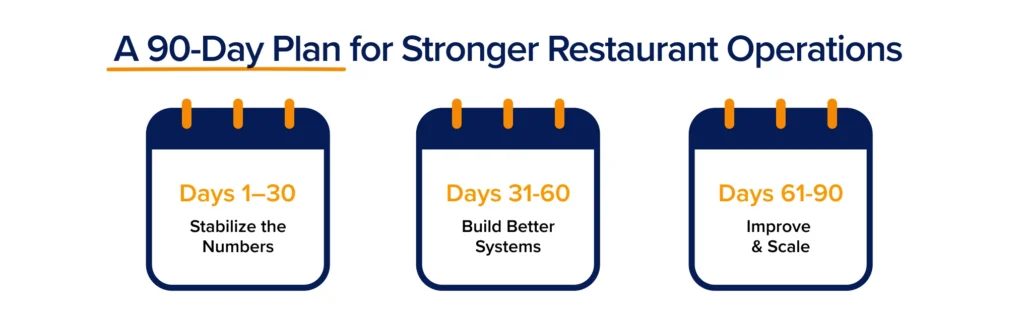
How to Improve Food Service Management in 30, 60, and 90 Days
Days 1–30: Stabilize the Numbers (Prime Cost, Inventory, Schedule)
Start by improving visibility.
Focus on:
- Weekly inventory
- Prime cost tracking
- Labor scheduling
- Waste monitoring
- Recipe costing
The goal is to identify where operational leaks are happening.
Days 31–60: Systemize (SOPs, Order Guide, Weekly Cadence)
Once visibility improves, create more consistency.
Operators often focus on:
- SOP documentation
- Manager accountability
- Ordering procedures
- Training systems
- Weekly operational reviews
Consistency usually improves execution faster than major operational changes.
Days 61–90: Scale (Hire/Train Leaders, Negotiate Vendors, Refine Menu)
After the operational foundation stabilizes, restaurants can focus more strategically on growth opportunities.
That may include:
- Leadership development
- Vendor negotiations
- Menu optimization
- Marketing improvements
- Operational forecasting
Operational Best Practices That Improve Margins
Restaurants that consistently protect margins usually focus heavily on operational discipline.
Some common best practices include:
- Weekly inventory counts
- Tight order guides
- Ongoing recipe updates
- Daily line checks
- Cross-training employees
- Monitoring invoice discrepancies
- Tracking waste consistently
- Reviewing labor against sales daily
- Maintaining strong vendor communication
The goal is not perfection.
It is consistency.
How Dining Alliance Supports Smarter Restaurant Management
Independent restaurants often need support beyond just food purchasing.
Dining Alliance helps operators improve visibility into purchasing, access competitive supplier programs, identify savings opportunities, and simplify procurement across their operations.
Members gain access to:
- Purchasing programs
- Rebates and savings opportunities
- Supplier partnerships
- Operational support
- Purchasing visibility tools
- Industry expertise
For many independent restaurants, stronger purchasing visibility and supplier support create more control over operational costs without adding unnecessary complexity.
Ready to improve your restaurant’s food service management strategy? Visit the Dining Alliance contact page to connect with a team member and explore membership opportunities designed for independent operators.