

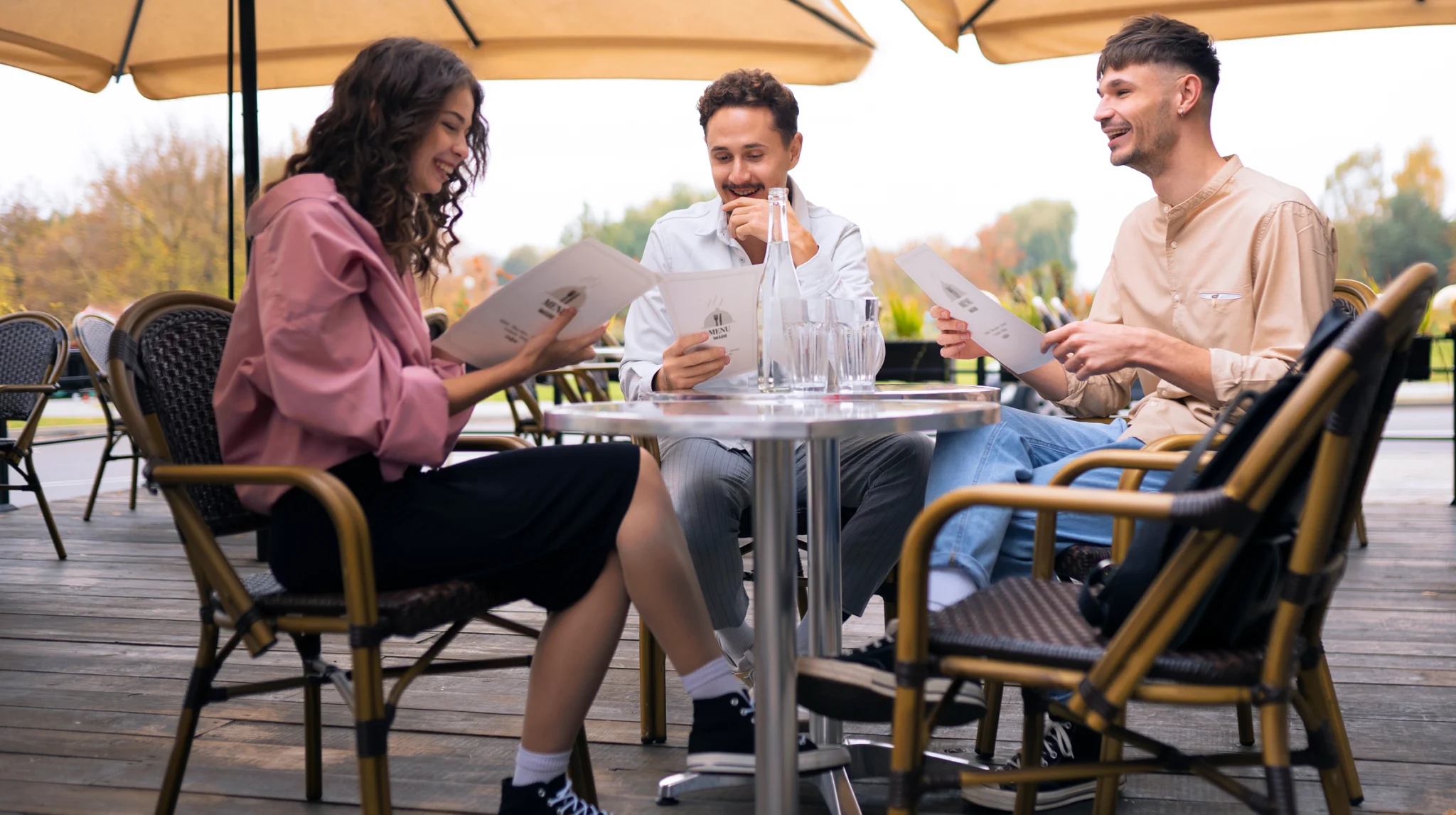
Outdoor dining can be much more than a few extra tables outside your restaurant. With the right setup, a patio can become an extension of your dining room, giving guests another way to enjoy your restaurant while creating additional revenue opportunities for your operation.
But a profitable outdoor dining space takes some planning. Everything from seating and shade to lighting, heating, weather protection, and traffic flow can impact how often your patio gets used and how comfortable guests are once they sit down.
Whether you’re building a restaurant patio from scratch or looking for ways to get more out of the outdoor space you already have, these outdoor dining ideas can help you create a setup that works for your guests, your staff, and your bottom line.
Why Outdoor Dining Is Worth It
Outdoor dining gives restaurants an opportunity to make better use of available space while creating an experience guests may specifically seek out when the weather is right. More usable tables can mean more covers during busy periods, additional space for private events, and another seating option when the dining room fills up.
A well-designed patio can also help create a different atmosphere than your indoor dining room. Guests may stick around for another round of drinks, meet friends for happy hour, or choose your restaurant specifically because they can dine outside.
The key is making sure the space earns its keep. Investing in versatile equipment, planning for changing weather, and creating an efficient layout can help restaurants use outdoor seating for more days throughout the year instead of limiting it to a short patio season.
Plan Your Outdoor Dining Space
Before ordering tables, umbrellas, heaters, or décor, think about how the outdoor space will actually function during service. Your patio should feel like an extension of the restaurant, not an obstacle course your servers have to navigate with a tray full of drinks.

Consider how many guests the space can comfortably accommodate, where servers will enter and exit, how food and beverages will travel from the kitchen or bar, and whether tables need to move for different party sizes or events.
Layout & Flow
More tables do not automatically mean more revenue if the layout slows down service or makes guests uncomfortable. Leave enough room between tables for guests and employees to move easily, and avoid placing seating where it can interfere with entrances, sidewalks, service stations, or emergency exits.
Think about the path your team will take dozens of times during a shift. Shorter, clearer routes between the kitchen, bar, service stations, and patio can help employees serve guests more efficiently.
Flexible layouts can also help you get more from the space. Tables that can be easily combined or rearranged make it easier to accommodate larger parties, private events, happy hours, and seasonal changes in demand.
Choose Weather-Resistant Furniture & Materials
Outdoor restaurant furniture has to work harder than the tables and chairs inside. Sun, rain, humidity, wind, temperature changes, and frequent cleaning can quickly wear down materials that were not designed for outdoor use.
Look for commercial-grade furniture made with durable, weather-resistant materials that are easy to clean and maintain. Stackable or lightweight seating can also make it easier to rearrange the patio or store furniture during severe weather and slower seasons.
Durability matters, but so does comfort. Choose furniture that fits your concept and gives guests a reason to settle in rather than immediately asking for the check.
Keep Guests Comfortable Year-Round
A beautiful patio will not do much for your restaurant if it is too hot, cold, windy, wet, or dark for guests to enjoy it. The more control you have over the outdoor environment, the more opportunities you have to keep those tables in rotation.
Instead of planning only for perfect patio weather, think about the conditions that typically prevent guests from sitting outside and invest in solutions that help address them.
Shade & Weather Protection
During warmer months, shade can be the difference between a busy patio and a row of empty tables. Umbrellas, awnings, pergolas, canopies, and other coverings can protect guests from direct sunlight while making the space more comfortable during peak daytime hours.
Weather protection can also help extend patio use when conditions are less predictable. Depending on your space and local regulations, wind screens, covered seating areas, or retractable enclosures can offer additional protection from wind and light rain.
Look for solutions that can adapt with the weather so you are not relying on one setup all year long.
Take Cover with Tents
Expand your outdoor seating and accommodate guests in a safe way. Outdoor dining tents can help your restaurant, bar or café stay open and maintain social distancing rules while indoor dining is restricted. Keep your customers warm and protected from cold and unpredictable weather.
Is it raining or snowing, and your customers don’t want to get out of the car? Tent solutions can also support your customer curbside pickup and can be an integral item in your Covid safe plan.
Get creative and add a logo or a happy hour special on the top or sides of the tent. This is a great marketing tactic that increases your brand exposure.
Not only are tents a solution for colder temperatures, tents can also be re-used in the summer for warmer weather by creating shade to keep customers cool while they get some fresh air. They can be good investments for weddings and receptions or a way to extend seating for special events like the Big Game in February or private bookings.
Heat Up Sales with Heat Lamps and Gas
Diners are craving fresh air these days, especially since most have been hibernating since the beginning of the pandemic. As the temperatures begin to drop, warm drinks and hot soups aren’t the only things that can heath up your guests. Customers need to stay warm – even if you have your outdoor seating protected inside of a tent. Don’t force them to bring a blanket just so they can enjoy their favorite restaurant foods. By using solutions like heat lamps, you can keep guests warm without their heated blankets. Don’t forget to fuel the outdoor dining experience with lamp gas to keep your heat lamps powered and hot!
Make It Year-Round
The goal is not necessarily to make every restaurant patio usable 365 days a year. It is to stretch the number of days your outdoor space can comfortably generate revenue.

Think in seasons. Umbrellas and shade solutions can support summer service. Heaters can help during cooler months. Tents, awnings, and weather barriers can provide additional flexibility during transitional seasons.
Consider equipment that serves more than one purpose or can be stored and redeployed as conditions change. The more adaptable your setup is, the easier it becomes to respond to weather, demand, special events, and seasonal traffic without rebuilding the patio every few months.
Set the Scene: Lighting, Greenery & Décor
Once the practical pieces are in place, think about what guests actually see and feel when they sit down.
Outdoor dining gives restaurants room to create an atmosphere that feels slightly different from the main dining room while still staying true to the brand. Planters, greenery, outdoor rugs, decorative barriers, branded elements, and seasonal touches can make a basic patio feel like a destination.
Décor can also serve a practical purpose. Planters and partitions can help define seating areas, greenery can soften barriers or fencing, and carefully placed design elements can create separation without making guests feel boxed in.
Just remember that outdoor décor has to survive outdoor life. Choose items that are durable, easy to clean, and simple for employees to move or store when necessary.
Lighting & Ambiance
Lighting plays two roles on a restaurant patio: helping guests and employees see comfortably and creating the right atmosphere once the sun goes down.
String lights, overhead fixtures, wall lighting, lanterns, and table lighting can add warmth without making the patio feel overly bright. Pay special attention to walkways, steps, entrances, service areas, and other places where employees and guests need clear visibility.
The right lighting can also make the patio more inviting from the street. A warm, lively outdoor space acts almost like a billboard for the restaurant, showing potential guests exactly what they could be enjoying if they stopped in.
Increase the Heat Without Increasing Costs
Creating an outdoor dining space requires an upfront investment, and the costs can add up quickly when you factor in furniture, tents, heaters, fuel, lighting, cleaning supplies, and other operational needs.
That makes purchasing strategy just as important outside the restaurant as it is inside.
Dining Alliance helps independent restaurants save on products and services they are already purchasing through manufacturer rebates, supplier programs, and exclusive member savings. Taking advantage of available savings on outdoor dining and operational solutions can help offset costs while giving restaurants more room to invest in the guest experience.

The goal is simple: create an outdoor space guests want to use without letting the cost of running it eat away at the additional revenue it generates.
Not a Dining Alliance member? Click here to become a member today and start saving.
Frequently Asked Questions
How can restaurants make outdoor dining profitable?
Start by treating outdoor seating as revenue-generating restaurant space rather than simply adding more tables. Create an efficient layout, choose durable equipment, prepare for changing weather, and track patio sales to understand when the space performs best. Restaurants can also use outdoor areas for happy hours, private dining, events, seasonal promotions, and other revenue opportunities.
What do you need to set up outdoor dining?
Every restaurant will have different needs, but common outdoor dining essentials include commercial-grade tables and chairs, shade or weather protection, appropriate lighting, heaters for cooler weather, signage, waste receptacles, and cleaning supplies. Depending on the location and setup, restaurants may also need barriers, tents, umbrellas, planters, service stations, or other equipment.
Do you need a permit for outdoor dining?
Permit requirements vary by city, county, and state, as well as by where the outdoor seating is located. Restaurants may need approval for patios, sidewalk seating, tents, heaters, structures, alcohol service, occupancy, or use of public space. Check with your local authorities before building or expanding an outdoor dining area to understand the permits, zoning requirements, and safety regulations that apply to your operation.
How do you heat a restaurant patio?
Restaurants commonly use commercial outdoor heaters, including freestanding, tabletop, wall-mounted, or overhead options, depending on the size and design of the patio. Choose equipment approved for commercial outdoor use and follow manufacturer instructions and local fire and safety regulations. Strategic placement, weather barriers, and a reliable fuel supply can help distribute warmth more effectively and keep guests comfortable during cooler weather.