


Margins are tight. Food costs move fast. Guests are asking better questions about where their food comes from.
That combination has pushed sustainable food sourcing from a “nice idea” into a real operational strategy. For restaurants, sustainability is no longer just about optics. It’s about building a purchasing program that protects quality, stabilizes supply, and supports long-term profitability.
If done right, sustainable sourcing doesn’t add complexity. It brings clarity.
What Is Sustainable Food Sourcing?
Sustainable food sourcing is the practice of purchasing ingredients in a way that considers environmental impact, ethical labor standards, long-term resource availability, and supply chain transparency.
In simple terms, it means asking better questions before you place the order:
- Where was this grown or raised?
- How was it produced?
- How far did it travel?
- Is this supplier operating responsibly?
- Will this product still be available six months from now?
For restaurants, sustainable sourcing isn’t about changing everything overnight. It’s about making smarter purchasing decisions that balance cost, quality, and long-term supply stability.
Why Is Sustainable Food Sourcing Important?
Restaurants sit at the center of the food system. The choices operators make influence distributors, manufacturers, growers, and ultimately consumer behavior.
Sustainable sourcing matters because it:
- Reduces exposure to supply chain disruptions
- Aligns with growing guest expectations
- Supports consistent product quality
- Minimizes waste and over-purchasing
- Strengthens long-term supplier relationships
Guests notice when restaurants care about sourcing. But operators feel the impact long before it reaches the dining room. Better sourcing decisions often mean fewer surprises in the back office.
Key Aspects of Sustainable Food Sourcing
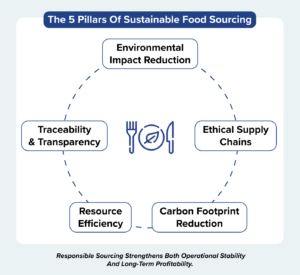
Environmental Impact Reduction
This includes sourcing products grown with responsible farming practices, minimizing pesticide overuse, supporting regenerative agriculture, and reducing unnecessary transportation miles.
Even small adjustments, such as choosing seasonal produce or regional suppliers when possible, can reduce environmental strain while improving freshness.
Ethical Supply Chains
Fair labor practices, humane treatment of animals, and responsible production standards are also part of sustainability.
Working with suppliers that put ethics first protects your brand’s reputation and is in line with what many customers expect from modern restaurants.
Carbon Footprint Reduction
Transportation, packaging, and energy use all contribute to a product’s carbon footprint.
Sourcing closer to home when feasible, consolidating deliveries, and optimizing order frequency can lower emissions while also improving cost control.
Resource Efficiency
Water usage, soil health, feed efficiency, and packaging materials all play a role.
Restaurants that pay attention to resource efficiency often discover that sustainable products also reduce spoilage and waste, creating measurable savings over time.
Traceability and Transparency
It’s very important to know where products come from. Traceability makes food safety response times faster, quality control stronger, and operators more sure of their supplier network.
Being open is good for more than just marketing. It is very important for managing risk.
Benefits of Sustainable Food Sourcing for Restaurants
Stronger Brand Trust and Guest Loyalty
People who eat out today read labels. They want to know where it came from. They look into things before they go.
Restaurants that talk about how they get their food in a responsible way build trust and emotional loyalty, not just repeat customers.
Partnerships with suppliers that focus on long-term, environmentally friendly practices are usually more stable.
Improved Supply Chain Resilience
When markets change, operators who have strong relationships and contracts that are in line with each other are often better off than those who rely on spot buys and last-minute changes.
Potential Cost Control Opportunities
Many people think that being sustainable always costs more. Many sustainable practices actually cut down on waste, make it easier to predict prices, and make it easier to plan for the future.
Sourcing smarter can mean:
- Less need for emergency purchases
- Less waste
- Better compliance with contracts
- Capture rebates better
That operational discipline helps protect margins over time.
Regulatory and ESG Alignment
As rules change and ESG reporting becomes more common, restaurants that use sustainable sourcing are ahead of the game instead of trying to catch up.
Making changes now can stop changes from happening later.
Common Barriers Restaurants Face
Cost Perception vs. Reality
Some eco-friendly products may seem more expensive at first. But only looking at unit cost ignores things like cutting down on waste, making sure suppliers are reliable, and keeping prices stable over time.
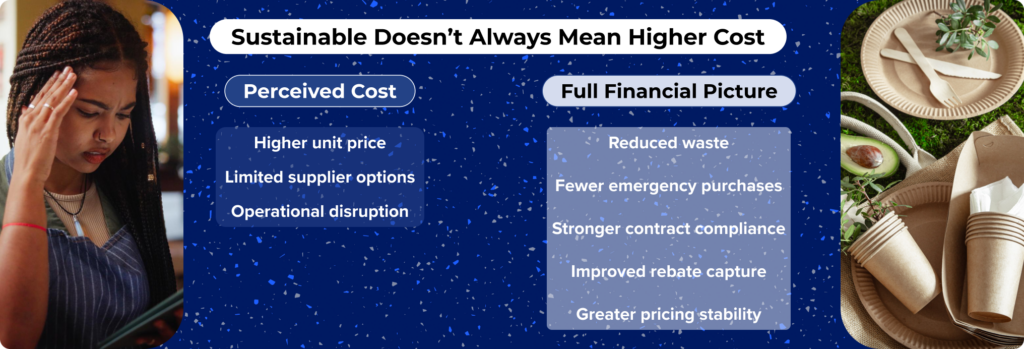
The whole picture often tells a different story.
Supplier Availability and Consistency
Not all areas have the same choices for suppliers. Changes in the seasons and the amount of work that needs to be done can make things less flexible.
That’s why sourcing strategies should find a balance between ideals and how things really work.
Operational Adjustments
Changing suppliers or menus requires planning. Kitchens might need to make small changes to their prep work. Managers might need clearer ways to place orders.
Not disruption, but small changes are the key.
Identifying Genuine Sustainable Suppliers
There is such a thing as “greenwashing.” Not all products that say they are sustainable meet important standards.
Before making their own claims, restaurants should look for certifications, documented practices, and clear information about where their food comes from.
Practical Steps to Implement Sustainable Sourcing
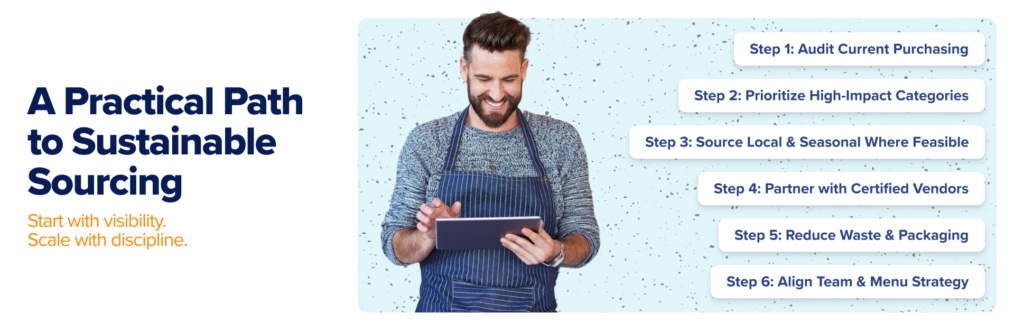
Audit Current Purchasing and Suppliers
Begin with visibility. Look over what you’re buying, who you’re buying it from, and the terms of the deal.
Look for patterns, like buying things that aren’t on contract, SKUs that don’t match up, and suppliers who don’t have written sustainability standards.
Prioritize High-Impact Ingredients
You don’t have to change all the ingredients at once. First, look at categories with a lot of items or that cost a lot.
Proteins, fruits and vegetables, and dairy are often the best places to make a difference and save money.
Source Local and Seasonal Products
Local and seasonal products cut down on the distance they have to travel and often make things fresher.
When you use seasonal ingredients, you can also make your menu more interesting for guests.
Partner with Certified & Ethical Vendors
Look for certifications that are well-known in the fields of organic farming, fair labor, humane treatment of animals, or sustainable fishing.
Certified partners give you paperwork that protects your brand and makes it more trustworthy.
Reduce Packaging and Food Waste
Sustainable sourcing goes beyond just the ingredient.
Consolidated deliveries, orders that are the right size, and careful inventory management all help cut down on waste.
Train Staff and Align Menu Strategy
The team can only make good sourcing decisions if they understand them.
Teach managers about the vendors that are approved. Make sure that the menu changes with the seasons. Make sure that ordering is done the same way in all locations.
It’s the little things you do every day that make a difference.
How Technology Supports Sustainable Purchasing Decisions
Visibility is important for sustainable sourcing.
It’s hard to measure waste, keep track of supplier performance, or find buying patterns that go against sustainability goals without clear data.
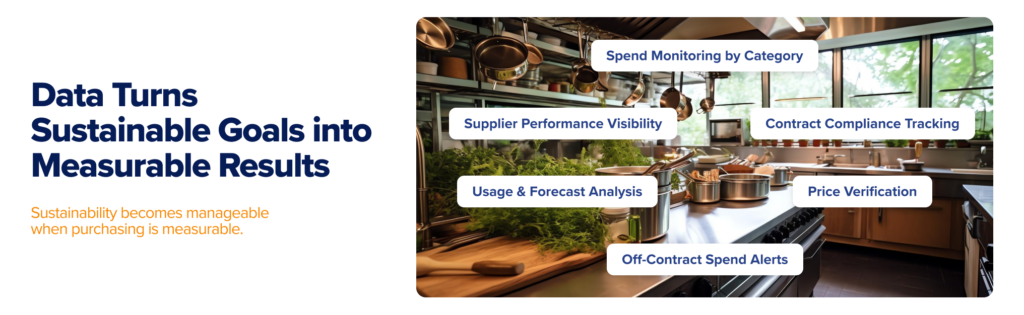
Restaurants can use modern buying technology to:
- Keep an eye on spending by category
- Keep an eye on contract compliance
- Check the prices for accuracy
- Find purchases that are not on contract
- Look at patterns in how things are used
- Make predictions more accurate
When operators can see what they are buying and why, sustainability becomes something they can deal with instead of something that is hard to understand.
Relationships are not replaced by technology. It gives them more information.
Conclusion
Sustainable food sourcing is not a way to sell things. It is a way of buying things.
It links taking care of the environment with running a business. It helps suppliers stay stable while also keeping margins safe. And it helps restaurants earn guests’ trust over time, especially those who care about where their food comes from.
Profitability and sustainability are not at odds with each other. When sourcing is done on purpose, they help each other.
If you are ready to explore how sustainable food sourcing can support both your margins and your mission, the right purchasing strategy makes all the difference. Sign up for free today and see for yourself how Dining Alliance helps operators source more sustainably!
