


If you’ve ever looked at a delivery invoice and thought, “Why did chicken suddenly jump another $12 a case?” you’re not alone. Most independent restaurant operators are dealing with tighter margins, unpredictable pricing, labor shortages, and constant pressure to do more with less. That’s exactly why restaurant procurement matters more than ever.
A smart restaurant procurement strategy isn’t just about ordering food. It’s about controlling costs, improving consistency, reducing waste, and making sure your kitchen can actually operate without daily surprises. And for independent operators especially, small procurement issues add up fast.
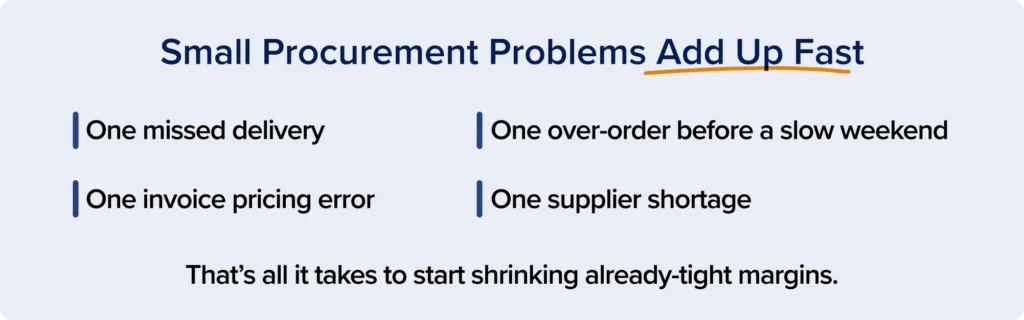
One pricing error. One missed delivery. One over-order before a slow weekend. Suddenly your margins are taking a hit before guests even sit down.
The good news? Restaurant procurement doesn’t have to feel overwhelming. A few smarter systems and better habits can make a major difference.
What Is Restaurant Procurement?
Restaurant procurement is basically everything that happens before ingredients ever hit the line.
It’s the way restaurants figure out what they need to buy, where they’re buying it from, how much they’re spending, and whether those products are actually showing up correctly and on time. That can mean food orders, paper goods, cleaning supplies, smallwares, beverages, or honestly anything the restaurant needs to keep operating day after day.
For a lot of independent operators, restaurant procurement becomes part of the daily routine without even realizing it. One minute you’re checking inventory in the walk-in. The next you’re texting a rep about a missing case of fries or trying to figure out why last week’s invoice suddenly looks higher.
And it’s usually bigger than just placing orders.
- It’s keeping food costs under control when prices jump around.
- It’s making sure managers are not all ordering differently.
- It’s catching invoice mistakes before they pile up.
- It’s finding backup suppliers before shortages happen.
- It’s figuring out whether a menu item is still worth keeping around when the ingredient cost keeps climbing.
At the end of the day, restaurant procurement is really about control. The operators who stay ahead of cost problems usually are the ones paying attention to the buying process before small issues turn into expensive ones.
Why a Smarter Procurement Strategy is Critical for Restaurants
Margins are already tight in the restaurant industry. Most operators don’t have room for constant pricing surprises or operational inefficiencies.
The challenge is that procurement problems are often hidden at first.
Maybe your team is over-ordering produce every week. Maybe your distributor quietly swapped products. Maybe your invoices no longer match contracted pricing. Maybe delivery shortages are forcing emergency purchases from retail stores at higher costs.
None of these issues feel catastrophic on their own. But over time, they chip away at profitability.
A smarter restaurant procurement strategy helps operators:
- Improve food cost control
- Increase visibility into purchasing
- Reduce waste and spoilage
- Prevent pricing discrepancies
- Strengthen supplier relationships
- Create more predictable operations
- Protect margins during inflation
The operators staying profitable right now usually are not the ones cutting corners. They’re the ones paying closer attention to food procurement.
How to Build a Smarter Restaurant Buying Strategy
Start With Your Recipe-Level Cost Data
If you don’t know exactly what each menu item costs to make, procurement decisions become guesswork.
Recipe-level costing gives operators visibility into ingredient usage, portion costs, and margin performance. It also helps identify where rising supplier prices are affecting profitability the most.
For example, if cheese prices increase dramatically, you can quickly see which menu items are most impacted instead of waiting for overall food costs to spike at the end of the month.
Good restaurant procurement starts with understanding what your menu is actually costing you.
Set Procurement KPIs (Food Cost %, Variance, Fill Rate, OTIF)
You can’t improve what you aren’t measuring.
Strong restaurant procurement strategies rely on clear KPIs that help operators identify trends before they become bigger problems.
A few important procurement KPIs include:
- Food cost percentage
- Price variance
- Fill rate
- OTIF (On-Time, In-Full delivery)
- Inventory turnover
- Waste percentage
Even reviewing these numbers weekly instead of monthly can help operators react faster.
Standardize an Order Guide Across Shifts
You can usually tell pretty quickly when every manager has their own ordering style.
One person orders heavy because they’re worried about running out. Another waits until the last second. Someone else orders a completely different product because “the rep recommended it.”
That’s when inventory starts getting messy fast.
A standardized order guide helps create consistency across every shift so ordering does not depend on who happens to be working that day.
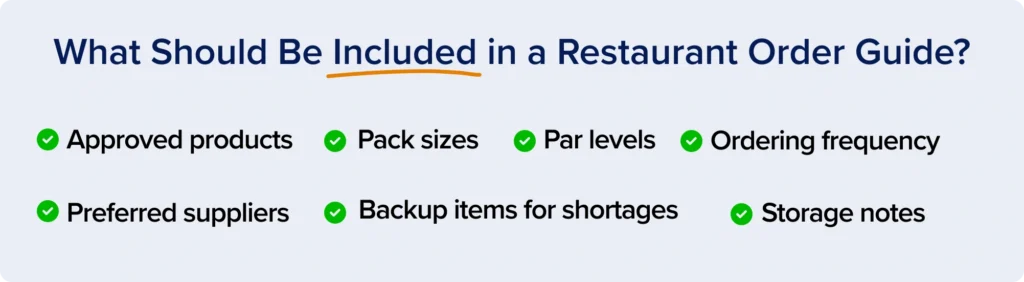
A good restaurant procurement order guide should include:
- Approved products the restaurant regularly uses
- Preferred suppliers for each category
- Standard pack sizes and case counts
- Par levels for high-use items
- Backup products for common shortages
- Notes about seasonal items or limited-time menu ingredients
- Ordering frequency for major categories
- Storage notes for products with short shelf lives
It sounds simple, but having one clear system can save operators a lot of headaches.
Instead of every shift ordering differently, the whole team follows the same playbook. That usually means fewer duplicate products, more consistent inventory levels, less waste, and a much easier time managing food costs week to week.
Build a Two- or Three-Vendor Strategy for Each Category
Relying too heavily on a single supplier creates risk.
If one vendor experiences shortages, delivery issues, or major pricing increases, operators can get stuck scrambling for alternatives at the last minute.
A smarter restaurant procurement strategy builds backup supplier relationships ahead of time.
That doesn’t mean splitting every order across multiple distributors. It means having secondary options available for critical categories like proteins, produce, fryer oil, or dairy products when supply chain disruptions happen.
Use Contract Pricing and Market Basket Reviews to Lock In Costs
Many independent operators are paying more than they realize simply because pricing is never reviewed consistently.
Contract pricing helps restaurants secure more stable costs on frequently purchased items. Regular market basket reviews also help operators compare pricing across core products to identify unnecessary spending.
Even small pricing differences matter when products are ordered every single week.
Restaurant procurement is not just about buying products. It’s about managing costs proactively.
Engineer Your Menu Around High-Margin, Reliably Sourced Items
Some menu items create operational headaches long before they create profits.
If an ingredient experiences constant shortages, major price swings, or high spoilage rates, it may not belong in multiple dishes across your menu.
Smart restaurant procurement works closely with menu engineering.
Operators who build menus around reliable, profitable ingredients usually create more stable margins over time.
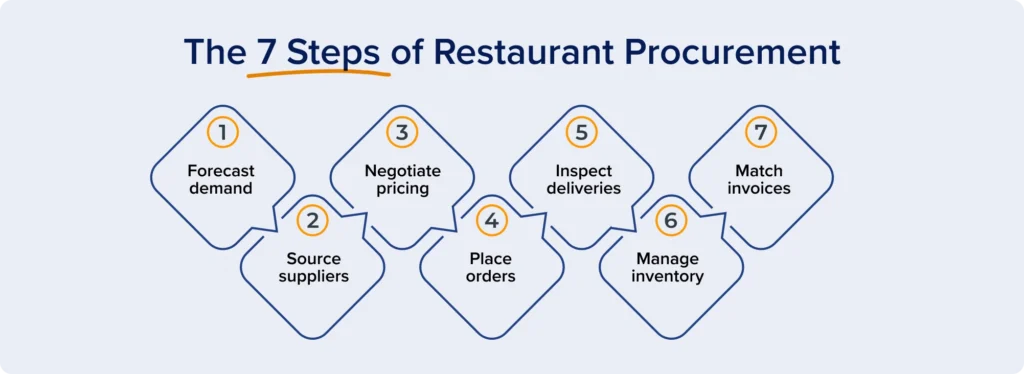
The 7 Steps of the Restaurant Procurement Process
1. Forecast Demand and Identify Buying Needs
This is usually where restaurant procurement either starts helping you or starts hurting you.
If ordering is based on guesses, panic, or “we ran out last Friday so double it,” things can spiral pretty quickly. Suddenly there’s too much product sitting in the walk-in or not enough of the stuff you actually need for service.
Most operators are trying to balance a bunch of moving targets at once:
- Weekend traffic
- Weather
- Catering orders
- Local events
- Seasonal menu changes
- Promotions
- School schedules
- Holidays
The better you can predict what the week is actually going to look like, the easier it gets to buy smarter instead of reacting at the last minute.
2. Source and Vet Suppliers
Every supplier sounds great during the sales pitch.
The real test usually happens on a slammed Friday when half the order shows up missing and nobody answers the phone.
Finding the right supplier is not just about who has the cheapest case price. Operators usually end up caring a lot more about consistency once service starts getting affected.
A few things restaurants usually pay attention to:
- Product quality
- Delivery reliability
- Communication from reps
- Pricing consistency
- Availability during shortages
- How problems get handled
- Minimum order requirements
- Contract flexibility
Good restaurant procurement depends heavily on supplier relationships. A strong rep who communicates well can save operators a lot of stress during supply chain issues.
3. Negotiate Contracts, Pricing, and Rebates
A lot of independent operators assume negotiating is only for giant chains with hundreds of locations.
Not true.
Even smaller restaurants usually have more opportunities than they realize when it comes to pricing programs, rebates, or contract support. Sometimes it comes through distributor relationships. Sometimes through manufacturers. Sometimes through a restaurant GPO.
And honestly, even small savings matter right now.
Saving a few dollars on products ordered every week adds up a lot faster than people think.
4. Place Purchase Orders Using a Standardized Order Guide
Ordering gets messy fast when everybody does it differently.
One manager orders based on memory. Another orders based on fear. Someone else forgot there were already two backup cases sitting in storage behind the fryer oil.
That’s why standardized order guides matter so much in restaurant procurement.
They help create consistency around:
- Approved products
- Par levels
- Pack sizes
- Supplier preferences
- Ordering frequency
It keeps ordering more predictable, especially during busy weeks or staffing changes.
5. Receive and Inspect Deliveries
This is the step operators rush through all the time because everybody’s busy.
But it’s also where a lot of expensive problems start.
Once products get signed for and rolled into storage, it becomes much harder to argue about shortages, damaged items, or temperature issues later.
Most restaurants try to check things like:
- Product counts
- Damaged packaging
- Temperatures on refrigerated items
- Product quality
- Missing cases
- Invoice accuracy
Nobody loves standing at the back door counting cases during a lunch rush, but catching problems immediately usually saves way bigger headaches later.
6. Manage Inventory and Storage
Inventory problems usually do not happen all at once.
It’s more like death by a thousand tiny mistakes.
A few products expire before getting used.
Something gets over-ordered three weeks in a row.
The freezer turns into a mystery cave nobody wants to organize.
Then suddenly food costs are climbing and nobody can fully explain why.
Good restaurant procurement depends on keeping inventory clean, organized, rotated properly, and easy to track. The more visibility operators have into what’s actually sitting on shelves, the easier it gets to order accurately.
7. Match Invoices and Process Payment
This part gets skipped more than operators want to admit.
A lot of restaurants are moving fast, paying invoices quickly, and assuming pricing is correct unless something looks wildly off.
The problem is small discrepancies happen constantly.
Maybe a contracted item suddenly costs more.
Maybe there’s a substituted product.
Maybe a delivery shortage still got billed anyway.
Individually, those issues might not seem huge. Over time though, they quietly chip away at margins.
That’s why smart restaurant procurement usually includes regularly checking invoices against purchase orders, contracted pricing, and actual deliveries before payments get finalized.
Common Restaurant Procurement Challenges (and How to Solve Them)
Inflation and Supplier Price Increases
Food prices continue fluctuating across many categories.
The best defense is visibility. Operators who regularly monitor pricing trends, contract compliance, and market basket costs usually react faster than those reviewing costs once a month.
Delivery Delays and Stock-Outs
Supply chain disruptions are still affecting restaurants in many markets.
Building backup supplier relationships and maintaining flexible menu options can help operators adjust quickly when shortages happen.
Invoice Discrepancies and Pricing Errors
Pricing discrepancies can quietly drain profitability.
Regular invoice audits and procurement reviews help operators identify errors before they become ongoing problems.
Over-Ordering and Food Waste
Over-ordering often happens because forecasting and inventory tracking are inconsistent.
Better ordering systems, inventory visibility, and recipe-level data help reduce unnecessary waste.
Supplier Concentration and Single-Source Risk
Depending too heavily on one supplier increases operational risk.
Diversifying sourcing strategies gives operators more flexibility during shortages or pricing spikes.
Restaurant Procurement KPIs Every Independent Operator Should Track
Food Cost Percentage
Food cost percentage measures how much revenue is being spent on ingredients.
It’s one of the most important restaurant procurement metrics because it directly affects profitability.
Price Variance vs. Contracted Cost
This KPI measures whether restaurants are actually being charged agreed-upon pricing.
Unexpected variance often signals pricing discrepancies or contract compliance issues.
On-Time, In-Full (OTIF) Delivery Rate
OTIF measures how consistently suppliers deliver complete orders on schedule.
Poor OTIF performance creates operational disruptions and emergency purchasing situations.
Inventory Turnover and Waste %
These metrics help operators understand how efficiently products move through the kitchen.
High waste percentages usually indicate over-ordering, spoilage, or poor forecasting.
Restaurant Procurement Checklist for Cost Control
Here’s a simple restaurant procurement checklist operators can review regularly:
- Review food cost percentage weekly
- Audit invoices for pricing discrepancies
- Update recipe costing monthly
- Standardize order guides across managers
- Monitor supplier delivery performance
- Maintain backup supplier relationships
- Conduct inventory counts consistently
- Compare market basket pricing quarterly
- Review menu profitability regularly
- Track waste and spoilage trends
Small procurement improvements made consistently usually create bigger long-term savings than major one-time changes.
GPO vs. Direct Vendor vs. Procurement Software: Which Approach Fits?
There’s no single “perfect” restaurant procurement model for every operator.
Some restaurants work directly with vendors and negotiate independently. Others join GPOs to access collective purchasing power and better pricing opportunities. Many operators also use procurement software to improve visibility into costs, inventory, invoices, and supplier performance.
In reality, most successful restaurant procurement strategies combine multiple approaches.
For independent operators especially, a GPO can help level the playing field by providing access to pricing, rebates, and supplier programs that may otherwise be difficult to secure alone.
At the same time, procurement technology helps operators track purchasing data more accurately and identify issues faster.
The best approach is usually the one that creates the most visibility and consistency for your operation.
Final Thoughts
Restaurant procurement may not be the most glamorous part of running a restaurant, but it has a massive impact on profitability.
When operators improve procurement visibility, standardize ordering, track costs more consistently, and strengthen supplier strategies, they usually gain something every restaurant wants right now: more control.
And in today’s environment, control matters.
The restaurants protecting margins are not necessarily buying less. They’re buying smarter.
FAQs About Restaurant Procurement
What are the 7 steps of the restaurant procurement process?
Most restaurant procurement processes follow the same general flow. First, you figure out what you’re going to need based on sales and inventory. Then you source suppliers, negotiate pricing, place orders, receive deliveries, manage inventory, and finally process invoices and payments. Sounds simple on paper. In reality? One missed truck or bad invoice can throw your whole week off.
How can independent restaurants reduce food costs through procurement?
Usually, it starts with paying closer attention to what’s actually happening in the kitchen and on invoices. A lot of operators are surprised how much money slips away through over-ordering, inconsistent portions, pricing changes, or products getting wasted before they’re used. Smarter restaurant procurement helps tighten all of that up without forcing restaurants to completely change how they operate.
What is a restaurant GPO, and how does it save money?
Think of a restaurant GPO like strength in numbers. Instead of one independent restaurant trying to negotiate pricing alone, the GPO combines the purchasing volume of a much larger network. That buying power can help operators get access to better pricing, rebates, and supplier programs they probably would not get on their own.
How is procurement different from purchasing in a restaurant?
Purchasing is basically the act of placing the order. Procurement is the bigger picture behind it. It includes supplier relationships, pricing negotiations, inventory strategy, invoice accuracy, forecasting, and making sure products are actually helping your margins instead of quietly hurting them.
How often should restaurants review supplier contracts?
Honestly, probably more often than most restaurants currently do. Pricing can change fast, especially in categories like proteins, dairy, oils, or produce. At a minimum, operators should probably review contracts and pricing every quarter. If costs are moving around a lot, monthly check-ins can help catch issues before they turn into bigger margin problems.