

Running a restaurant means juggling dozens of moving parts at once. Labor schedules, menu pricing, guest experience, inventory levels, and food costs all compete for your attention every day. Behind the scenes, one relationship quietly influences almost all of them: your food distributor.
The right distributor can help your kitchen run smoothly, keep menu items consistently stocked, and protect your margins. The wrong one can lead to delivery headaches, pricing surprises, and a lot of unnecessary stress in the middle of service.
Picking the right restaurant food distributor is more than just a buying decision. It’s a smart move. Operators often find ways to make their operations more reliable, keep food costs down, and make day-to-day tasks easier when they take the time to carefully consider their options.
Let’s talk about what food distributors for restaurants do and how to choose the best one for your business.
What is a Restaurant Food Distributor?
Restaurant food distributors act as the bridge between food manufacturers, producers, and restaurants. Instead of operators sourcing ingredients from dozens of individual suppliers, distributors consolidate those products and deliver them directly to restaurants on a regular schedule.
In simple terms, they make sure the ingredients and supplies you need arrive at your back door.
Most restaurant food distributors provide a wide range of products, including:
- Fresh produce
- Meat and seafood
- Dairy products
- Frozen foods
- Dry goods and pantry staples
- Kitchen supplies and disposables
Distributors manage purchasing, warehousing, logistics, and delivery so restaurants can focus on what they do best: preparing great food and serving guests.
Why Choosing the Right Restaurant Food Distributor Is Critical for Your Restaurant
Your distributor has a lot more to do with than just getting you the right ingredients.
They have an effect on:
- Stability in food costs
- Consistency of the product
- Managing your inventory
- Execution of the menu
- How well the kitchen works
If deliveries are late, the quality of the ingredients changes, or prices go up without warning, it quickly affects your whole business.
The right distributor, on the other hand, can be a great partner for your business. They help you keep your inventory moving, keep your menu standards high, and cut down on the time your team spends dealing with ordering and supplier problems.
The relationship with the distributor often decides how well the kitchen can run, especially for independent restaurants.
Types of Restaurant Food Distributors
Not all food distributors for restaurants work the same way. Operators can choose the best type for their menu, buying needs, and business model if they know the differences between them.
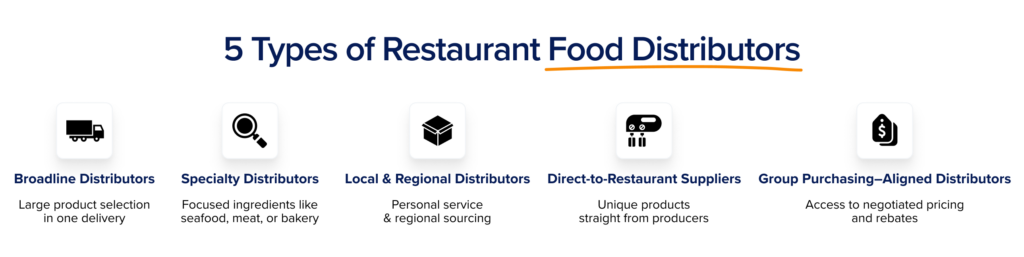
Broadline Distributors
Broadline distributors get a lot of food and non-food items from one place. A lot of restaurants use broadline distributors because they make ordering and delivery easier by shipping a lot of different types of products in one box.
These distributors usually have thousands of SKUs, including proteins, fruits and vegetables, paper goods, and cleaning supplies.
Specialty Distributors
Specialty distributors only deal with certain types of products. These could be distributors of seafood, specialty meats, baked goods, or produce.
When restaurants need high-end ingredients or niche products that broadline distributors might not have, they often work with specialty distributors.
Local and Regional Distributors
Local and regional distributors only work in certain areas. Many restaurants like working with these partners because they can offer more personalized service and may be able to get local ingredients that go with seasonal menus.
These distributors might also let you order and have things delivered at times that work better for you.
Direct-to-Restaurant Suppliers
Some makers and producers sell directly to restaurants. This method can be useful for hard-to-find specialty ingredients or one-of-a-kind menu items that are hard to get from regular distributors.
But running a restaurant with more than one direct supplier can make things more complicated.
Group Purchasing–Aligned Distributors
Distributors that work with group purchasing networks negotiate prices and contract terms for restaurants.
Restaurants can get negotiated prices, chances to get rebates, and distributor networks that they might not be able to get on their own through these partnerships.
Key Factors to Consider When Choosing a Food Distributor
Comparing price lists is not enough to choose a distributor. Operators should think about how well the distributor helps with their menu, kitchen workflow, and long-term growth.
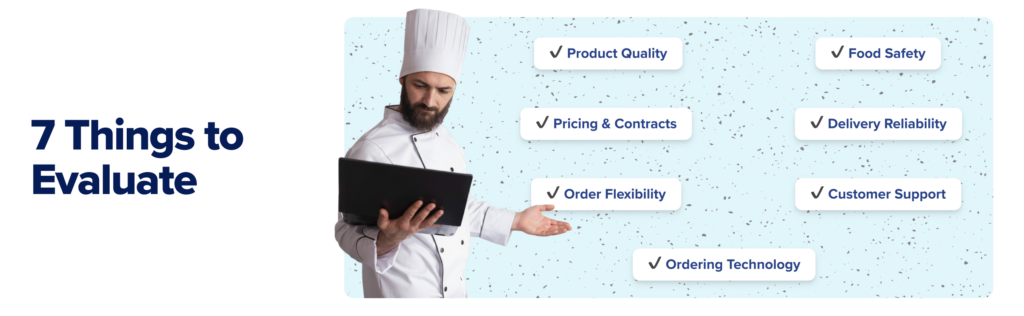
Product Quality and Menu Compatibility
Your distributor should be able to always get you the ingredients your menu needs. That includes standards of quality, product details, and availability.
If a distributor often changes products or has trouble getting key ingredients, it can make things difficult in the kitchen and for guests.
Pricing, Contracts, and Payment Terms
The prices that restaurant food distributors charge can be very different. Operators should carefully read over contracts, discount programs, and payment terms.
It’s also important to know that prices can change based on market conditions or how many products are available.
Delivery Reliability and Service Area
Consistency in delivery is important. Restaurants need deliveries that are on time to keep their stock levels steady and avoid running out of food.
Check to see if the distributor’s delivery schedule works with how you order and how much space you have to store things.
Minimum Order Requirements and Flexibility
Some distributors have minimum order amounts. These rules can be hard for smaller restaurants or those with limited storage space to follow.
Find distributors that let you place orders in a way that works with the speed of your restaurant.
Food Safety Standards and Certifications
Food safety should always come first. Reputable restaurant food distributors follow strict rules for food safety and keep up with industry certifications that show they meet all regulatory standards.
These safety measures keep your guests and your brand safe.
Ordering Technology and Inventory Visibility
Many distributors now have online ordering systems that let restaurants keep track of orders, see price changes, and check on the availability of products.
Operators can make better decisions about their inventory with technology tools that give them better visibility into their purchases.
Customer Support and Account Management
Responsive support makes a big difference when problems come up. Strong distributors have dedicated account representatives who can help you solve problems quickly, suggest products, and give you advice on how to run your business.
How to Compare Restaurant Food Distributors
When evaluating potential distributors, it helps to compare them across a few key operational areas.
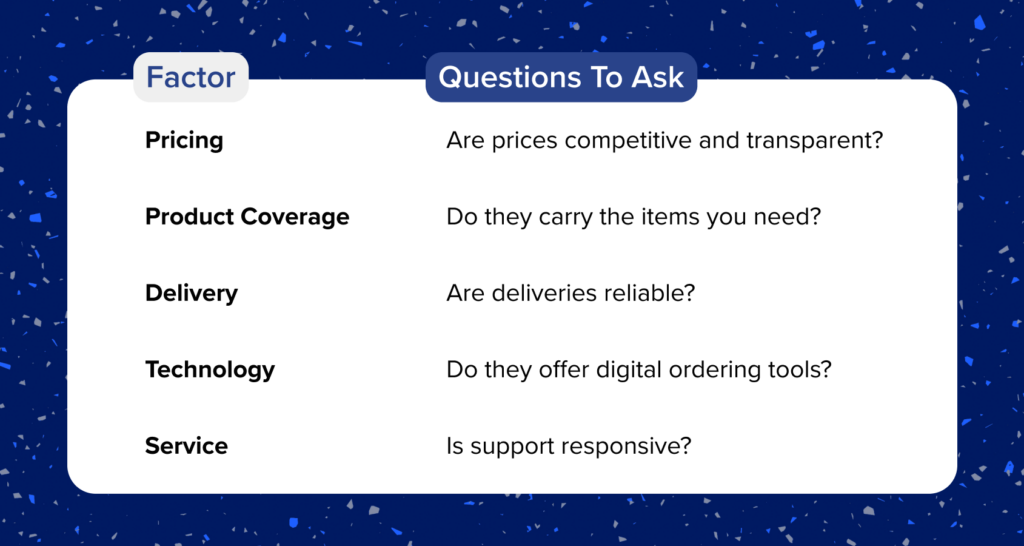
Pricing and Contract Terms
Look over the different types of contracts, pricing levels, and any rebate programs that the distributor offers. It is important to be open, especially when prices go up or down.
Product Quality and Category Coverage
Check to see if the distributor can get you all the ingredients you need for your menu. Selection is just as important as consistency.
Delivery Reliability and Service Levels
When supply problems happen, ask about delivery times, service areas, and backup plans.
Ordering, Reporting, and Technology Tools
Many modern distributors offer digital tools that make ordering easier and give you information about how people buy things.
Supplier Performance and Accountability
The best distributors keep track of performance metrics and work to make service better over time.
Restaurant Food Distributor Pricing: What Restaurants Should Expect
There are a number of things that affect the prices of restaurant food distributors, such as the amount of food they buy, the variety of foods they sell, their location, and their contracts with suppliers.
Operators may come across pricing structures like this:
- Pricing models that add costs
- Pricing contracts through agreements made through negotiation
- Discounts based on volume
- Discounts or programs that give people a reason to buy
Restaurants need to keep an eye on their purchasing data and check distributor prices regularly because food prices change often because of supply and market conditions.
Local vs National Restaurant Food Distributors
Restaurant operators often end up choosing between local distributors and large national ones. Both can work well, depending on how your restaurant runs.
National distributors are usually the easiest way to get a wide range of products in one delivery. They carry thousands of items and have the infrastructure to deliver consistently across large service areas.
Local distributors tend to feel more personal. You may deal with the same rep regularly, and they’re often quicker to help with special requests or last-minute product needs. Many also source regional ingredients, which can be helpful if your menu leans into seasonal or local products.
A lot of restaurants don’t stick with just one type. It’s pretty common to rely on a national distributor for everyday staples while bringing in local suppliers for specialty items.
How the Right Restaurant Food Distributor Improves Profitability
Most operators think of a food distributor as simply the company that drops off ingredients. In reality, the relationship affects your costs more than you might expect.
When deliveries are consistent and products show up exactly as ordered, kitchens run smoother. There’s less scrambling to find substitutes and fewer surprises during prep.
Reliable distributors also make inventory easier to manage. When you know when products will arrive and what quality to expect, it’s easier to plan orders and avoid overbuying.
Those small things add up over time. Less waste, fewer ordering issues, and more predictable pricing can quietly help protect your margins.
Common Mistakes Restaurants Make When Choosing Food Distributors
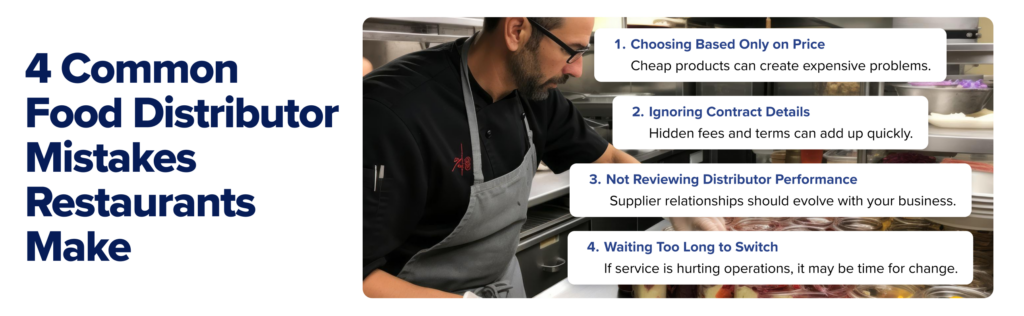
Choosing a restaurant food distributor can feel straightforward at first. But a few common mistakes can end up costing restaurants time, money, and a lot of frustration down the road.
Being aware of these pitfalls can help operators make a smarter decision from the start.
Choosing Based on Price Alone
When you own a restaurant, the price is obviously important. But operators don’t always get what they want when they choose a distributor based only on the lowest price.
Sometimes, lower prices mean that the quality of the products isn’t always the same, deliveries aren’t always on time, or there aren’t always enough products in stock. Those problems often make your menu or service worse, and the savings go away quickly.
A good distributor should offer prices that are competitive, but dependability and product consistency are just as important.
Overlooking Contract Terms and Hidden Fees
Many operators don’t know that distributor agreements can have more information than they think.
There are sometimes extra costs, like delivery fees, fuel surcharges, or minimum order amounts, in the fine print. If those terms aren’t clear from the start, they can surprise restaurants later.
Before signing a contract with a distributor, you should carefully read the terms and ask about any fees that aren’t clear right away.
Failing to Review Distributor Performance Regularly
A distributor relationship shouldn’t run on autopilot forever, even if it starts off strong.
Things change in the market. The needs of the menu change. Prices change. Restaurants can make sure they’re still getting the service and value they expect by checking on their distributors from time to time.
Regular check-ins can also lead to better service or better pricing programs.
Sticking with the Wrong Distributor for Too Long
Restaurant teams are busy, and switching distributors can feel like a hassle. Because of that, some operators stick with a distributor even when the relationship clearly isn’t working anymore.
If deliveries are constantly late, products are inconsistent, or pricing isn’t competitive, it may be time to explore other options.
The right distributor should make operations easier, not harder.
How Dining Alliance Helps Restaurants Choose the Best Food Distributors
Finding the right restaurant food distributor isn’t always simple. With so many options, pricing structures, and service models, it can be difficult for operators to know where to start.
That’s where Dining Alliance comes in.
Dining Alliance connects restaurants with a large network of trusted food distributors while helping operators access negotiated pricing and purchasing programs. Instead of navigating supplier relationships on your own, restaurants can tap into a system designed to make purchasing easier and more cost-effective.
Members also gain access to tools and insights that help them track purchases, understand pricing trends, and identify opportunities to improve their buying strategy.
For many independent restaurants, that kind of support can make a big difference when managing food costs and supplier relationships.