

If you’ve ever looked at your food costs and thought, there has to be a better way to buy this stuff, you’re not alone.
Most independent restaurant operators don’t have the purchasing volume of a national chain. That can make it harder to negotiate pricing, qualify for rebates, or get access to supplier programs that larger brands take advantage of every day.
That’s one of the reasons restaurant buying groups and GPOs have become so popular. They give independent operators a way to tap into the buying power of a much larger network without giving up control of their business.
The challenge is that the terms “buying group” and “GPO” get thrown around a lot, and they’re often used as if they mean the exact same thing.
They have a lot in common, but there are a few differences worth understanding before you decide which option makes the most sense for your restaurant.
Whether you’re looking to lower food costs, earn rebates, or simply get more value out of your purchases, here’s what you need to know.
Buying Group vs GPO: Key Differences at a Glance
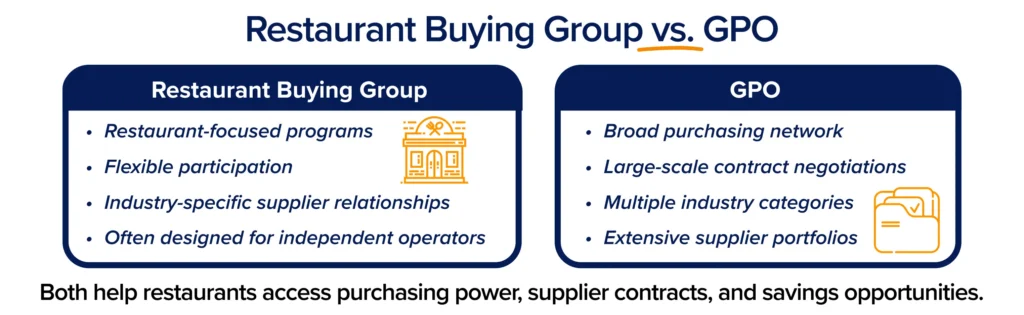
If you’re researching restaurant buying groups and GPOs, you’ll quickly notice something: people often use the terms interchangeably.
And honestly, that’s because they share a lot of the same goals. Both are designed to help restaurants get better pricing, earn rebates, and access supplier programs that can be difficult to secure on your own.
Where things start to differ is behind the scenes. Some organizations are built specifically around independent restaurant operators, while others negotiate contracts across a much larger membership base that may span multiple industries.
For most operators, the question isn’t whether something is technically a buying group or a GPO. The bigger question is whether it helps lower costs, delivers meaningful value, and fits the way you already purchase products.
What Is a Group Purchasing Organization (GPO)?
A group purchasing organization, commonly called a GPO, is an organization that negotiates contracts with suppliers on behalf of a large network of members. By combining the purchasing volume of thousands of businesses, a GPO can often secure pricing, rebates, and contract terms that individual restaurants may not be able to negotiate on their own.
GPOs exist in many industries, including foodservice, healthcare, hospitality, and education.
How a Restaurant GPO Works
When a restaurant joins a GPO, it gains access to pre-negotiated supplier contracts. Instead of approaching manufacturers individually, the restaurant can purchase products through participating distributors while taking advantage of pricing and rebate programs already established by the GPO.
For independent operators, this can level the playing field by providing access to purchasing opportunities that are often available only to larger restaurant groups.
Cost Structure and Rebates
Many restaurant GPOs generate revenue through supplier-funded administrative fees rather than charging restaurants directly. In some cases, restaurants may also receive rebates based on qualifying purchases made through contracted suppliers.
The exact rebate structure varies by organization and supplier agreement. Some programs offer monthly rebates, while others provide quarterly or annual payments.
Understanding how rebates are calculated and distributed is an important part of evaluating any purchasing program.
What a GPO Negotiates on Your Behalf
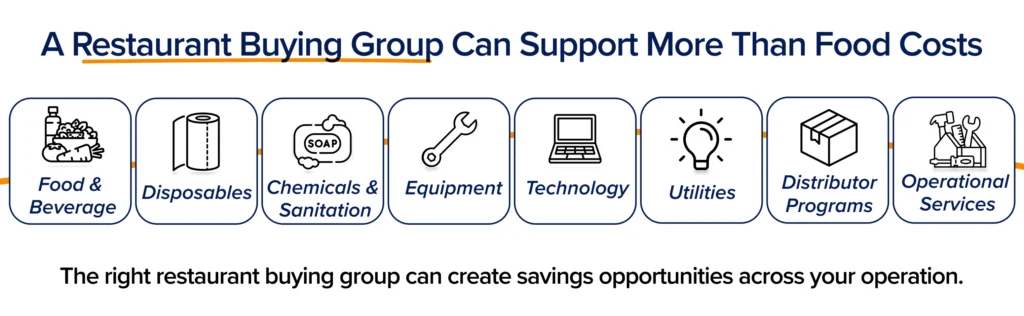
A restaurant GPO may negotiate contracts across a wide range of categories, including:
- Food and beverage products
- Smallwares and kitchen supplies
- Equipment purchases
- Janitorial and sanitation products
- Uniform services
- Technology solutions
- Payment processing
- Facility maintenance services
The goal is to leverage collective purchasing volume to create savings opportunities across multiple areas of restaurant operations.
What Is a Restaurant Buying Group?
A restaurant buying group is an organization that helps restaurant operators combine their purchasing power to secure better pricing, rebates, and supplier agreements.
The primary focus is helping members reduce costs while maintaining flexibility in their purchasing decisions.
Many restaurant buying groups are designed specifically for independent operators who may not have the volume needed to negotiate favorable contracts on their own.
How a Buying Group Works
Members of a restaurant buying group gain access to negotiated supplier programs and purchasing agreements. The buying group works with manufacturers and service providers to create contracts that benefit the collective membership.
Restaurants continue purchasing through their existing distributor relationships in many cases while gaining access to enhanced pricing and rebate opportunities.
This allows operators to improve purchasing performance without significantly changing day-to-day operations.
Membership Fees and Hidden Costs
Every restaurant buying group has a different business model.
Some organizations charge membership fees, enrollment fees, or administrative costs. Others generate revenue through supplier agreements and allow restaurants to participate at little or no direct cost.
Before joining any restaurant buying group, operators should clearly understand:
- Membership requirements
- Program fees
- Contract obligations
- Rebate eligibility
- Termination policies
Transparency is critical when evaluating purchasing programs.
What a Buying Group Negotiates on Your Behalf
A restaurant buying group may negotiate agreements covering:
- Food products
- Beverage programs
- Disposables
- Equipment
- Chemicals and sanitation supplies
- Utility services
- Technology platforms
- Operational services
The exact supplier network varies by organization, which is why it’s important to review available contracts before joining.
Where Restaurant Buying Groups and GPOs Are Similar
Most restaurant owners don’t wake up in the morning wondering whether they need a buying group or a GPO.
They’re wondering why chicken costs more than it did last month. Or why two operators can buy the same product and pay completely different prices.
That’s why both options exist.
While the details vary from organization to organization, most programs are designed to help operators:
- Keep more money in the business through better purchasing programs
- Take advantage of supplier incentives they may not qualify for on their own
- Earn rebates on products they’re already buying
- Spend less time negotiating and more time running the restaurant
- Get additional support when evaluating suppliers and programs
For many operators, the differences between a buying group and a GPO matter less than the end result. If the program helps improve margins without creating extra work, it’s doing its job.
Key Differences Between Buying Groups and GPOs
While restaurant buying groups and GPOs share many similarities, there are some differences in how they operate. Understanding these distinctions can help you determine which model aligns best with your restaurant’s goals, purchasing habits, and growth plans.
Structure and Governance
A traditional GPO is often managed by a centralized organization that negotiates contracts on behalf of its members. Decisions about supplier relationships, contract terms, and program offerings are typically handled by the organization itself.
A restaurant buying group may take a more member-focused approach, with programs and partnerships developed specifically around the needs of restaurant operators. Depending on the organization, members may have greater input into supplier selection and purchasing initiatives.
Membership Criteria and Onboarding
Some GPOs serve multiple industries and may have broader membership requirements. Others focus specifically on foodservice.
A restaurant buying group is usually designed around restaurant operators and may offer a more tailored onboarding experience. Independent restaurants, regional chains, and multi-unit operators can often join quickly without extensive purchasing commitments or minimum volume requirements.
When evaluating either option, ask how long implementation takes and what support is available during the onboarding process.
Contract Negotiation and Supplier Relationships
One of the biggest differences can be the depth of supplier relationships.
Many restaurant buying groups focus heavily on foodservice-specific supplier networks and understand the unique challenges operators face. This often results in contracts that are more relevant to restaurant operations.
Some GPOs may offer a broader contract portfolio that extends beyond foodservice categories. While this can create additional savings opportunities, not every contract may be relevant to a restaurant operator.
The key is evaluating whether the available supplier programs align with your actual purchasing needs.
Member Control and Flexibility
Flexibility matters, especially for independent restaurants that rely on local supplier relationships or unique menu offerings.
Many restaurant buying groups allow members to maintain existing distributor relationships while accessing negotiated pricing and rebate programs. This can make participation feel less restrictive and easier to implement.
Before joining any organization, review purchasing requirements, contract obligations, and any limitations that could affect your operational flexibility.
Industry Specialization and Supplier Network
A restaurant buying group typically focuses exclusively on foodservice and hospitality purchasing.
That specialization can provide access to supplier programs designed specifically for restaurant operations, including food, beverage, equipment, disposables, technology, and operational services.
A broader GPO may offer contracts across multiple industries, which can be beneficial if you’re looking for savings opportunities beyond foodservice purchasing.
Cost Structure and Fees
Not all purchasing organizations operate the same way financially.
Some restaurant buying groups and GPOs charge membership fees, annual dues, or administrative costs. Others generate revenue through supplier partnerships and offer membership at little or no direct cost to operators.
The important question isn’t simply whether there’s a fee. It’s whether the value, rebates, savings opportunities, and support outweigh the cost of participation.
Pros and Cons of GPOs vs Buying Groups
Every restaurant is different. What works for a multi-unit chain may not be the best fit for an independent operator.
Evaluating the advantages and limitations of each model can help narrow your decision.
Advantages and Limitations of GPOs
Advantages:
- Access to large-scale purchasing power
- Broad supplier contract portfolios
- Potential rebate opportunities
- Established contract management processes
- Savings across multiple operational categories
Limitations:
- Some contracts may not be restaurant-specific
- Less flexibility depending on program structure
- Limited personalization in certain organizations
- Supplier networks may vary in relevance to independent operators
Advantages and Limitations of Buying Groups
Advantages:
- Focus on restaurant-specific purchasing needs
- Often designed for independent operators
- Flexible participation models
- Access to industry-focused supplier relationships
- Potential for more personalized support
Limitations:
- Supplier networks may be smaller than some national GPOs
- Program offerings vary by organization
- Savings opportunities depend on purchasing categories and participation levels
- Not all buying groups offer the same level of reporting or technology support
Questions to Ask Before Joining a Buying Group or GPO
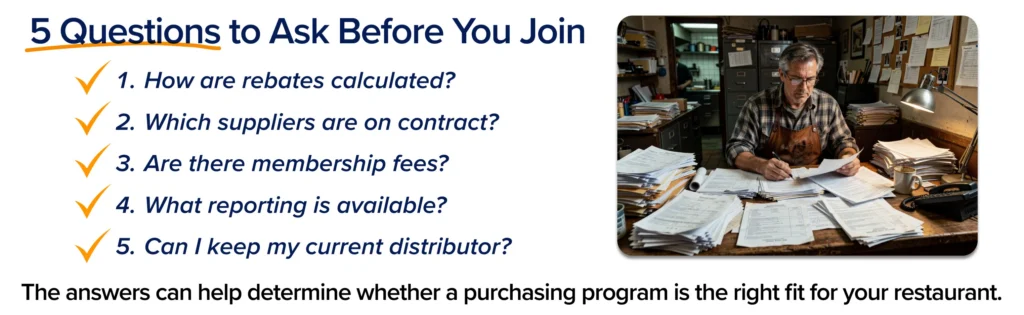
Before joining a restaurant buying group or GPO, take time to evaluate the details. Asking the right questions upfront can help you avoid surprises and ensure the program aligns with your restaurant’s needs.
How Are Rebates Calculated and Paid?
Rebate programs vary significantly between organizations.
Ask how rebates are earned, what purchases qualify, when payments are distributed, and whether there are minimum purchasing requirements. Understanding the process upfront will help you accurately estimate potential savings.
What Are the Contract Length and Exit Terms?
Review any membership agreements carefully.
Some organizations operate with flexible participation terms, while others may require longer commitments. Understanding contract length, renewal policies, and termination requirements can prevent future headaches.
Which Distributors and Suppliers Are Already on Contract?
A purchasing program is only valuable if it includes suppliers you actually use.
Request a list of participating suppliers, manufacturers, and distributors. Compare those contracts against your current purchasing patterns to determine whether the program is a good fit.
What Reporting and Spend Visibility Will I Get?
The best purchasing decisions are driven by data.
Ask whether the organization provides reporting tools, rebate tracking, spend analysis, or purchasing insights. Greater visibility can help identify additional opportunities to improve profitability.
Are There Membership Fees or Hidden Costs?
Always understand the complete financial picture before joining.
Ask about:
- Enrollment fees
- Membership dues
- Administrative fees
- Minimum purchasing requirements
- Contract compliance expectations
Transparency is a good indicator of a trustworthy purchasing partner.
How to Switch From Your Current Distributor Contract?
Many restaurant operators assume they must change distributors to participate in a restaurant buying group or GPO. In reality, that’s often not the case.
Ask how implementation works and whether existing distributor relationships can remain in place. Many organizations are designed to work alongside your current purchasing process, making the transition relatively simple.
How to Choose the Right Option for Your Restaurant
The right choice depends on your operation’s size, purchasing volume, supplier preferences, and long-term goals.
If you’re primarily focused on foodservice purchasing and want access to restaurant-specific supplier programs, a restaurant buying group may be a strong fit.
If you’re looking for a broader range of contracts that extend beyond restaurant operations, a larger GPO may offer additional opportunities.
Rather than focusing solely on labels, evaluate the actual value being delivered. Look closely at supplier contracts, rebate programs, flexibility, support, reporting capabilities, and overall savings potential.
The best restaurant buying group or GPO is the one that helps you reduce costs, simplify purchasing, and improve profitability without creating additional complexity.
Ready to see how a restaurant buying group can help lower costs and strengthen your purchasing strategy? Click here to contact Dining Alliance and learn how independent restaurant operators can access supplier contracts, rebate opportunities, and purchasing programs designed to support long-term success.