


If the phrase “AI-powered recipe optimization” makes you picture robots flipping pancakes or computers telling chefs how to season food… you’re not alone. But in real restaurants, AI isn’t replacing creativity; it’s helping operators solve the everyday challenges that hit the bottom line: tight margins, inconsistent results, rising ingredient costs, and menu items that don’t always perform the way you hoped they would.
For independent restaurants especially, recipe optimization has always been a balancing act. You’re trying to keep guests happy, protect margins, and maintain quality — often without a big culinary or R&D team behind you. That’s where AI steps in as more of a behind-the-scenes helper than a headline act.
When used correctly, AI becomes another tool for refining what you already create, helping you test smarter, cost with more accuracy, and fine-tune recipes without wasting food or time.
Why Modern Recipes Need Smarter Optimization
The old way of recipe development relied on endless kitchen testing, handwritten scaling notes, and eyeballing food costs after the fact. That approach still teaches valuable instincts — but today’s business reality is different.
Ingredient pricing changes weekly. Labor shortages limit how much prep testing teams can do. Consumers are asking for nutrition transparency, dietary options, and consistency across locations — all at once.
Operators don’t need more guesswork. They need clear answers faster.
Smarter recipe optimization means:
- Knowing your real food cost before you roll out a new menu item
- Adjusting portions without sacrificing value perception
- Maintaining flavor consistency across shifts and locations
- Finding ingredient swaps that save money without the guest noticing
AI doesn’t replace kitchen creativity — it strengthens it by providing clearer data to guide decisions.
How AI Makes Recipes Better
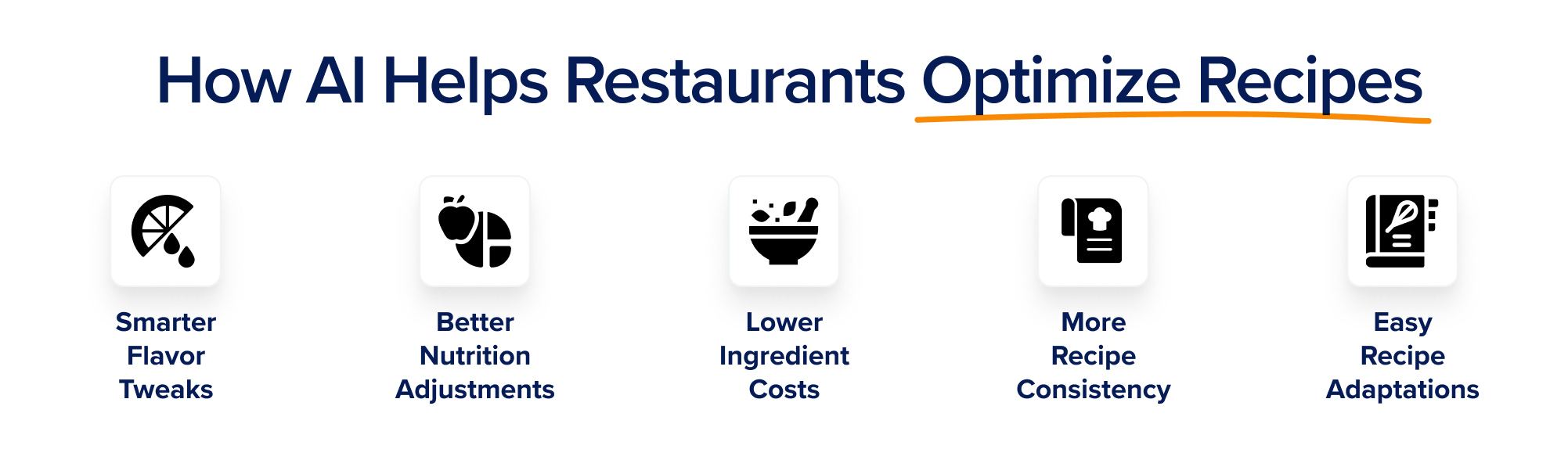
Improve Flavor Without Guesswork
Instead of relying only on trial and error, AI tools analyze thousands of ingredient combinations and flavor interactions to help suggest adjustments that naturally complement your recipes. It’s not telling chefs what to cook — it’s helping explore what solves common flavor issues like flat sauces, overly sweet marinades, or bland grain bowls.
Enhance Nutritional Value
Want to reduce sodium, adjust macros, or offer lighter options without ruining a dish? AI evaluates nutritional breakdowns instantly and suggests ingredient swaps or portion tweaks that maintain taste while improving nutrition profiles.
Reduce Ingredient Costs
One of the biggest wins for operators. AI can pinpoint where small changes deliver savings:
- Identifying high-cost ingredients that offer minimal flavor impact
- Recommending alternative products with similar results
- Suggesting portion adjustments that reduce cost without shrinking perceived value
Maintain Recipe Consistency
AI-powered recipe platforms help standardize measurements, cooking times, and prep methods — eliminating those subtle changes that creep in during busy shifts and slowly impact quality across locations.
Adapt Recipes for Different Needs
Need to offer gluten-free, dairy-free, or vegetarian versions? AI makes things easier by showing chefs how to change things up without changing the texture or taste. This way, chefs don’t have to start over every time they want to make a new dish.
How AI Breaks Down and Refines Recipes
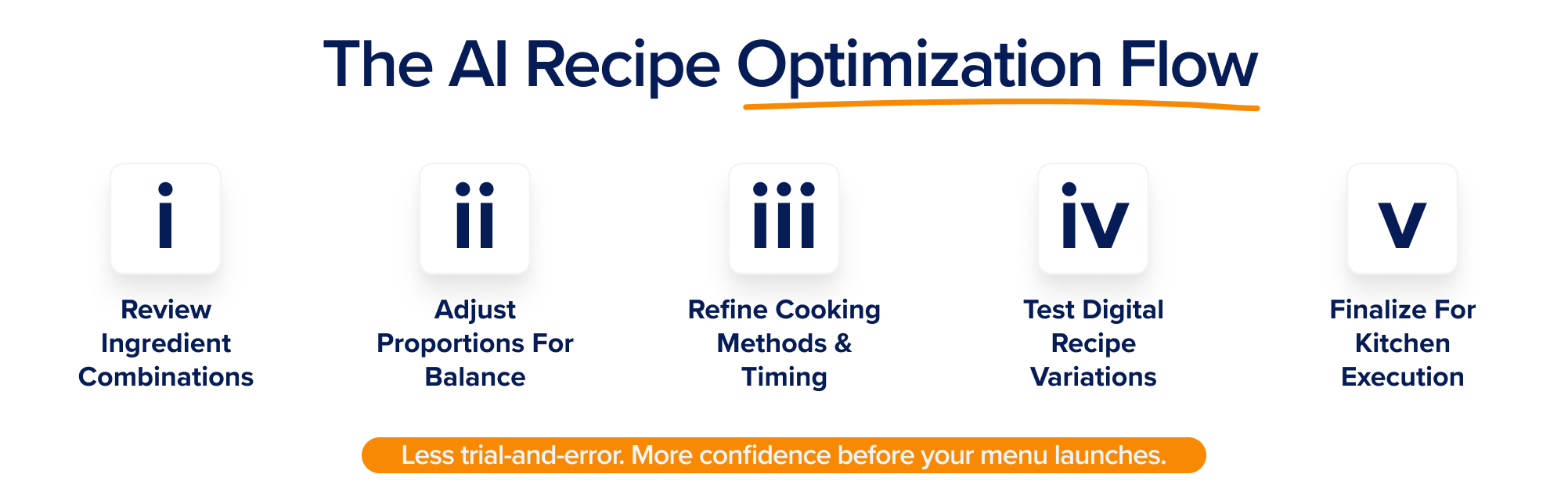
Analyze Ingredient Combinations
AI looks at how ingredients work together, not just how they taste, but also how they cook, feel, and look. This makes sure that your recipes work well in a real kitchen.
Adjust Proportions for Better Results
Rather than blindly re-testing recipes, AI proposes proportion changes based on actual ingredient impact, making dialing in final versions faster and more reliable.
Improve Cooking Techniques and Timing
AI tools look at how different cooking methods affect results, like whether something tastes better when it’s roasted or grilled, or how timing affects moisture retention and texture.
Test Multiple Variations Digitally
Instead of making ten real trial batches, operators can run dozens of digital simulations first. This helps them narrow down their options before they go into the kitchen, which saves time and money.
How AI Enhances Taste, Texture, and Balance
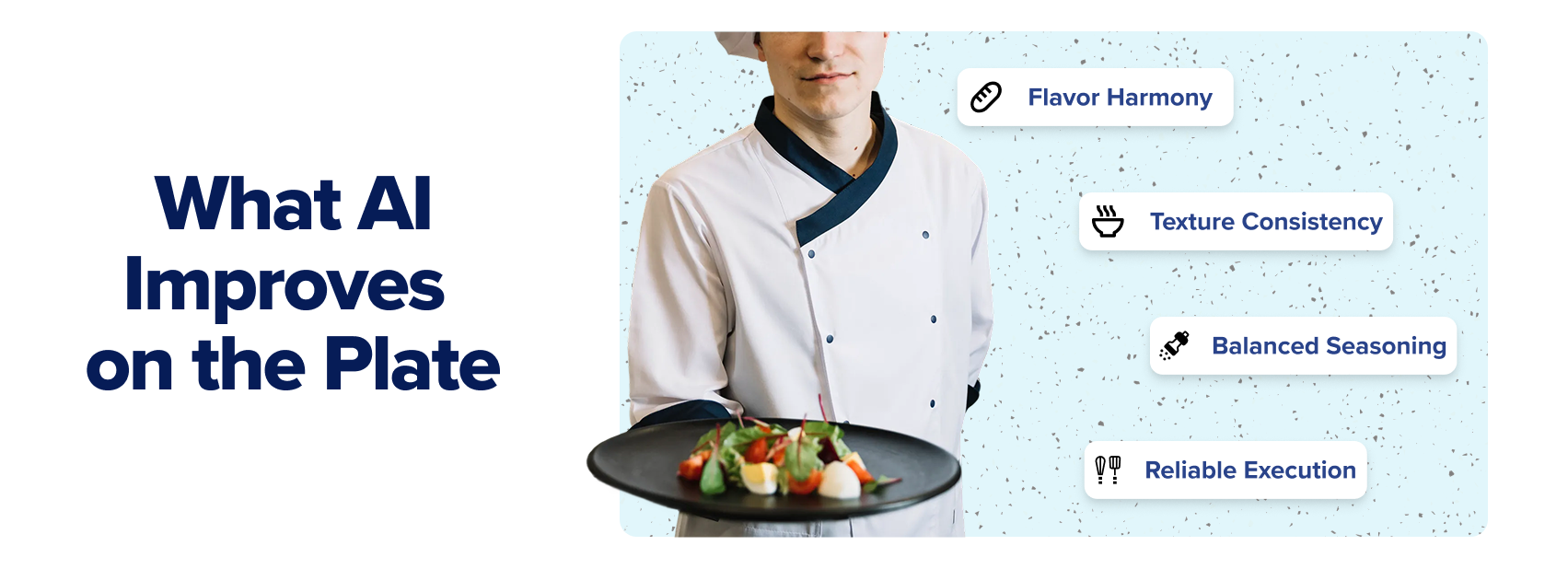
Predict Flavor Harmony
AI predicts combinations that work naturally together — helping avoid clashes or one-note flavor profiles.
Improve Mouthfeel and Texture
It considers moisture content, fat ratios, and binding interactions to help achieve consistent textures — whether it’s creamy soups, crispy coatings, or tender proteins.
Eliminate Overpowering Ingredients
AI flags ingredients that dominate recipes unnecessarily, allowing subtle rebalancing so flavors complement instead of compete.
Create More Balanced Profiles
Final recipes benefit from smoother transitions between sweet, salty, acidic, and savory tones — the small details that elevate food from “good” to “craveable.”
Popular AI Tools for Recipe Optimization
Most operators won’t use “stand-alone AI recipe robots.” Instead, these capabilities are increasingly built into:
- Recipe costing platforms
- Nutrition analysis tools
- Menu engineering software
- Kitchen and inventory management systems
These tools combine data on ingredient performance, nutrition, prep time, and cost to surface smarter recipe decisions in one place.
Challenges in AI-Based Recipe Optimization
Loss of Creative Control
Some chefs fear AI limits creativity. But the best operators use AI as a guide — not a gatekeeper. Human creativity remains the final decision-maker.
Over-Reliance on Data
Data doesn’t replace taste testing. AI narrows choices — kitchens still finalize recipes through hands-on cooking.
Flavor Prediction Limitations
AI offers strong recommendations, but flavor perception remains subjective. Final tasting always matters.
Learning Curve for New Users
Like any tech platform, adopting AI tools takes training — but modern interfaces are increasingly designed for operators, not data scientists.
How to Start Optimizing Recipes Using AI
Understand What Needs Improvement
Pinpoint the problem:
- Is food cost too high?
- Are guests inconsistent on favorites?
- Is prep too labor-intensive?
Set Goals for Taste, Cost, or Nutrition
Be specific. Better margins? Cleaner ingredient labels? Improved consistency?
Let AI Review Your Recipe
Use platforms that analyze recipes across cost, nutrition, and flavor interactions.
Explore Suggested Changes
Review ingredient swaps, portion tweaks, or prep adjustments.
Compare Different Recipe Variations
Test two or three options digitally to find the strongest performers.
Test Recipes in Real Conditions
Cook at scale during actual service — not only small batch tastings.
Finalize the Recipe with Your Own Touch
No algorithm replaces the chef’s palate. Use AI insights — then trust your instincts to complete the dish.
Future of AI Recipe Optimization
AI adoption will continue accelerating — particularly for independents who don’t have in-house culinary R&D teams. The biggest benefit won’t be creativity replacement — it will be leveling the playing field, allowing smaller operators access to the same testing power as national brands.
Recipe optimization will become faster, smarter, and more cost-efficient — helping independent restaurants compete without sacrificing quality or identity.
Frequently Asked Questions
How does AI optimize food recipes?
It analyzes ingredient data, nutrition, cooking performance, and costs to suggest recipe refinements that improve consistency, taste, and margins.
Is AI recipe optimization suitable for restaurants?
Absolutely — especially independents who need speed, efficiency, and cost control without building large culinary development teams.
Can AI help reduce ingredient costs?
Yes. AI identifies high-cost ingredients, portion inefficiencies, and substitution opportunities that preserve quality while improving margins.
Are AI-optimized recipes safe to use?
Yes. AI simply assists analysis and recommendations. Final decisions and food safety accountability always remain with operators and chefs.
Which AI tools are best for recipe optimization?
Most value comes from integrated restaurant platforms that combine recipe costing, nutrition tracking, menu analysis, and inventory management features.
Will AI replace chefs in recipe creation?
No. AI supports creativity — it doesn’t replace it. Taste, innovation, and guest connection remain human-driven.
Ready to turn recipe insights into smarter purchasing decisions? Click here or fill out the form below to see how Dining Alliance connects independent operators to the pricing power, supplier access, and data tools that help great recipes deliver real profits.
