


Running a restaurant kitchen isn’t just about cooking great food. It’s about juggling people, processes, costs, and timing—all while keeping quality consistent and guests happy. If you’ve ever felt like you’re putting out fires more than running a kitchen, you’re not alone.
The good news? Once you understand how to manage a restaurant kitchen with the right systems in place, everything starts to run smoother—from prep to plate to profit.
What is Restaurant Kitchen Management?
Restaurant kitchen management is everything that happens behind the line to keep your operation running efficiently. It includes managing staff, controlling inventory, maintaining food safety, and making sure every dish goes out the way it’s supposed to.
It’s part leadership, part logistics, and part problem-solving. And on most days, it’s all three at once.
Why Effective Kitchen Management Is Critical for Restaurant Success
Protect Profit Margins and Food Costs
Margins are tight. One over-portion here, a little waste there—it adds up fast. Knowing how to manage a restaurant kitchen means having visibility into what you’re spending and where you can tighten things up without sacrificing quality.
Ensure Food Consistency and Speed of Service
Guests don’t care if you’re short-staffed or your delivery came in late. They expect the same dish, the same way, every time. Strong kitchen management keeps your team aligned so execution stays consistent—even during the rush.
Improve Staff Retention and Team Morale
There is a lot of pressure in kitchens. When things are out of control, people leave. Your team will stay interested if you set clear goals, give them structured training, and make sure everyone has a fair schedule.
Pass Health Inspections and Compliance Checks
No operator wants to have to deal with a failed inspection. Having good systems in place for food safety, storage, and cleanliness means that following the rules is just part of your daily life, not something you have to do when inspectors come.
Core Responsibilities of Managing a Restaurant Kitchen
Overseeing Daily Kitchen Operations
The small things that happen every day, like making prep lists, checking the line, and keeping the service flow going, are important. A kitchen is running well before the first ticket goes through the printer.
Managing Kitchen Staff and Shifts
You’re not just filling shifts; you’re also putting together a team that works well together. That means making sure that every schedule has a good mix of skills, strengths, and personalities.
Controlling Food Costs and Inventory
Counting the items on the shelf is only one part of inventory. It’s knowing how to use something, keeping track of changes, and making better choices about what to buy.
Maintaining Food Safety and Compliance
You need to keep track of the temperature, set standards for storage, and make cleaning schedules. They are what keeps a kitchen safe and reliable.
How to Manage a Restaurant Kitchen: Proven Systems That Work
Design an Efficient Kitchen Layout and Workflow
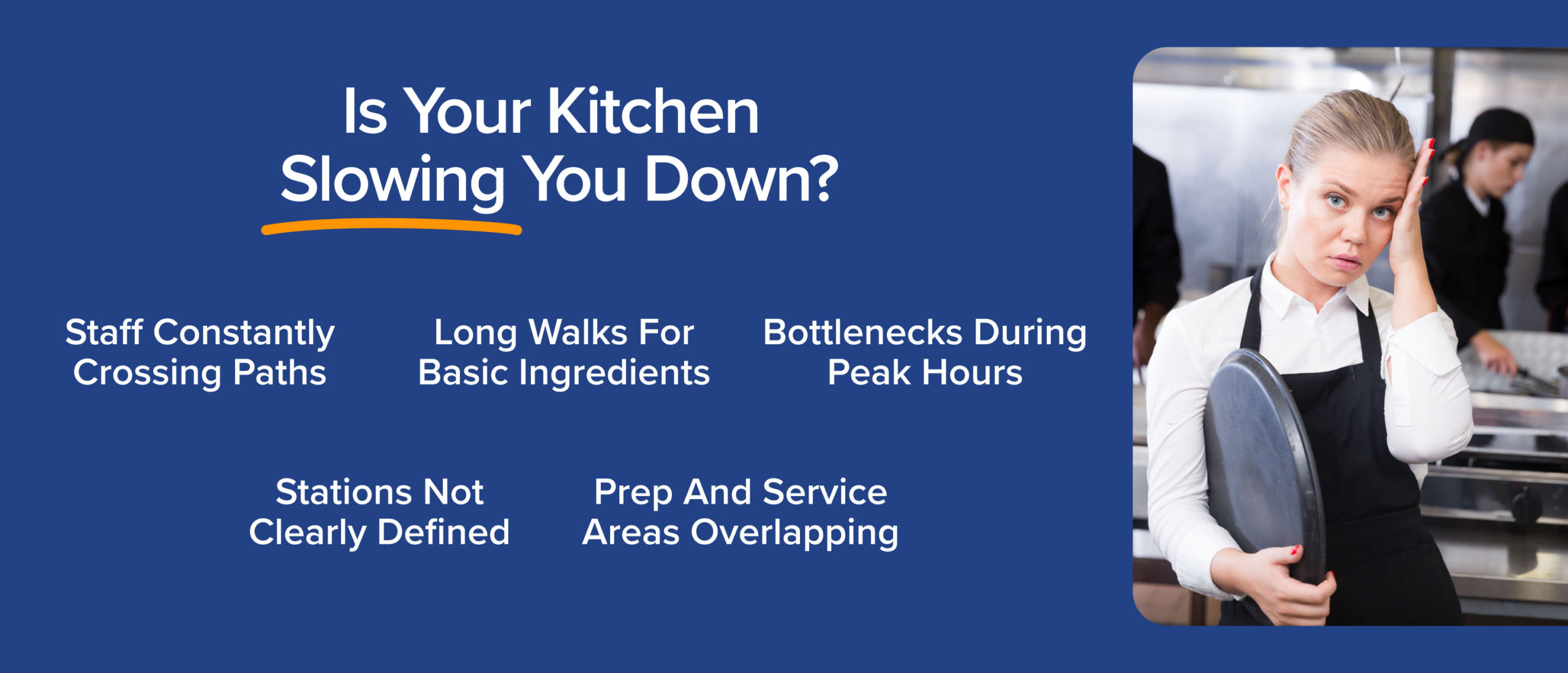
If your team is constantly bumping into each other or walking across the kitchen for basic items, you’ve got a workflow problem.
Think about movement. Your layout should support speed, not slow it down.
Create Standard Operating Procedures (SOPs)
SOPs make it easy to know what to do every day. You should write down and be able to repeat everything, from how to make a sauce to how to shut down a station.
Improve Communication Between BOH and FOH
Half of the problems that happen during service are due to poor communication. Things run smoothly when there are clear callouts, correct tickets, and a strong link between the front and back of the house.
Use Kitchen Technology to Reduce Errors and Delays
Technology isn’t meant to take the place of your team; it’s meant to help them. Tools that keep track of stock, automate ordering, or flag pricing problems can save you hours of work and keep you from making expensive mistakes.
Kitchen Inventory Management and Cost Control Strategies
Inventory Tracking and Stock Accuracy Systems
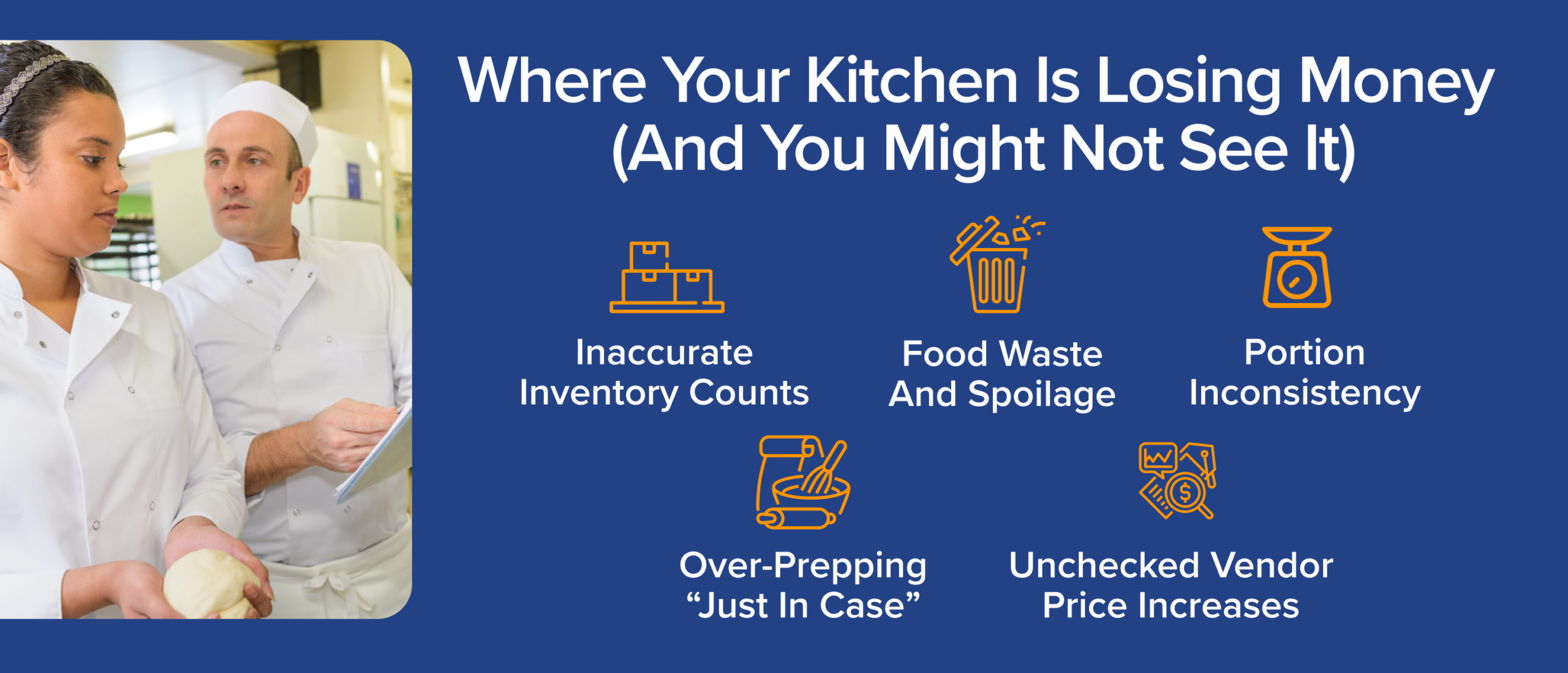
If your inventory is even a little off, it throws everything off. Suddenly you think you have enough chicken for the weekend… and you don’t.
The fix isn’t complicated, it’s consistency. Count the same way, on the same days, with the same process every time. Keep it simple so your team actually sticks to it. Fancy systems don’t matter if no one uses them correctly.
Waste Reduction and Yield Control Practices
This is where money quietly disappears. A little extra trim here, a pan that gets tossed there, over-prepping “just in case”… it adds up fast.
Start paying attention to what’s actually getting thrown out. Not guessing—actually looking. Then train your team on how to use products fully and prep with a plan instead of a habit.
Purchasing Controls and Vendor Discipline
Every operator has had that moment where an invoice looks… off. And if you’re not checking, you’re probably overpaying more often than you think.
Knowing how to manage a restaurant kitchen also means keeping your vendors in check. Stick to your contracts, question price jumps, and don’t be afraid to push back. The small stuff is where the big dollars sneak in.
Cost Monitoring and Performance Reporting
If you’re only looking at numbers once a month, you’re already behind.
Watch your food cost, track what’s moving (and what’s not), and keep an eye on price changes. You don’t need a complicated system, but you do need to actually look at the data regularly.
That’s how you stop reacting to problems and start catching them early.
How to Manage Kitchen Staff Like a Professional Chef-Manager
Hire the Right Kitchen Team
You can teach someone how to cook your menu. You can’t teach them how to hustle or care about the job.
When you’re building your team, look beyond experience. Do they show up on time? Can they take feedback without getting defensive? Do they handle pressure without shutting down?
A reliable team that works well together will always outperform a group of talented people who don’t.
Train for Speed, Safety, and Consistency
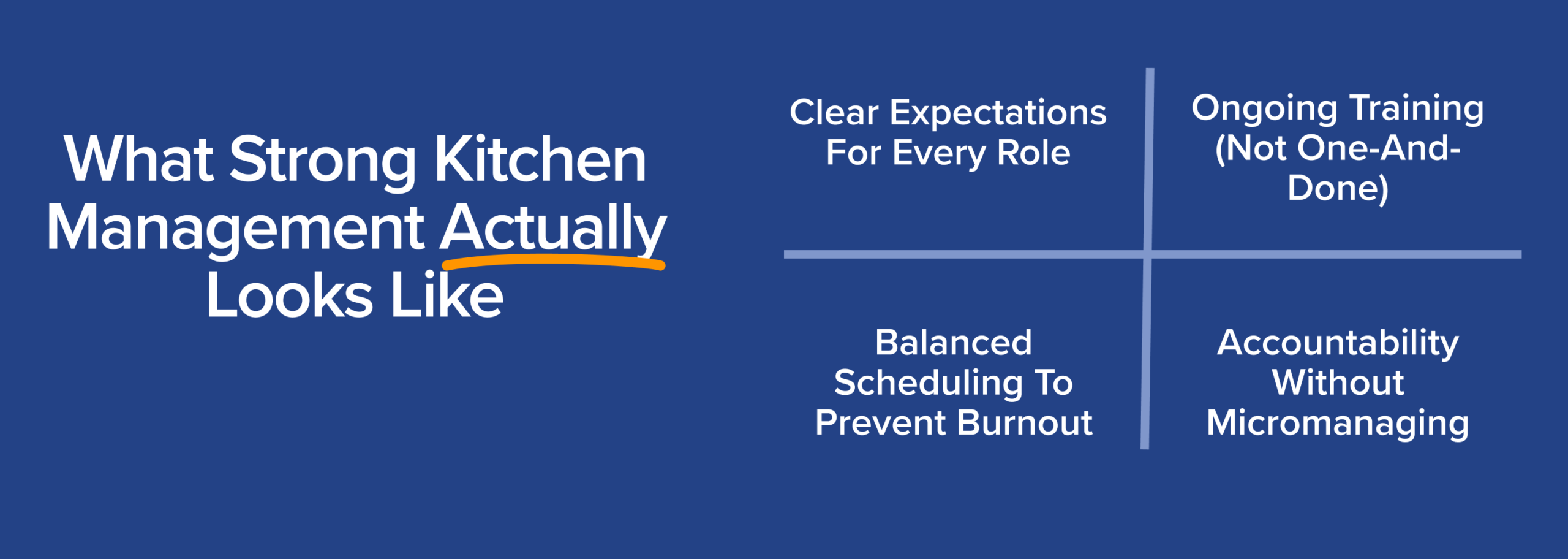
Training isn’t something you check off once and move on from. It’s constant.
When the kitchen gets busy, people fall back on habits. So your job is to make sure those habits are the right ones. Walk through processes, reinforce standards, and don’t assume everyone remembers what you showed them last month.
Consistency doesn’t happen by accident.
Schedule to Prevent Burnout
If your team is constantly exhausted, you’ll see it in the food and in the turnover.
Back-to-back doubles, clopens, short-staffed shifts—it catches up fast. Spread out your strongest people, build schedules that actually make sense, and give your team a chance to recover.
A well-rested kitchen runs better. It’s that simple.
Build Accountability Without Micromanagement
Nobody wants someone hovering over them all shift.
Set clear expectations, make sure everyone knows what “right” looks like, and then let them do their job. Step in when needed, coach when something’s off, but don’t nitpick every move.
If you’ve trained your team well, you shouldn’t have to manage every second.
Kitchen Equipment Management and Preventive Maintenance
Equipment problems never happen at a convenient time. It’s always mid-rush, when you’re already in the weeds.
A fryer goes down, a cooler can’t hold temp, and now you’re scrambling to adjust on the fly.
Stay ahead of it. Regular cleaning, routine checks, and fixing small issues early can save you from much bigger headaches later. It’s not the most exciting part of how to manage a restaurant kitchen, but it’s one of the most important.
Menu Planning and Quality Control in the Kitchen
Your menu should make your kitchen’s life easier, not harder.
If you’ve got too many items or too many ingredients that only get used once, it slows everything down and creates more opportunities for mistakes. Keep it focused. Build a menu your team can execute well, even during a rush.
And don’t skip quality checks. Taste the food. Look at the plates. Make sure what’s going out actually meets your standards every time.
Common Kitchen Management Mistakes and How to Avoid Them
Even if you’ve got a solid system in place, a few small habits can quietly throw everything off. Here are some of the most common mistakes—and what to do instead
Poor Inventory Tracking
Skipping counts or rushing through them might feel like you’re saving time, but it usually creates bigger problems later.
If your numbers aren’t accurate, your ordering won’t be either—and that’s when you end up short in the middle of a shift or overstocked with product you don’t need.
Overcomplicated Menus
More items don’t always mean more sales.
What they usually mean is slower ticket times, more waste, and a kitchen that struggles to keep up when things get busy. A tighter menu is almost always easier to execute well.
Inadequate Staff Training
If your team isn’t properly trained, they’ll fill in the gaps themselves—and not always the way you want.
That’s when consistency slips, safety standards get missed, and small mistakes start adding up. Taking the time to train upfront saves a lot of headaches later.
Ignoring Kitchen Performance Data
Your numbers are telling you what’s happening—you just have to look at them.
If food costs are creeping up or certain items aren’t moving, there’s always a reason. The earlier you catch it, the easier it is to fix before it turns into a bigger issue.
Final Thoughts
Figuring out how to manage a restaurant kitchen isn’t about doing everything yourself. It’s about building systems your team can rely on every day.
When your staff is trained, your processes are consistent, and you’re paying attention to what’s actually happening in the kitchen, things start to run a whole lot smoother.
Click here to see how Dining Alliance can help you run a more efficient, profitable kitchen.
Frequently Asked Questions
What are the key responsibilities of a restaurant kitchen manager?
Honestly, it’s a little bit of everything. You’re making sure the kitchen runs smoothly day to day—people show up, prep gets done, food goes out right, and nothing falls through the cracks.
You’re also watching costs, keeping inventory in line, and making sure your team is following food safety standards without cutting corners.
How do you control food costs in a restaurant kitchen?
There’s no one magic fix—it’s a bunch of small things done consistently.
Keeping your inventory accurate, not over-prepping, watching portion sizes, and actually paying attention to what you’re being charged all make a difference. It’s the day-to-day discipline that keeps costs from creeping up.
How do you manage kitchen staff effectively?
It really comes down to having the right people and not overcomplicating things.
Hire folks who can handle the pace, train them the right way, and be clear about what you expect. After that, it’s about trusting them to do their job while still stepping in when something’s off.
What systems help run a restaurant kitchen smoothly?
The stuff that works is usually pretty simple.
Clear processes, consistent inventory routines, good communication between front and back of house, and actually checking your numbers regularly. When those are in place, things don’t feel as chaotic.
How can technology improve kitchen management?
It mostly helps by giving you visibility you didn’t have before.
Instead of guessing, you can see what you’re spending, what’s being used, and where things might be off. It also cuts down on a lot of manual work, which your team definitely doesn’t need more of.