

Walk into almost any restaurant kitchen in 2026 and you’ll hear the same conversations happening, sometimes before the first ticket even prints.
A delivery shows up late. A case price is higher than last week, again. A product that’s been on the menu for years suddenly isn’t available, so the team is scrambling to find a substitute that won’t throw off prep, portions, or guest expectations.
That’s food sourcing in real life.
It’s not a theory or a back-office task. It’s the day-to-day reality of keeping a kitchen stocked, a menu consistent, and costs under control while everything around you keeps shifting. Pricing moves faster. Supply chains are tighter. Guests notice when something changes, even if they can’t quite put their finger on why.
In 2026, restaurants aren’t just sourcing food. They’re managing risk, protecting margins, and making strategic decisions about where their ingredients come from and how dependable those sources really are.
This guide breaks down how food sourcing works today, why it plays such a critical role in restaurant success, and what operators can do to build a sourcing approach that’s steady, flexible, and built for the pressure kitchens face right now.
What Is Food Sourcing?
Ask ten operators what food sourcing means and you’ll get ten slightly different answers.
For some, it’s who they order from.
For others, it’s how they keep prices from creeping up month after month.
For many, it’s the behind-the-scenes work that determines whether a menu stays intact or needs constant adjustment.
At its core, food sourcing is how restaurants decide where their ingredients come from, how they’re purchased, and how reliable those sources really are. That includes choosing suppliers, navigating pricing structures, managing contracts, and making sure the same products show up the same way, week after week.
In today’s environment, food sourcing isn’t a one-time decision. It’s an ongoing process that connects the menu, supplier relationships, pricing discipline, and supply chain stability. When those pieces work together, restaurants gain consistency and control. When they don’t, the cracks show fast.
Why Food Sourcing Matters for Restaurants
Food sourcing decisions don’t live in a spreadsheet. They show up on the line, on invoices, and sometimes right in front of guests.
When sourcing is thoughtful and structured, kitchens feel predictable. When it isn’t, teams spend a lot of time reacting.
Food Quality and Menu Consistency
A regular orders their favorite dish and notices something’s off. The portion looks smaller. The flavor isn’t quite right. The garnish changed.
Often, that’s not a recipe issue. It’s a sourcing issue.
Inconsistent suppliers or last-minute substitutions can quietly undermine menu consistency. Reliable food sourcing helps restaurants stick to the same specs, the same yields, and the same results, even when availability tightens.
Cost Control and Margin Protection
Food costs rarely spike all at once. They creep.
One item costs a little more this week. Another increases next month. A rebate disappears quietly. Over time, margins take the hit.
Without a clear sourcing strategy, operators may not realize they’re paying different prices for the same product or missing opportunities to offset rising costs. Smarter food sourcing brings those details into focus before they become problems.
Supply Reliability and Risk Reduction
Anyone who’s had to 86 a menu item mid-shift knows how disruptive supply issues can be.
Weather events, production slowdowns, labor shortages, and transportation delays all affect what shows up at the back door. A resilient sourcing approach includes alternatives, secondary suppliers, and visibility into where risk exists so teams aren’t scrambling when something falls through.
Sustainability and Brand Reputation
Sustainability doesn’t look the same for every restaurant. For some, it’s sourcing closer to home. For others, it’s reducing waste or choosing partners with responsible practices.
Food sourcing plays a quiet but important role here. The right suppliers can help operators balance sustainability goals with cost realities instead of forcing a trade-off between the two.
Types of Food Sourcing Models
Most restaurants don’t use just one way to get their food. They use a mix of methods depending on the menu, the number of customers, and how complicated the business is.
Local and Regional Food Sourcing
Local and regional sourcing can support seasonal menus, freshness, and community connections. It works especially well for produce and specialty items, though availability and pricing can shift quickly depending on the season.
National and Broadline Distributors
Broadline distributors offer convenience and scale. They’re often the backbone of restaurant sourcing, especially for staples. Without additional oversight, though, pricing and product alternatives can be harder to compare.
Specialty and Niche Suppliers
These suppliers bring differentiation. Whether it’s value-added proteins, specialty sauces, or unique ingredients, niche suppliers help menus stand out, but they require tighter coordination to avoid complexity.
Direct-From-Producer and Farm Sourcing
Sourcing directly from producers increases transparency and control but also adds logistical responsibility. It works best when restaurants have the time and systems to manage it consistently.
Contract and Private-Label Sourcing
Contract and private-label programs help lock in pricing, standardize products, and support consistency across locations. These models are especially valuable for restaurants focused on long-term cost control.
How Restaurants Source Food Effectively
You don’t get strong food sourcing by chance. It is built one step at a time.
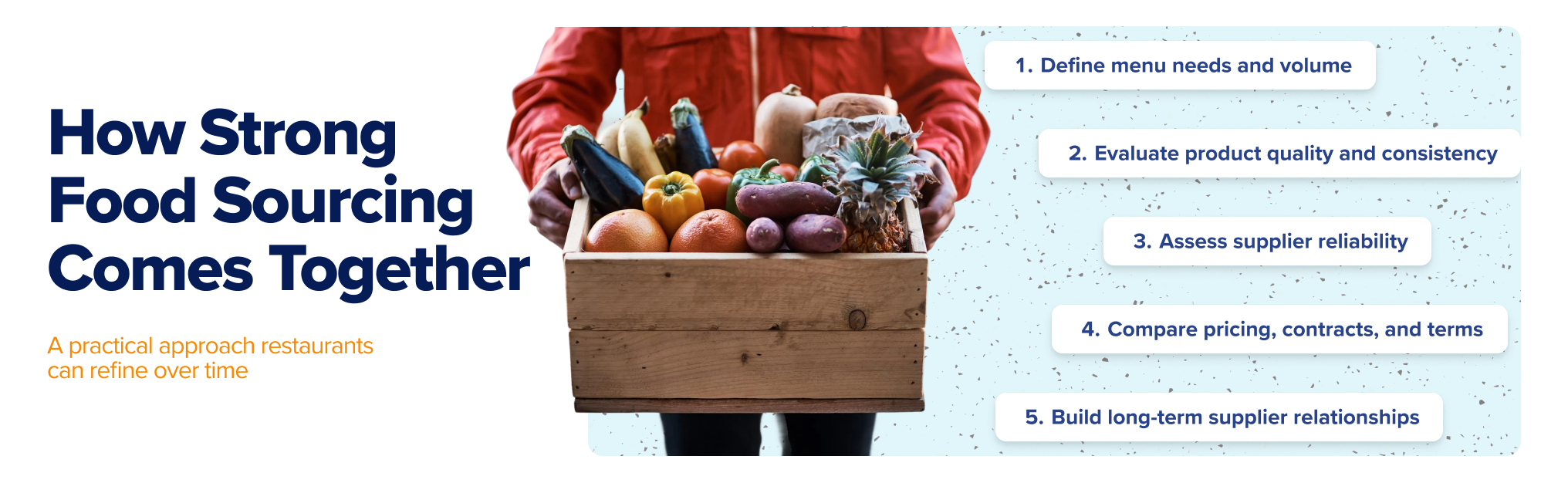
Identifying Menu and Volume Requirements
Knowing what the menu actually uses is the first step to good sourcing. That means knowing:
- Core items vs. features that are only available for a short time
- Volume changes every week and every season
- Products that drive costs versus products that set them apart
Clarity here stops people from buying too much, running out of things, and making unnecessary changes.
Evaluating Product Quality and Consistency
There are more ways to tell if something is good than just taste. Yield, size, packaging, shelf life, and how the product is prepared all matter. Consistent sourcing helps kitchens avoid surprises when the performance of a product suddenly changes.
Assessing Supplier Reliability and Service Levels
Late deliveries, missing items, or bad communication can quickly cause stress. When there are a lot of orders, reliable suppliers make things run more smoothly.
Comparing Pricing, Contracts, and Terms
Sometimes, the lowest price isn’t the best deal. Terms, contracts, rebates, and delivery minimums all have an effect on the real cost. Over time, restaurants that look at the whole picture make better decisions about where to get their food.
Building Long-Term Supplier Relationships
Strong sourcing strategies prefer working together to switching all the time. Long-term relationships often lead to better service, clearer communication, and more flexibility when problems come up.
Key Factors to Consider When Choosing Food Suppliers
Choosing suppliers isn’t just about what’s on the order guide. It’s about what actually happens once the kitchen is moving.
Certifications, Compliance, and Food Safety Standards
Food safety is table stakes. The real question is how quickly a supplier can back it up when paperwork or proof is needed.
Minimum Order Quantities and Scalability
Suppliers should work with your volume, not against it. What fits during a busy season shouldn’t create waste during a slow one.
Geographic Location and Logistics Capabilities
Closer doesn’t always mean better, but logistics matter. Delivery consistency, timing, and problem-solving speed all come into play.
Transparency in Pricing and Sourcing Practices
If pricing feels confusing, it usually is. Clear sourcing and pricing make it easier to spot changes before they hurt margins.
Technology and Data Accessibility
Good sourcing decisions rely on visibility. When data is easy to access, operators spend less time reacting and more time planning.
Common Food Sourcing Challenges
Even seasoned operators have trouble finding what they need. Most problems don’t start out big; they get bigger over time.
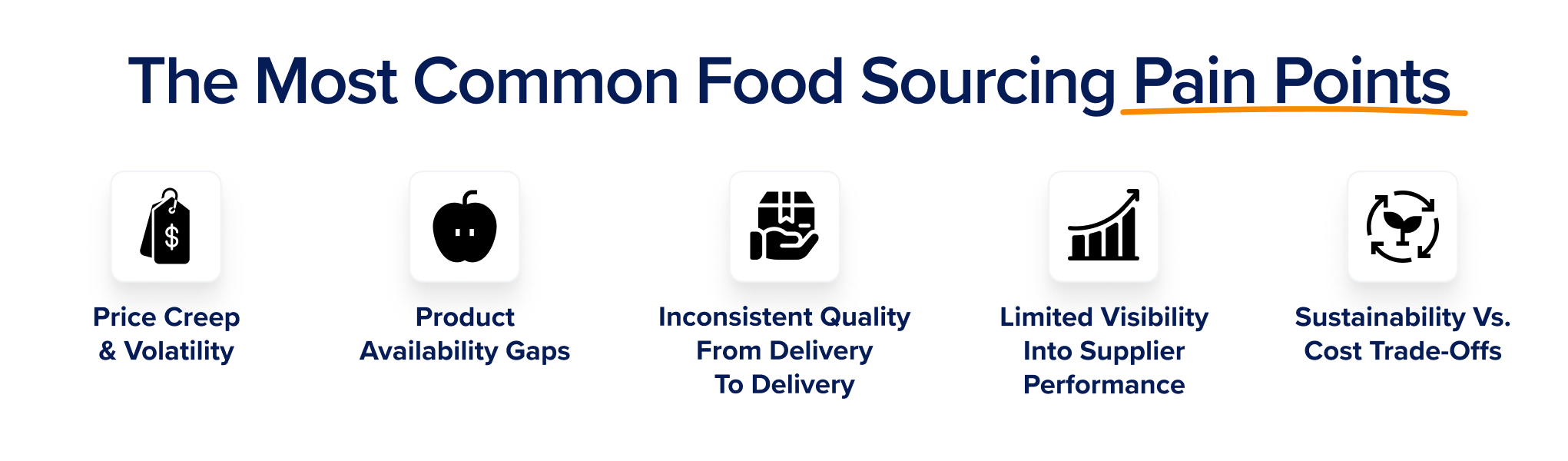
Price Volatility and Cost Fluctuations
Prices don’t often go up a lot overnight. They go up little by little each week, item by item, until the margins seem tighter than they should be.
Supply Chain Disruptions
It’s still possible for deliveries to be late, products to be out of stock, and sudden changes to happen. The only thing that makes a difference is how ready an operation is when they do.
Inconsistent Product Quality
When the same item works differently from one delivery to the next, kitchens notice it right away in the prep and execution.
Limited Visibility Into Supplier Performance
It’s hard to tell which suppliers are helping the business and which ones are causing problems when you don’t have clear information.
Balancing Sustainability With Cost Constraints
A lot of restaurants want to buy things in a responsible way, but it can be hard to do that without clear prices and realistic choices.
Best Practices for Smarter Food Sourcing in 2026
There’s no perfect sourcing playbook. What works best is what holds up during busy weeks, slow weeks, and everything in between.
Diversify Supplier Networks
Relying on one source works until it doesn’t. Having options gives operators room to adjust when prices move or products disappear.
Standardize Sourcing and Procurement Processes
When ordering lives only in someone’s head, mistakes happen. Simple, shared processes keep sourcing consistent even as teams change.
Use Data to Monitor Pricing and Performance
Most sourcing issues show up in patterns, not one-offs. Data helps catch them early instead of after margins take the hit.
Align Sourcing Decisions With Menu Strategy
Menus drive purchasing, not the other way around. When the two drift apart, costs and complexity tend to follow.
Regularly Review Supplier Agreements
Agreements shouldn’t be “set it and forget it.” A quick review can reveal terms that no longer match how the restaurant actually operates.
Food Sourcing Trends to Watch in 2026
Food sourcing isn’t standing still. Most of the shifts operators are making now are responses to pressure they’ve already felt.
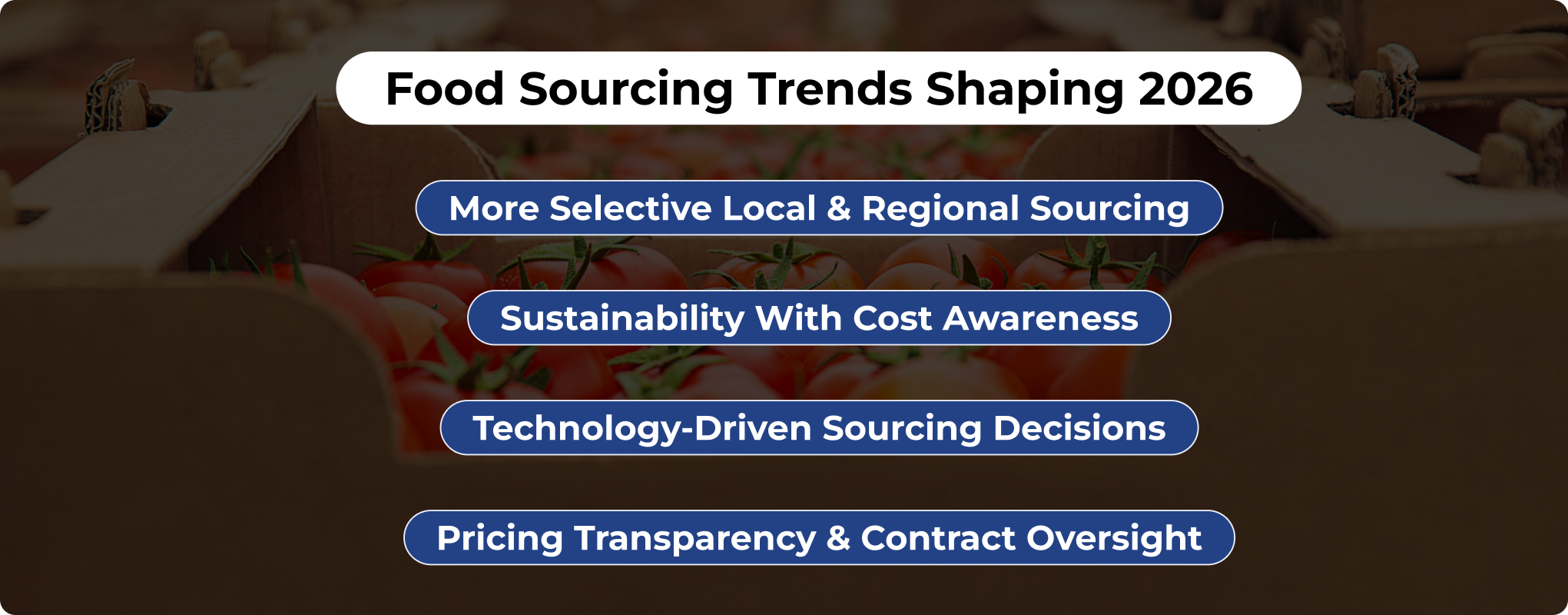
Increased Focus on Local and Regional Sourcing
Local and regional sourcing hasn’t disappeared, but it’s becoming more selective. Operators are pairing regional programs with reliable distribution instead of relying on them exclusively.
Sustainability and Ethical Sourcing Expectations
Guests still care where food comes from, but they also care about consistency and price. Restaurants are looking for sourcing options that support both.
Greater Use of Technology in Supplier Management
More sourcing decisions are backed by data instead of gut checks. Technology is helping operators see what’s actually happening across categories and suppliers.
Demand for Pricing Transparency and Contract Compliance
Restaurants want fewer surprises. Clear pricing and tighter contract oversight are becoming priorities, not nice-to-haves.
Role of Technology in Modern Food Sourcing
Technology has quietly become one of the most useful sourcing tools in the kitchen, even if it never touches the line.
When purchasing data, pricing history, and supplier details are easy to access, decisions get simpler. Operators spend less time chasing information and more time addressing issues before they grow.
That visibility makes food sourcing feel manageable again, even as supply chains stay unpredictable.
How Dining Alliance Supports Smarter Food Sourcing
As sourcing becomes more strategic, many independent restaurants look for ways to strengthen buying power without changing how they already order.
Dining Alliance supports smarter food sourcing by combining negotiated pricing, cashback programs, and tools that give operators visibility into their purchasing behavior. Restaurants gain access to a wide network of manufacturers and distributors, along with insights that help identify cost-control opportunities across key categories.
To see how this approach works in practice, you can explore Dining Alliance’s food sourcing solutions and how they help independent operators build stronger, more reliable supply chains.
Where Food Sourcing Goes From Here
Food sourcing in 2026 is less about chasing the lowest price and more about reducing uncertainty.
Restaurants that treat sourcing as an ongoing process, not a one-time decision, are better positioned to protect margins, support their teams, and keep menus consistent when conditions change.
Food Sourcing FAQs
What is the difference between food sourcing and procurement?
Food sourcing focuses on where products come from and which suppliers are used. Procurement covers the broader process, including purchasing, contracts, invoicing, and payment.
How can restaurants improve reliability in food sourcing?
Using more than one supplier, reviewing performance regularly, and improving visibility into pricing and availability all help reduce disruption.
What sourcing model works best for multi-location restaurants?
Most multi-location restaurants rely on a mix of contract sourcing and national or regional suppliers to balance consistency with flexibility.
How does food sourcing impact food costs and margins?
Food sourcing affects how predictable pricing is, how often substitutions happen, and how easily operators can spot cost changes before they hurt margins.
Why is supplier transparency important in food sourcing?
Transparency makes it easier to understand pricing, track changes, and avoid surprises that slowly eat into profitability.
