

If you’ve ever looked at your weekly food order and thought, “Why is this number higher again?” you’re not alone.
For most operators, purchasing happens fast. Orders get placed. Deliveries show up. Invoices get filed. Service moves on.
But behind those routine decisions sits one of the biggest profit levers in your business.
That’s where food procurement optimization for restaurant owners becomes critical.
Done right, it protects margins. Done casually, it slowly chips away at profitability.
Let’s break it down.
What is Food Procurement in Restaurants?
Food procurement in restaurants is the process of sourcing, negotiating, ordering, receiving, and paying for the ingredients you serve every day.
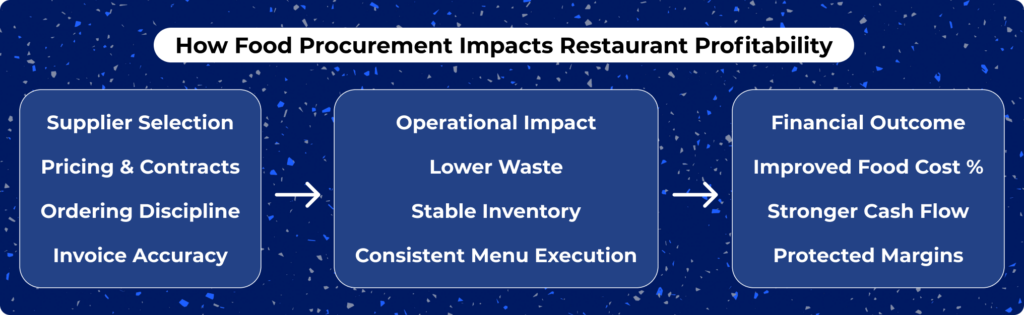
It includes:
- Forecasting what you’ll need
- Selecting suppliers
- Negotiating pricing
- Placing orders
- Verifying deliveries and invoices
Most operators think of procurement as “placing orders.” But true food procurement optimization for restaurant owners goes much deeper. It’s about controlling cost, improving consistency, and reducing risk across the entire purchasing cycle.
Why Food Procurement Optimization is Needed for Restaurant Owners
Margins in foodservice are thin. Small changes in purchasing decisions create big impacts over time.
That’s why food procurement optimization for restaurant owners isn’t optional — it’s strategic.
Rising Food Costs and Margin Pressure
Ingredient costs don’t stay still.
Proteins fluctuate. Produce shifts with seasonality. Freight and labor costs ripple through supplier pricing.
Without structured food procurement optimization for restaurant owners, these changes quietly erode profit.
Direct Impact on Restaurant Profitability
Procurement directly affects your largest controllable expense: food cost.
Every pricing decision, supplier selection, and contract term influences margin.
Optimizing procurement gives restaurant owners tighter control over food cost percentage and long-term stability.
Improving Cash Flow and Working Capital
Over-ordering ties up cash. Poor payment terms strain liquidity.
Restaurant owners can optimize their food purchases by getting better deals and making sure that their purchases match their needs. That keeps working capital safe, which is very important for ideas that are growing.
Reducing Food Waste and Cost Variability
When you buy things without a plan, you often end up with too much stock.
And too much inventory goes bad.
For restaurant owners, optimizing food procurement means organizing orders, inventory, and sales so that waste is the exception rather than the rule.
Enabling Consistent Menu Execution Across Locations
For brands with more than one unit, inconsistent buying leads to inconsistent food on the plate.
Centralized food procurement optimization for restaurant owners helps make sure that:
- Standardized parts
- Prices that don’t change
- Consistent performance from vendors
And that consistency keeps your brand safe.
Understanding the Food Procurement Process in Restaurants
Getting food isn’t just one choice. It’s a series of steps that require discipline.
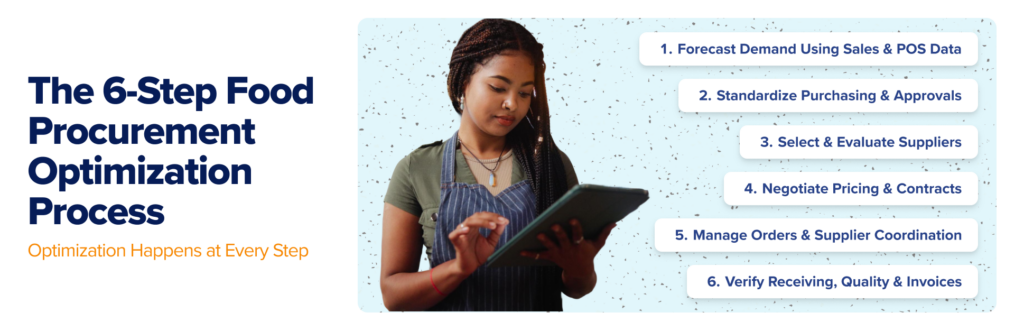
Step 1 – Forecast Demand Using Sales and POS Data
Good forecasting is the first step to good procurement.
Look at past sales, sales patterns, local events, and menu specials. Restaurant owners can optimize their food purchases by making sure that what they buy is based on actual demand, not habit.
Step 2 – Standardize Purchasing and Approval Workflows
Who gives the go-ahead for orders? Who checks the prices? Who signs the bills?
When there aren’t clear workflows, buying things gets inconsistent. Standardization is an important part of optimizing food purchasing for restaurant owners, especially those who run more than one location.
Step 3 – Select and Evaluate Food Suppliers
Reliability is more important than price.
When you evaluate a supplier, you should look at:
- Rates of filling
- Lead times
- Consistency of the product
- Responsiveness
Choosing the right suppliers helps keep procurement stable in the long term.
Step 4 – Negotiate Pricing, Payment Terms, and Contracts
Price per case isn’t the only thing that matters in negotiation.
The total cost is affected by payment terms, shipping costs, and volume discounts.
Restaurant owners should look at the whole financial picture, not just the line-item cost, when optimizing their food purchases.
Step 5 – Order Management and Supplier Coordination
Accuracy in orders cuts down on problems.
Clear communication, set deadlines, and organized ordering systems help people not have to rush at the last minute.
Step 6 – Receiving, Quality Checks, and Invoice Verification
When the truck gets there, procurement isn’t over.
The prices on the invoices must match the quotes. Deliveries have to meet quality standards. You should immediately point out any differences.
This is where things often go wrong, and where optimization makes a difference.
The Do’s of Food Procurement Optimization for Restaurant Owners
Strong procurement systems are built intentionally.
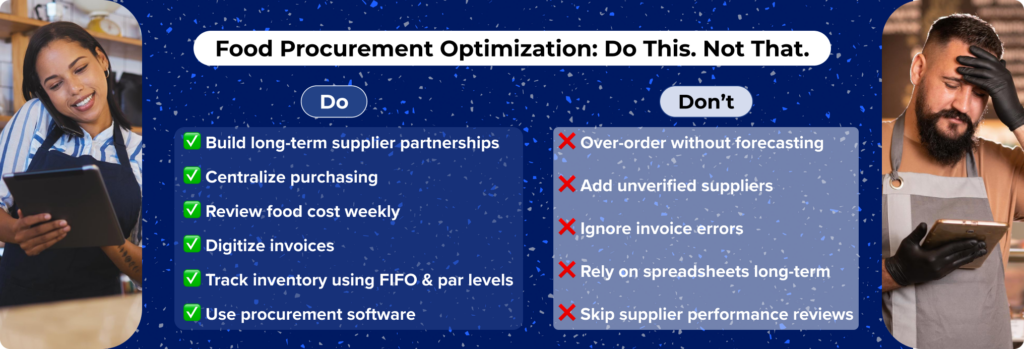
Build Strong, Long-Term Supplier Relationships
Transactional buying makes things unstable.
Strategic relationships often lead to:
- Better ways to talk to each other
- Better ways to solve problems
- Prices that are more stable
For restaurant owners, getting the best deals on food is all about working together, not switching suppliers all the time.
Track Inventory Using FIFO and Par Levels
Buying and keeping track of inventory are linked.
Using FIFO rotation and clear par levels makes sure that food purchases match actual use.
Analyze Food Costs Regularly
You shouldn’t only look at food costs at the end of the month.
Restaurant owners can quickly make changes before the difference gets bigger by reviewing every week.
Centralize Purchasing Across Locations
If each location negotiates on its own, there is no leverage.
Centralized food procurement optimization gives restaurant owners more buying power and makes things more consistent.
Standardize Portion Sizes to Control Costs
Even the best procurement can’t protect margins if the portion sizes change.
Following the rules of procurement discipline consistently makes the benefits stronger.
Use Procurement and Accounting Software
Tracking things by hand makes mistakes more likely.
Modern purchasing systems link data on buying, inventory, and accounting, which gives restaurant owners a better view.
Digitize Invoices for Better Cost Visibility
Digitizing invoices makes them more accurate and lowers the number of missed price differences.
This small operational shift strengthens overall food procurement optimization for restaurant owners.
The Don’ts of Restaurant Food Procurement
Even people who have been doing this for a long time make mistakes when they buy things.
Over-Ordering Without Demand Forecasting
Buying extra “just in case” usually means throwing things away.
Fear of running out shouldn’t drive purchases; forecasting should.
Relying on Multiple Unverified Suppliers
Adding vendors without checking their work is risky.
It’s better to stay consistent than to chase prices in the short term.
Ignoring Invoice Errors and Price Variances
It’s normal for invoices to have mistakes.
If you don’t check your work, small mistakes add up and change how well food costs are doing.
Managing Procurement Manually with Spreadsheets
Spreadsheets work, but only for a while.
As operations grow, manual systems take longer and are more likely to make mistakes.
Skipping Regular Supplier Performance Reviews
You should check on your relationships with suppliers from time to time.
Long-term cost control is affected by fill rates, consistent pricing, and responsiveness.
Key Metrics Restaurant Owners Should Track for Procurement Optimization
Metrics make things clear.
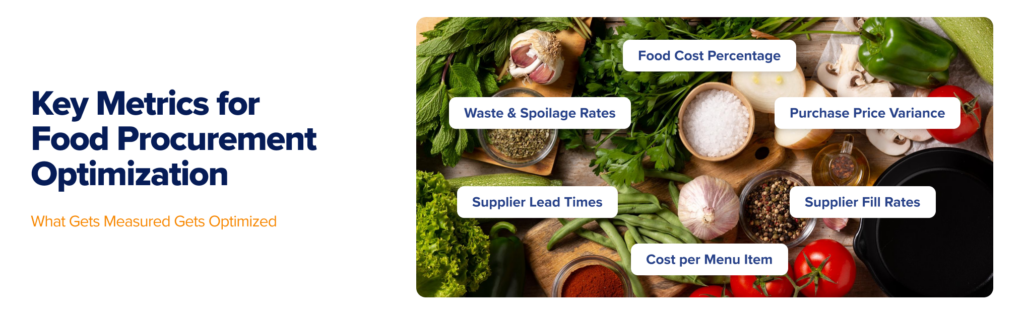
Restaurant owners can only optimize their food purchases by keeping an eye on the right performance indicators.
Food Cost Percentage
The most obvious sign that procurement is working.
Purchase Price Variance
Compares the expected price with the price on the invoice.
Waste and Spoilage Rates
Shows the differences between buying and using.
Supplier Lead Times and Fill Rates
Checks the reliability and performance of the supply chain.
Cost per Menu Item
Links decisions about buying things directly to the menu’s profit.
Food Procurement Optimization Checklist for Restaurant Owners
- Use real sales data to predict demand
- Make ordering processes the same for everyone
- Make supplier negotiations more centralized
- Look over the cost of food every week
- Keep an eye on differences in invoices
- Check the performance of suppliers every three months
- Make sure that buying and planning the menu are in sync
- Make things digital and automatic when you can
Consistent execution is what makes reactive buying different from optimized procurement.
Final Thoughts
Restaurant owners who want to optimize their food purchases don’t have to cut corners.
It’s about making disciplined systems that keep margins safe, lower volatility, and bring stability to a market that isn’t always stable.
The restaurants that treat buying as a strategic function and not just a job are the ones that grow in a way that lasts.
Ready to strengthen your purchasing strategy and gain more control over food costs?
