

If you’ve been running a restaurant for the past few years, you don’t need someone to tell you that food inflation is real. You’ve watched the price of chicken jump one week, cooking oil the next, and produce fluctuate with the weather. One supplier raises prices while another runs out of stock, forcing you to find an alternative at the last minute.
The challenge isn’t just that ingredients cost more. It’s that everything feels less predictable. Planning menus, managing inventory, and protecting margins have become much harder when the cost of doing business seems to change every month.
For independent restaurant owners, food inflation has become more than an economic headline. It’s something that affects purchasing decisions every day.
The good news? While no restaurant can control inflation, there are practical ways to reduce its impact. One of the most effective is strengthening your purchasing strategy through a restaurant group purchasing organization (GPO).
The Rising Cost of Running a Restaurant in 2026
Restaurant operators have always dealt with changing food costs, but today’s environment feels different. Inflation has touched nearly every expense involved in running a restaurant.
Food costs remain elevated. Labor costs continue to rise. Insurance premiums, utilities, transportation expenses, and credit card processing fees all compete for a larger share of every sales dollar.
At the same time, guests are becoming more selective about where they spend their money. Many operators are trying to absorb higher costs without pricing themselves out of the market.
That’s a difficult balance to maintain.
According to the National Restaurant Association, restaurant sales are expected to continue growing in 2026, but inflation-adjusted growth remains modest while elevated operating costs continue putting pressure on profitability.
For independent restaurants especially, protecting margins now requires more than increasing sales. It requires making smarter purchasing decisions.
What is Food Inflation?
If you’ve been ordering food for a restaurant over the past few years, you’ve experienced food inflation firsthand.
Food inflation is simply the rising cost of food over time. But for restaurant operators, it’s much more than seeing a higher price on a distributor invoice. One week it’s chicken wings. The next it’s cooking oil, eggs, fresh produce, or takeout containers. Costs don’t always rise together, and they rarely stay predictable for long.
That’s what makes food inflation so challenging. You aren’t managing one price increase. You’re trying to keep up with dozens of products that can move independently based on market conditions, weather, transportation costs, and supply issues.
When those fluctuations happen across an entire menu, planning becomes much harder. Forecasting food costs, setting menu prices, and protecting margins all become moving targets, forcing operators to make purchasing decisions with far less certainty than they’d like.
The Biggest Drivers Behind Food Inflation
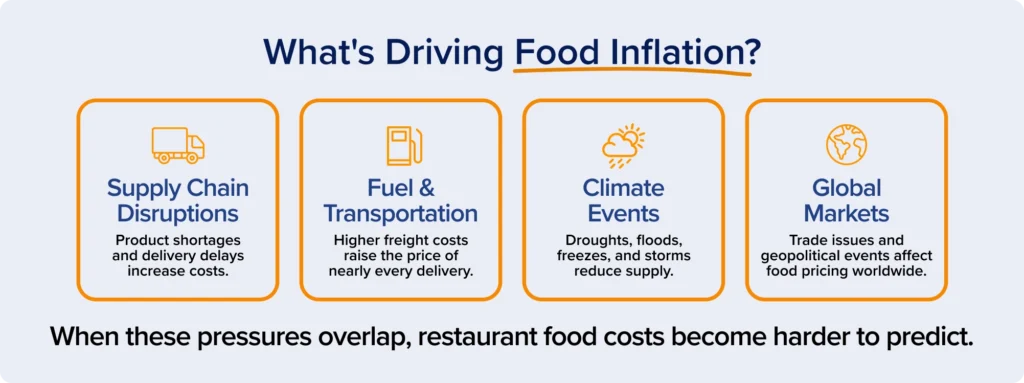
There isn’t one reason food costs keep climbing. More often, it’s a combination of events happening at the same time. A weather disaster in one region, higher transportation costs, labor shortages, or geopolitical tensions can all ripple through the food supply chain. By the time products reach your kitchen, those pressures are reflected in what you pay.
Supply Chain Disruptions
Supply chains are more stable than they were a few years ago, but they’re far from immune to disruption. A production delay, labor shortage, or distribution bottleneck can quickly reduce the availability of key products.
When inventory becomes harder to source, prices tend to follow. Operators may also find themselves dealing with product substitutions, backorders, or delivery delays that make purchasing decisions more challenging than usual.
Fuel and Transportation Costs
Before ingredients arrive at your restaurant, they’ve likely been shipped several times through growers, manufacturers, distributors, and delivery networks.
As fuel prices increase, the cost of moving those products increases, too. Distributors eventually absorb those expenses into pricing, meaning restaurants often pay more for everything from proteins and produce to disposable supplies. Even modest freight increases can add up when you’re placing orders week after week.
Climate Issues
Agriculture has always depended on the weather, and restaurants feel the effects when growing conditions change.
Droughts, hurricanes, floods, wildfires, and unexpected freezes can reduce harvests or delay production, creating shortages that drive prices higher. Fresh produce is often affected first, but grains, oils, dairy products, and other commodities can also see significant price swings after major weather events.
Global Conflicts
Restaurant purchasing doesn’t stop at national borders. Many everyday ingredients come from global markets, so events happening thousands of miles away can still influence local food costs.
Trade restrictions, tariffs, shipping delays, and geopolitical conflicts can all affect product availability and pricing. Imported seafood, olive oil, spices, coffee, specialty cheeses, and wine are just a few categories that often respond quickly when global supply chains face new challenges.
The Impact of Food Inflation on Restaurants
Food inflation reaches far beyond the invoice from your distributor. It influences nearly every financial decision inside a restaurant.
Rising Ingredient Costs
The most obvious impact is paying more for the ingredients needed to prepare each menu item.
For operators, that means recipes that were profitable two years ago may no longer deliver the same margins today.
Without regular food cost reviews, those increases can quietly erode profitability over time.
Increased Operating Expenses
Food inflation rarely happens alone.
Restaurants are also managing higher labor expenses, insurance costs, utilities, processing fees, and other overhead expenses.
The National Restaurant Association found that more than 9 in 10 operators identified food costs, labor costs, inflation, and insurance costs as significant business challenges in 2025.
As operating costs rise across multiple categories, maintaining healthy margins becomes increasingly difficult.
Menu Price Increases
Many restaurants respond to food inflation by increasing menu prices.
Sometimes that’s necessary. But there’s a limit to what customers are willing to pay.
The challenge is finding the right balance between protecting profitability and preserving guest loyalty.
Frequent price increases can create sticker shock, especially for value-conscious diners.
The Cost of Food Waste
When ingredients become more expensive, waste becomes even more costly.
Throwing away a few pounds of produce or over-ordering proteins doesn’t just create operational inefficiencies—it directly affects profitability.
Restaurants that regularly monitor inventory, portion sizes, and spoilage often uncover savings opportunities that help offset some of the impact of food inflation.
The Hidden Impact of Food Inflation Most Restaurants Ignore
Most discussions about food inflation start with rising ingredient costs, but that’s only part of the story. The real financial impact shows up in the day-to-day decisions operators have to make, from managing cash flow to adjusting schedules and responding to unexpected supplier price changes.
Cash Flow Problems
Paying more for inventory means more cash leaves the business before a single meal is served.
For independent restaurants especially, that can create real pressure. Even if sales stay consistent, more money is tied up in food purchases, leaving less flexibility to cover payroll, utilities, equipment repairs, or other unexpected expenses. Higher sales don’t always translate into healthier cash flow when inventory costs keep climbing.
Unpredictable Purchasing Costs
Restaurant operators can plan for higher prices. What makes things difficult is not knowing when those prices will change.
A product that fits the budget this week may cost significantly more on the next delivery, making purchasing decisions feel like a moving target. That uncertainty makes forecasting more difficult and can quickly throw menu costing, purchasing plans, and financial projections off course.
Food Cost Percentage
Strong sales don’t automatically guarantee strong margins.
As ingredient prices rise, the cost of preparing each menu item rises with them. If menu prices stay the same while food costs continue climbing, food cost percentages gradually increase, reducing profitability one plate at a time.
That’s why successful operators revisit recipe costs regularly instead of assuming yesterday’s margins still hold true today.
Vendor Price Changes
Supplier pricing reflects what’s happening across the broader market, so changes are inevitable.
Sometimes they’re expected. Other times they appear with very little warning, forcing restaurants to decide whether to absorb the increase, look for an alternative product, or adjust the menu. Without clear visibility into pricing trends, those decisions often become reactive instead of strategic.
Staff Scheduling and Labor Costs
When food costs consume a larger share of revenue, labor is often the next expense operators examine.
That can mean shorter shifts, leaner schedules, or asking employees to cover additional responsibilities. While controlling labor costs is important, consistently operating with fewer people can affect both the guest experience and employee morale.
Many restaurants find it’s more sustainable to strengthen purchasing practices first, reducing unnecessary food costs before making cuts that impact the front or back of house.
Strategies Restaurants Can Use to Manage Food Inflation
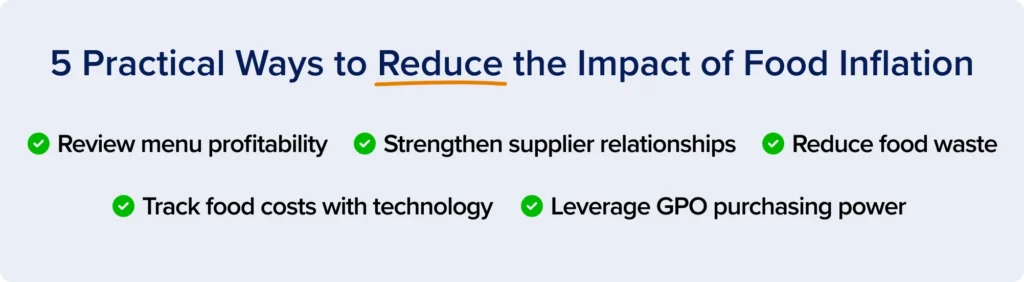
There isn’t one solution to food inflation. Restaurants that weather rising costs most successfully are usually making several small improvements instead of relying on one big change. They regularly evaluate their menus, look for purchasing efficiencies, reduce waste, monitor food costs closely, and build stronger supplier relationships that help them stay competitive even when markets fluctuate.
The goal isn’t simply to spend less. It’s to make purchasing decisions that support long-term profitability without sacrificing food quality or the guest experience.
Simplify Menus and Remove Low-Margin Items
One of the fastest ways to reduce the impact of food inflation is by taking a fresh look at your menu.
Many restaurants gradually add new dishes over time but rarely remove older ones. Before long, the menu includes dozens of ingredients that are only used in one or two recipes. That creates more purchasing complexity, increases inventory requirements, and raises the risk of food waste.
Instead, identify menu items that consistently underperform or generate lower profit margins. Ask yourself a few simple questions:
- Does this item sell often enough to justify keeping the ingredients in stock?
- Are ingredient costs rising faster than menu prices?
- Does this dish require specialty ingredients that can’t be used elsewhere?
- Is it labor-intensive compared to similar menu items?
You may discover that removing just a handful of low-margin dishes simplifies ordering, improves inventory turnover, and frees up kitchen staff to focus on your best-selling items.
Another smart strategy is cross-utilizing ingredients whenever possible. If the same chicken, vegetables, sauces, or cheeses can be used across several dishes, you’re less likely to end up with excess inventory that expires before it’s used.
Menu engineering isn’t about giving guests fewer choices. It’s about building a menu that works harder for your business while continuing to deliver the quality and consistency customers expect.
Renegotiate Supplier Contracts
Many restaurant owners don’t realize how much flexibility may exist within their supplier relationships.
If it’s been a while since you’ve reviewed your pricing, now is a good time to have that conversation. Ask about contract pricing, product alternatives, seasonal opportunities, and available rebates that could help reduce costs.
For independent restaurants, negotiating better pricing alone can be difficult. That’s where a restaurant GPO like Dining Alliance can help by providing access to nationally negotiated pricing, supplier agreements, and rebates that help offset the impact of food inflation.
Improve Inventory and Waste Management
Every ingredient that ends up in the trash represents money that never had a chance to generate revenue.
Reducing waste starts with understanding where losses occur. That could mean over-ordering, inconsistent portion sizes, products expiring before they’re used, or ingredients sitting too long in storage.
Regular inventory counts, proper product rotation, and standardized recipes all help reduce unnecessary waste while giving operators a clearer picture of actual food costs.
Even small improvements can make a meaningful difference. Using inventory more efficiently often allows restaurants to offset part of the impact of food inflation without making noticeable changes to the guest experience.
Use Technology to Track Food Costs More Accurately
When food inflation causes ingredient prices to change from one delivery to the next, relying on monthly reports or handwritten inventory sheets simply isn’t enough. By the time you realize your food costs have increased, the damage to your margins may have already been done.
Technology gives restaurant operators a much clearer picture of what’s happening behind the scenes. Instead of only seeing how much they spent, operators can track food costs in real time, compare purchasing trends, identify products with significant price increases, and monitor food cost percentages before small issues become expensive problems.
Many food cost management platforms also combine purchasing data, inventory levels, and recipe costing into one place. That means operators can see the true cost of every menu item, understand how changing ingredient prices affect profitability, and make informed decisions about pricing or menu adjustments based on actual data instead of estimates.
Inventory reporting adds another layer of visibility by helping restaurants reduce over-ordering, identify slow-moving products, and keep a closer eye on waste. Purchasing analytics can uncover spending trends, highlight unexpected price changes, and reveal opportunities to improve buying decisions across suppliers.
The National Restaurant Association also points to digital tools and data analytics as key investments helping restaurants improve efficiency, manage operating costs, and make more informed business decisions.
Technology alone won’t eliminate food inflation, but it can eliminate much of the guesswork that comes with managing it. When restaurant owners have timely, accurate data at their fingertips, they’re better equipped to control costs, protect margins, and make purchasing decisions with confidence instead of reacting after expenses have already increased.
How GPOs Help Restaurants Reduce the Impact of Food Inflation
Independent restaurants often face food inflation differently than large chains. While national brands may have procurement teams dedicated to sourcing products and negotiating contracts, many independent operators are managing purchasing alongside countless other responsibilities.
That’s where a group purchasing organization (GPO) can provide an advantage. By combining the purchasing volume of thousands of restaurants, a GPO helps members strengthen their purchasing strategy, improve cost visibility, and access savings opportunities that may be difficult to secure independently.
Access to Better Pricing From Suppliers
One of the primary benefits of working with a GPO is stronger purchasing power.
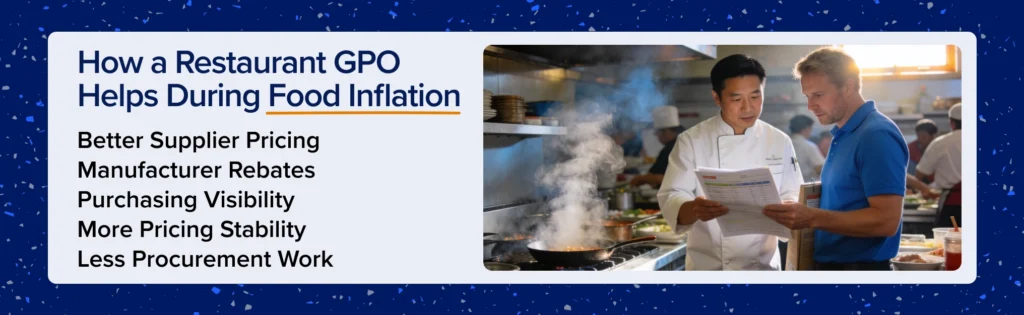
Rather than negotiating with suppliers as a single restaurant, operators become part of a larger purchasing network. That collective buying power often opens the door to more competitive pricing, manufacturer programs, and supplier agreements that help restaurants better manage rising costs.
When food inflation affects multiple product categories at once, those savings can make it easier to protect margins without making constant menu price adjustments.
Rebates That Improve Restaurant Cash Flow
Beyond negotiated pricing, many GPOs also help restaurants earn manufacturer rebates on qualifying purchases.
These rebates create another opportunity to reduce overall purchasing costs because operators earn money back on products they’re already buying. Instead of changing distributors or completely reworking purchasing habits, restaurants can generate additional savings through existing purchasing activity.
Over time, those rebates can help offset some of the financial pressure created by food inflation while improving overall cash flow.
More Stable Pricing During Market Volatility
Restaurant operators can’t control commodity markets or supply chain disruptions, but they can reduce some of the uncertainty around purchasing.
Working with a GPO gives restaurants access to established supplier relationships and negotiated purchasing programs that can provide greater pricing consistency when markets become volatile.
While prices will always fluctuate, having a structured purchasing strategy makes it easier to budget, forecast expenses, and make informed buying decisions.
Better Visibility Into Purchasing Data
Managing food inflation becomes much easier when you understand exactly where your purchasing dollars are going.
Many GPOs provide technology that helps operators track purchasing activity, monitor rebate earnings, review spending by category or manufacturer, and identify additional savings opportunities. Having that level of visibility allows restaurant owners to make purchasing decisions based on actual data instead of assumptions.
When you know what’s changing, and why, you can respond faster and make more confident decisions about purchasing, pricing, and profitability.
Reduced Procurement Stress for Restaurant Owners
Independent restaurant owners already wear enough hats. Negotiating supplier pricing, tracking rebates, monitoring contracts, and keeping up with changing food costs can quickly become another full-time job.
A GPO helps simplify many of those responsibilities by bringing purchasing resources, supplier relationships, and savings opportunities together in one place. Instead of spending valuable time chasing the best pricing or managing multiple supplier programs, operators can spend more time focused on running their restaurants and serving guests.
Food Inflation Trends Restaurants Should Watch in 2026
No one can predict exactly where food inflation will go next, but restaurant operators can prepare for the trends that are most likely to influence purchasing decisions over the coming year. Keeping an eye on market conditions won’t eliminate rising costs, but it can help you respond faster instead of being caught off guard.
Commodity Pricing Volatility
Commodity prices will likely remain unpredictable throughout 2026. Proteins, dairy, produce, cooking oils, and grains can all fluctuate due to weather, transportation costs, global demand, and other market factors.
Monitoring purchasing trends and maintaining strong supplier relationships can help restaurants respond more quickly when prices begin to shift.
Labor Cost Pressures
Food inflation isn’t the only challenge affecting restaurant profitability. Rising wages, payroll expenses, and ongoing staffing shortages continue to put pressure on operating budgets.
Finding efficiencies in purchasing, inventory management, and daily operations can help offset some of these rising costs.
Supply Chain Recovery Trends
Supply chains have become more stable than they were a few years ago, but occasional product shortages, substitutions, and delivery delays still occur.
Restaurants that stay flexible, communicate regularly with suppliers, and diversify purchasing options will be better prepared to navigate future disruptions while minimizing the impact of food inflation.
Practical Ways Restaurants Can Prepare for Future Food Inflation
While no restaurant can predict what food prices will do next, preparing ahead of time makes it easier to adapt when costs begin to rise. Small, consistent habits can go a long way toward protecting your margins.
Monitor Food Costs Weekly Instead of Monthly
Waiting until the end of the month to review food costs can leave you reacting to problems that have already affected your bottom line.
Instead, review food costs weekly. Keeping a closer eye on purchasing trends allows you to catch unexpected price increases sooner, make timely menu adjustments, and identify opportunities to control costs before they become bigger issues.
Build Stronger Supplier Relationships
Good supplier relationships become even more valuable during periods of food inflation.
Stay in regular communication with your distributors and ask about seasonal products, pricing changes, and available alternatives before placing orders. Having those conversations early can help you avoid surprises and make better purchasing decisions.
Use Data to Improve Menu Profitability
Not every menu item contributes equally to your bottom line.
Review your sales and food cost data regularly to identify:
- Your highest-margin menu items
- Dishes with rising ingredient costs
- Slow-selling items that may no longer be profitable
- Opportunities to cross-utilize ingredients
Small menu adjustments based on real data can improve profitability without requiring a complete menu overhaul.
Focus on Waste Reduction Across the Kitchen
Reducing waste is one of the easiest ways to offset food inflation.
Simple practices like rotating inventory properly, following standardized recipes, monitoring portion sizes, and using ingredients before they expire can make a noticeable difference over time. When every ingredient counts, reducing waste helps every purchasing dollar go further.
Partner With Procurement Experts Before Costs Rise Again
The best time to strengthen your purchasing strategy isn’t after prices increase, it’s before they do.
Working with procurement experts or joining a restaurant GPO can help you gain access to better pricing, manufacturer rebates, purchasing insights, and supplier support before market conditions change. Having the right strategy in place allows you to respond with confidence instead of scrambling when the next round of food inflation arrives.
Final Thoughts
Food inflation isn’t a challenge that’s going away overnight. While prices may stabilize in some categories, restaurants will likely continue navigating changing ingredient costs, labor pressures, and shifting market conditions for the foreseeable future.
The good news is that independent operators have more ways than ever to protect their margins. By monitoring food costs regularly, reducing waste, strengthening supplier relationships, and taking advantage of purchasing programs designed specifically for restaurants, you can make your business more resilient no matter what the market does next.
At the end of the day, managing food inflation isn’t about reacting to every price increase. It’s about building a smarter purchasing strategy that helps your restaurant stay profitable today while preparing for whatever comes next.