


Ask any independent restaurant operator what keeps them up at night, and food distribution challenges will be near the top of the list. It’s not just about rising prices or late trucks. It’s the constant uncertainty. Will the order show up on time? Will it be complete? And, will the price match what was quoted last week?
Food distribution touches every part of restaurant operations. When it works, it fades into the background. When it doesn’t, it shows up everywhere—from the walk-in to the P&L.
Food Distribution in the Restaurant Industry
Food distribution is the engine that keeps restaurants running. Distributors handle sourcing, storage, transportation, and delivery, often across hundreds or thousands of products. For independent operators, this system has to work smoothly because there’s very little margin for error.
Unlike large chains, independent restaurants don’t always have backup suppliers, dedicated procurement teams, or long-term freight contracts. When something goes wrong in distribution, they’re often the first to feel it and the last to get answers.
That’s why understanding food distribution challenges isn’t just helpful. It’s necessary.
The Biggest Food Distribution Challenges Restaurants Face
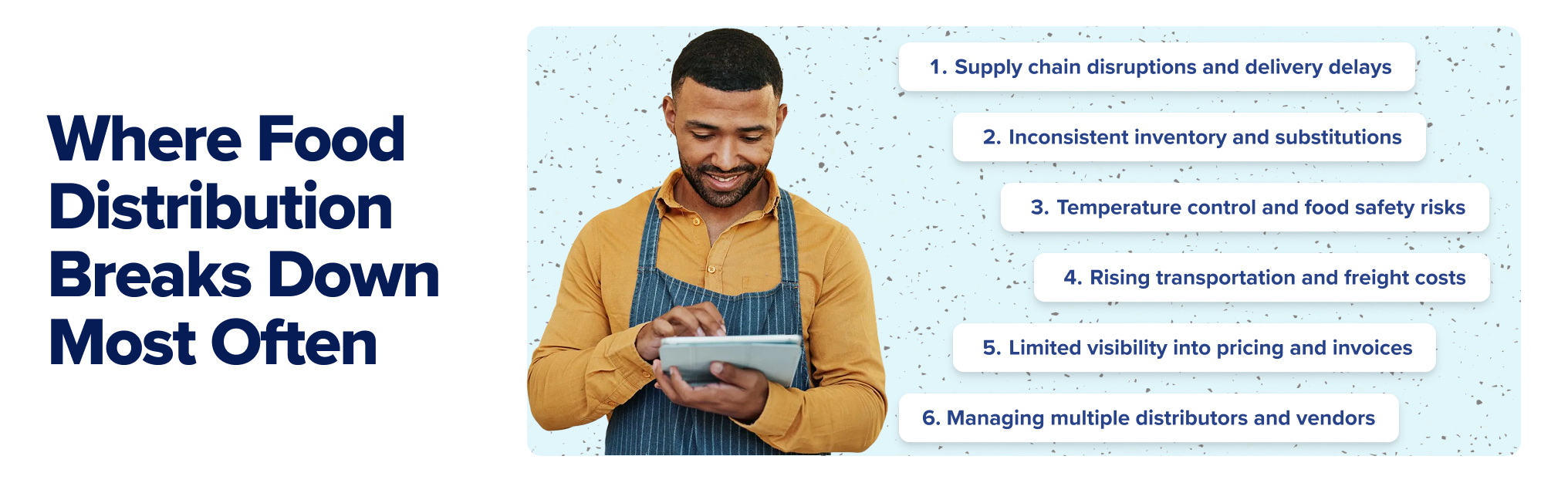
Supply Chain Disruptions and Delays
Supply chain disruptions have become part of daily operations. Weather events, production slowdowns, labor shortages, and transportation issues can all delay deliveries or eliminate items entirely.
For restaurants, even a one-day delay can create ripple effects that last all week.
How Restaurants Can Reduce Supply Chain Risk
While restaurants can’t control global supply chains, they can reduce risk by focusing on preparation. That often includes:
- Tracking which items are most vulnerable to disruption
- Identifying backup products or suppliers ahead of time
- Staying informed about supply trends before issues hit
Planning doesn’t eliminate disruption, but it makes it easier to respond without panic.
Inventory Availability and Inconsistent Deliveries
Few things throw off a kitchen faster than inconsistent deliveries. Missing cases, unexpected substitutions, or partial shipments force teams to improvise on the fly. Over time, this inconsistency affects food quality, staff confidence, and guest satisfaction.
| Items repeatedly out of stock | Split deliveries across multiple days |
| Unannounced substitutions | Products arriving past usable shelf life |
How to Improve Inventory Reliability
Inventory reliability improves when ordering becomes more intentional. Restaurants that track usage patterns, adjust pars regularly, and communicate clearly with distributors experience fewer surprises and less waste.
Temperature Control and Food Safety Compliance
Temperature control during food distribution isn’t optional. It’s foundational. When products arrive outside safe temperature ranges, restaurants face spoilage, compliance risks, and potential health concerns.
The challenge is that temperature issues aren’t always obvious at first glance.
How to Maintain Food Safety During Distribution
Food safety improves when delivery checks become routine, not reactive. Simple habits like logging temperatures, rejecting compromised product, and documenting issues protect both guests and the business.
Rising Distribution and Transportation Costs
Distribution costs don’t always show up as a single line item. They appear as fuel surcharges, delivery fees, minimum order penalties, or quiet price increases across multiple SKUs.
Over time, those costs add up.
How to Control Distribution and Freight Costs
Restaurants gain control by reviewing invoices consistently and understanding where fees come from. Operators who regularly check pricing trends are better positioned to spot issues early and avoid margin creep.
Limited Visibility Into Distributor Pricing and Spend
One of the most frustrating food distribution challenges is not knowing what you’re actually paying. Pricing changes frequently, and invoices can be dense and difficult to audit manually.
Without visibility, small discrepancies become expensive habits.
How to Improve Pricing and Spend Transparency
Transparency starts with access to clear data. When restaurants can see pricing trends, historical spend, and invoice inconsistencies in one place, decision-making becomes faster and more confident.
Managing Multiple Distributors and Vendors
Many independent restaurants work with multiple distributors to get the products they need. While that flexibility can be helpful, it also increases complexity.
More vendors usually mean:
- More invoices
- More delivery schedules
- More pricing structures to track
How to Simplify Distributor and Vendor Management
Simplification doesn’t always mean reducing vendors. It means organizing information better. Centralized purchasing data and consistent processes reduce administrative work and help teams stay focused on operations.
Sustainability and Packaging Challenges
Sustainability is increasingly important to guests, but eco-friendly packaging and distribution options often come with higher costs. Independent operators are left balancing expectations with financial reality.
How to Balance Sustainability With Cost Control
Restaurants can take a practical approach to sustainability by focusing on waste reduction, evaluating packaging choices, and understanding the true cost impact of greener options before making changes.
How Food Distribution Challenges Directly Affect Restaurants
Food distribution issues don’t stay isolated. They show up across the operation:
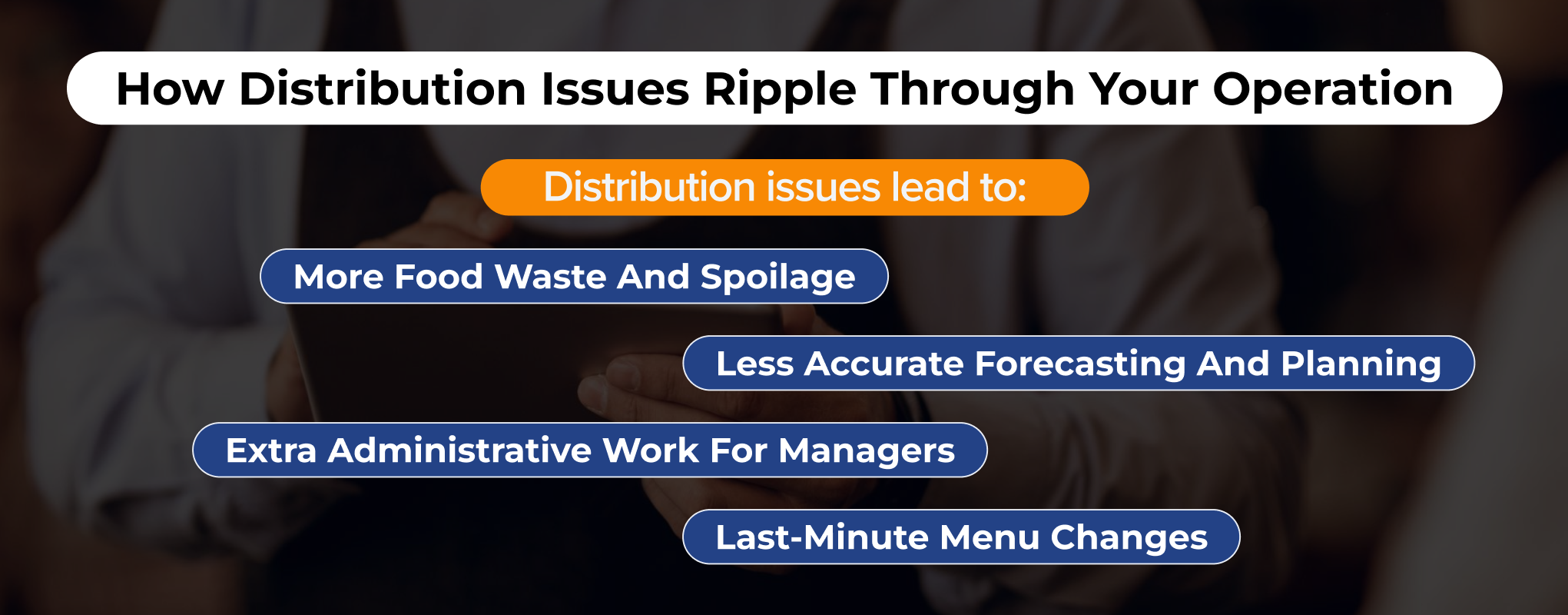
Increased Food Waste and Spoilage
Late trucks and rushed drops cause problems fast. Product sits longer than planned. Boxes get stacked wrong. Temps aren’t what they should be. Suddenly food that should have lasted the week is getting tossed early. That waste doesn’t feel dramatic in the moment, but it shows up later when food cost is higher than expected.
Menu Changes and Service Disruptions
When an item doesn’t arrive, it’s never just a menu tweak. The kitchen has to adjust prep. Servers have to explain changes at the table. Guests ask questions you don’t always have answers to. Do that often enough and consistency starts slipping, which regulars notice right away.
Higher Labor and Administrative Burden
Missing cases. Prices that don’t match last week. Invoices that need correcting. Someone has to stop what they’re doing and deal with it. Most of the time, that someone is a manager who already has a full plate. It’s not hard work, but it’s time-consuming, and it adds up quickly.
Reduced Profitability and Forecasting Accuracy
When deliveries and pricing change week to week, planning gets fuzzy. Orders get padded to avoid running out. Costs move around more than expected. Forecasting turns into educated guessing, which makes it harder to know what margins will actually look like a month from now.
What This Means for Independent Restaurants
Food distribution challenges aren’t going anywhere. Independent restaurants feel them every week, sometimes every day. But when operators understand where things tend to break down—pricing, deliveries, availability, invoicing—they’re in a much better position to stay steady instead of constantly reacting. A little visibility goes a long way when margins are tight.
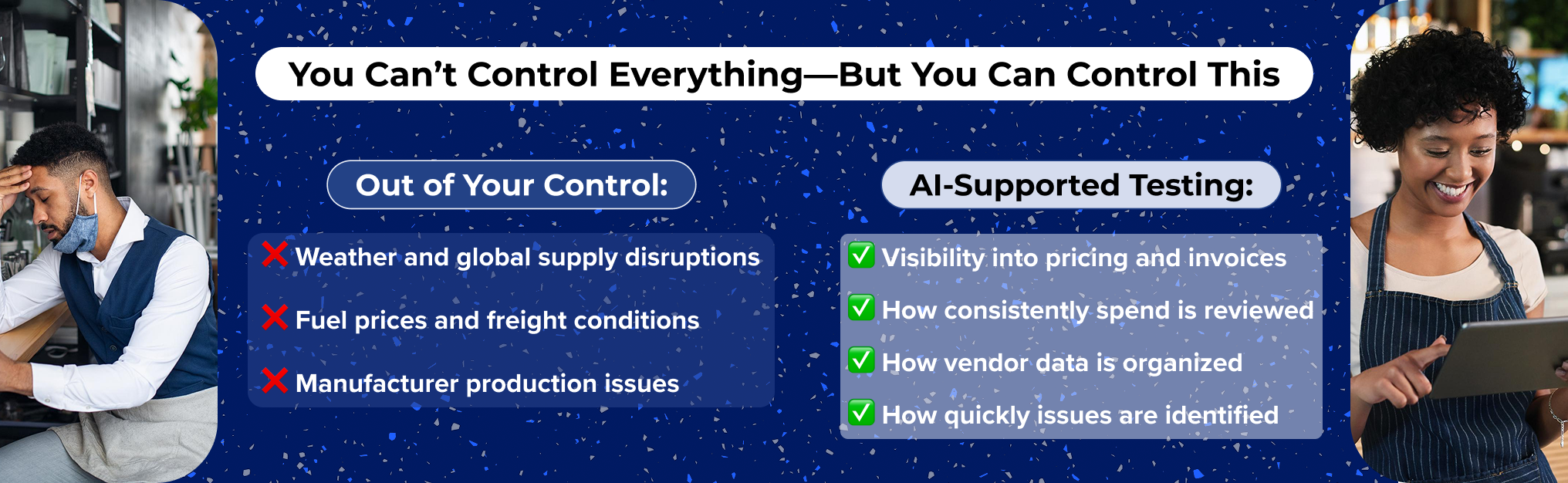
This is where having the right support matters. Dining Alliance helps independent operators cut through the noise by bringing more clarity to distributor pricing, purchasing patterns, and vendor relationships—so decisions feel informed, not rushed, and operations stay focused on running the restaurant, not chasing down answers.
FAQs
How do distribution issues impact restaurant food costs?
Distribution issues increase food costs through price volatility, waste, delivery fees, and last-minute purchasing that limits negotiating leverage.
How can restaurants reduce risk from supply chain disruptions?
Tracking usage data, planning alternatives, and staying informed about supply trends help restaurants respond faster when disruptions occur.
What role do distributors play in food cost volatility?
Distributors influence pricing through sourcing, transportation, and fee structures. Without visibility, volatility is harder to manage.
How can restaurants gain better visibility into distributor pricing?
Centralized purchasing data, consistent invoice reviews, and pricing transparency tools help restaurants understand true costs and catch discrepancies early.
