

The margins are small. Work isn’t always dependable. Prices for food never seem to stay the same.
Buying food and drinks wisely isn’t just something independent restaurant owners do in the back office. It is one of the best ways to protect your profits and lower your risks.
When buying is reactive, prices go up slowly. Every bill works in your favor when you plan ahead. This guide gives you real-world tips on how to save money on food and drinks without sacrificing quality or the experience of your guests.
Understanding Food and Beverage Purchasing in Restaurant Operations
Restaurants use a structured process called food and beverage purchasing to get the drinks and food they need to keep their businesses running. This includes looking for, ordering, getting, and paying for the things.
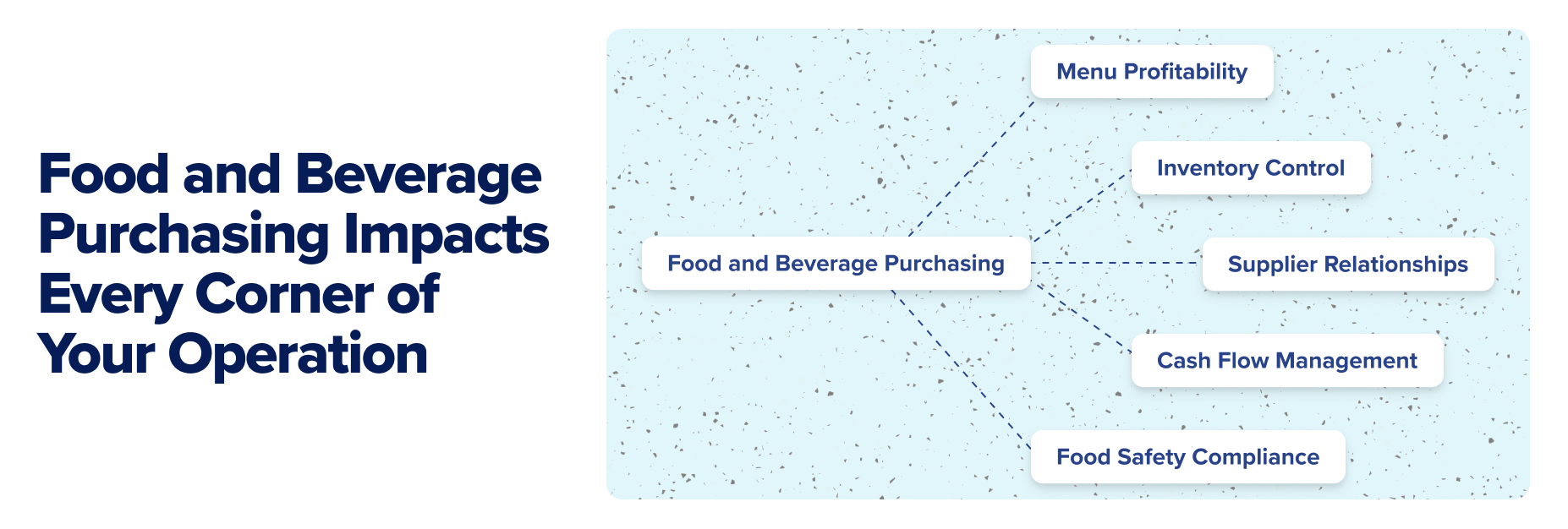
It touches:
- Menu profit
- Taking care of stock
- Connections with suppliers
- Money coming in and going out
- Following the rules for food safety
Independent operators often decide quickly what food to buy. You are trying to keep track of calls from vendors, staffing issues, and prep lists all at the same time. But if you don’t have a clear plan for how to buy food and drinks, small mistakes can add up to big losses over time.
Making a plan before you buy things makes things more stable. It combines forecasting, managing suppliers, pricing contracts, and making sure invoices are correct into one simple system.
Core Principles of Cost-Effective Food and Beverage Purchasing
There are a few simple but strict rules that make buying food and drinks strong.
Demand Forecasting and Order Accuracy
Accurate demand forecasting can help you:
- Don’t order too much and let it go bad.
- Cut down on emergency purchases
- Keep your stock levels low.
- Make cash flow better
Use past sales, the time of year, sales, and local events to help you decide when to order. Even just looking at the menu mix and usage once a week can make a big difference in how accurately you buy food.
Contract Pricing, Rebates, and Cost Visibility
Many independent operators are missing out on money because they can’t see all of the pricing agreements and rebates.
Strategic buying of food and drinks includes:
- Locking in prices for contracts when possible
- Keeping track of manufacturer rebates
- Checking to see if the invoice price is correct
- Keeping an eye on how costs change over time
You can quickly spot mistakes and make sure that rebate money really goes back to your business when you know how much you should be paying.
Supplier Consolidation and Spend Control
When you work with too many suppliers, things get more complicated and you have less power.
You can benefit from supplier consolidation in the following ways:
- Make ordering easier
- Make sure contracts are followed better
- Make your negotiating power stronger
- Cut down on the amount of work that needs to be done by the administration
Smart buying doesn’t mean using as few suppliers as possible. It’s about making sure that each relationship helps you reach your financial and operational goals.
Step-by-Step Food and Beverage Purchasing Process
A disciplined process for buying food and drinks keeps costs steady and operations running smoothly.
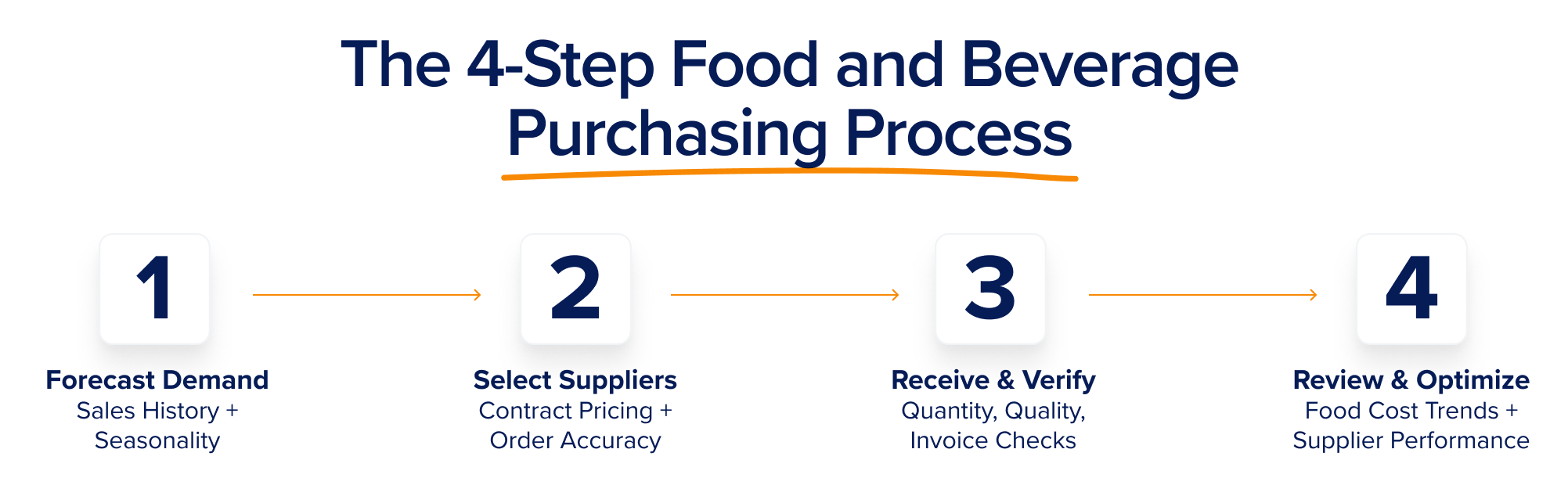
Forecasting Demand
Begin with sales that are expected.
Check out:
- Sales data from the past
- Future sales
- Changes in the seasons
- Patterns of weather
Next, figure out how much each SKU is likely to be used. This step links menu performance directly to buying decisions.
Supplier Selection and Ordering
Choose suppliers that meet your quality and pricing standards once you know what you need.
When you order:
- Check the prices in the contract
- Look over the minimum order requirements.
- Make sure the frequency of orders matches the amount of storage space you have.
- Check the numbers against the forecasts again.
Being consistent here makes your whole food buying plan stronger.
Receiving, Invoice Verification, and Accuracy Checks
The receiving dock is where you can see if your purchase was successful or not.
Some best practices are:
- Checking that the amounts match the purchase orders
- Checking the quality and temperature of the product
- Going over the prices on the invoice line by line
- Pointing out differences right away
Checking invoices carefully protects your profit margin and makes sure that your food and drink buying plan really saves you money.
Performance Review and Continuous Optimization
Buying food and drinks should never be the same.
Regular reviews should include:
- Trends in the percentage of food costs
- Analysis of waste
- Rates of compliance with contracts
- How well the supplier does
Continuous improvement stops small problems from becoming costly habits.
Smart Strategies to Lower Food and Beverage Purchasing Costs
You don’t have to lower quality to lower the cost of buying. It needs to make processes more strict.
Leveraging Group Purchasing Organizations (GPOs)
Group Purchasing Organizations bring together the buying power of many operators to get better prices and rebates.
This could mean for independent restaurants:
- Access to prices across the country
- Better chances for rebates
- Larger networks of suppliers
- More power to negotiate
A GPO lets smaller businesses buy food and drinks in a way that helps them compete with bigger chains on price.
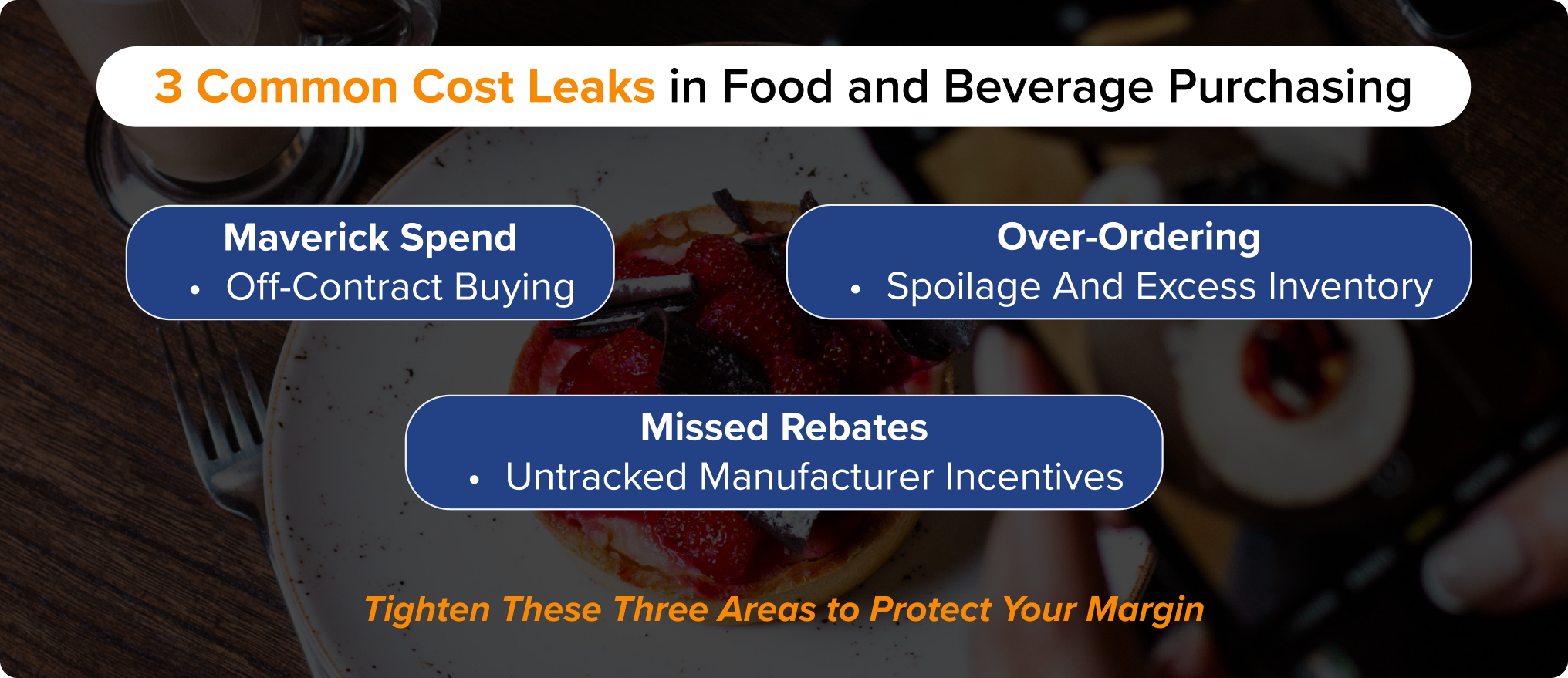
Reducing Maverick and Off-Contract Spend
When you buy things that aren’t part of a deal, that’s called “maverick spending.”
Even small purchases that aren’t on the contract add up.
Cutting down on maverick spending makes:
- Consistent pricing
- Get a rebate
- Predictability of the budget
Clear rules for buying and making sure suppliers are on the same page help cut down on these hidden leaks.
Optimizing Order Frequency and Volume
Ordering too often makes the cost of labor and delivery go up. Ordering too rarely raises the risk of spoilage.
To find the right balance:
- Looking at how much space is available
- Keeping an eye on how long products last
- Making sure that order cycles match sales volume
Optimizing the frequency of orders is a powerful way to lower the cost of buying food and drinks.
Supplier Management Best Practices
Having good relationships with your suppliers is very important for buying food and drinks.
Contract Compliance and Negotiation
Compliance makes sure that you are really getting the benefits of negotiated prices.
Look over contracts often and ask:
- Are we keeping our promises about volume?
- Are we getting the prices we agreed on?
- Are the rules for rebates clear?
- It’s not just about getting a lower price when you negotiate. It’s about making the service better, making sure deliveries are on time, and getting more value for your money.
Supplier Performance Tracking and Scorecards
Keep an eye on suppliers based on measurable standards like:
- Delivery on time
- Correct order
- Quality of the product
- Consistent pricing
Supplier scorecards make both sides more responsible and push for ongoing improvement.
Using Technology to Improve Food and Beverage Purchasing
It is hard to keep track of all costs when you do it by hand.
Technology can help with buying food and drinks in the following ways:
- Automating checks of invoices
- Keeping track of contract compliance
- Keeping an eye on rebate capture
- Giving information about spending
- Linking buying and inventory systems
Independent operators who have to handle a lot of different tasks find that visibility tools make it easier to make decisions and keep costs down.
Compliance, Food Safety, and Purchasing Controls
Food and drink purchases are directly related to following the rules and keeping food safe.
Purchasing controls make sure that:
- Suppliers that are approved meet safety standards.
- Records are kept up to date
- It’s easy to see where the product came from.
- It is easy to handle recalls.
Strong procurement processes protect your brand and lower the risk of running your business.
How Strategic Food and Beverage Purchasing Drives Long-Term Savings
Cutting costs in the short term can lead to problems in the long term. Buying food and drinks in a smart way can help you save money over time.
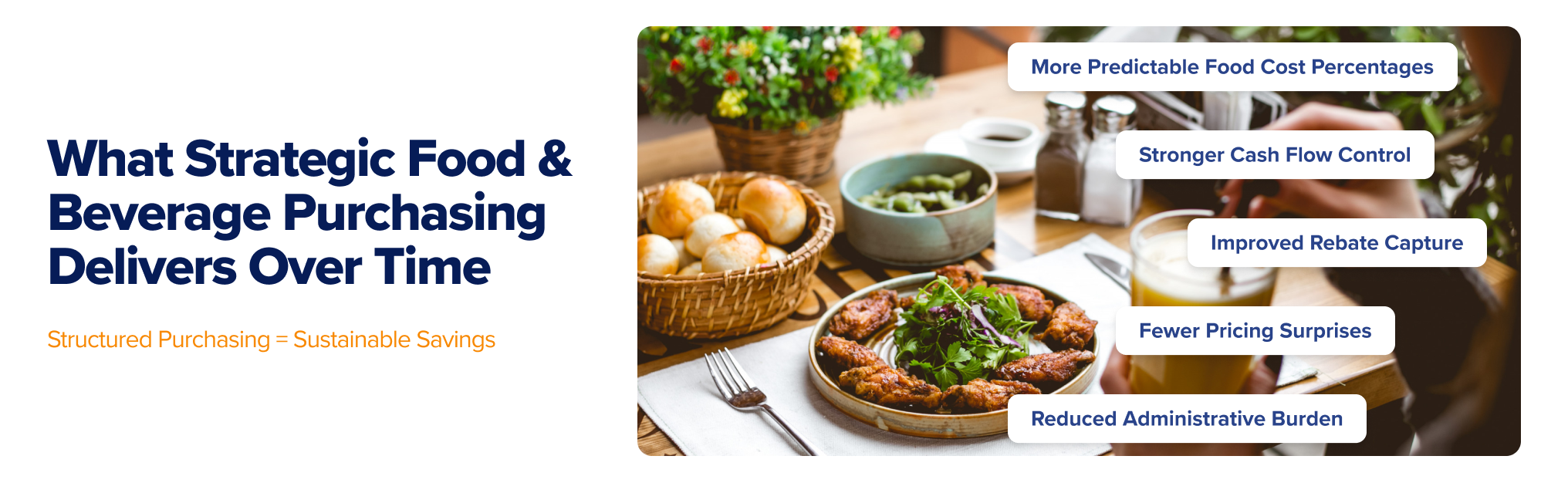
Over time, operators who use structured purchasing get the following benefits:
- More reliable percentages for food costs
- Better management of cash flow
- Better getting rebates
- Less price shock
- Less work for the administration
Most of the time, savings don’t happen overnight. They build up through careful execution.
Why Strategic Purchasing Partners Matter
Independent operators often have to do all the buying themselves.
Strategic partners add:
- Negotiated pricing power
- More suppliers in the network
- Help with managing rebates
- Tools for seeing prices
- Expertise in procurement
- Independent restaurants can run as well as much bigger groups if they have the right partner and a structured way to buy food and drinks.
FAQs About Food and Beverage Purchasing
What Is Food and Beverage Purchasing in Restaurants?
Restaurants use a structured process called food and beverage purchasing to find, order, receive, and keep track of the ingredients and drinks they need to run their businesses every day. It involves predicting demand, choosing suppliers, checking invoices, and keeping an eye on performance.
How Can Restaurants Reduce Food and Beverage Purchasing Costs?
Restaurants can save money by getting better at predicting demand, using contract pricing and rebates, spending less off-contract, making orders more often, and improving how they manage suppliers.
How Does Group Purchasing Help Restaurants Save Money?
Group Purchasing Organizations use the buying power of many operators to get better prices and rebate programs. This gives independent restaurants access to cost benefits that are usually only available to bigger chains.
What Role Does Technology Play in Food Purchasing?
Technology makes buying food and drinks easier by making prices more visible, automating the process of checking invoices, keeping track of contract compliance, and giving real-time spending data that helps you make better choices.
