


AlsoThe margins are smaller. Vendors’ prices change more quickly than menus. It’s hard to guess what work will be like. Prices for utilities are going up.
You’re not the only one who is under a lot of stress. All over the country, operators are changing how they save money for restaurants. They are now doing it every day instead of just once.
The good news? There are a lot of ways that restaurants can protect their profits that aren’t obvious. You just have to know where to look.
Why Cost Savings for Restaurants Matter More Than Ever
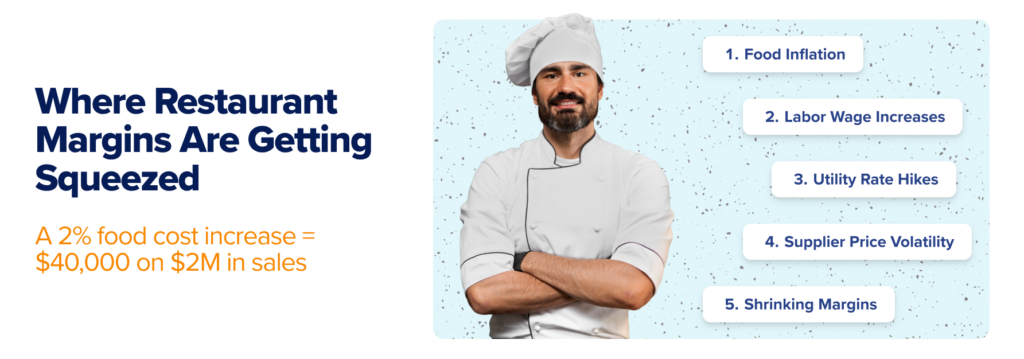
Restaurant owners have a problem because food prices, wages, and operating costs are all going up. Even small rises in the cost of food or labor can make a business lose money.
It might not seem like a big deal that food prices went up by 2%. But that means that every $2 million in sales costs $40,000 right off the top.
Restaurants can’t save money by cutting corners anymore. They are about making systems work better, making things easier to see, and making better choices about what to buy and how to run things without giving up quality or the guest experience.
The operators who are winning right now don’t always have the lowest prices. They are the most disciplined.
Food Cost-Saving Strategies for Restaurants
Restaurants can still control a lot of their costs, and food costs are still one of the biggest. The key is to keep it under control without making things less consistent or cutting back on portions.
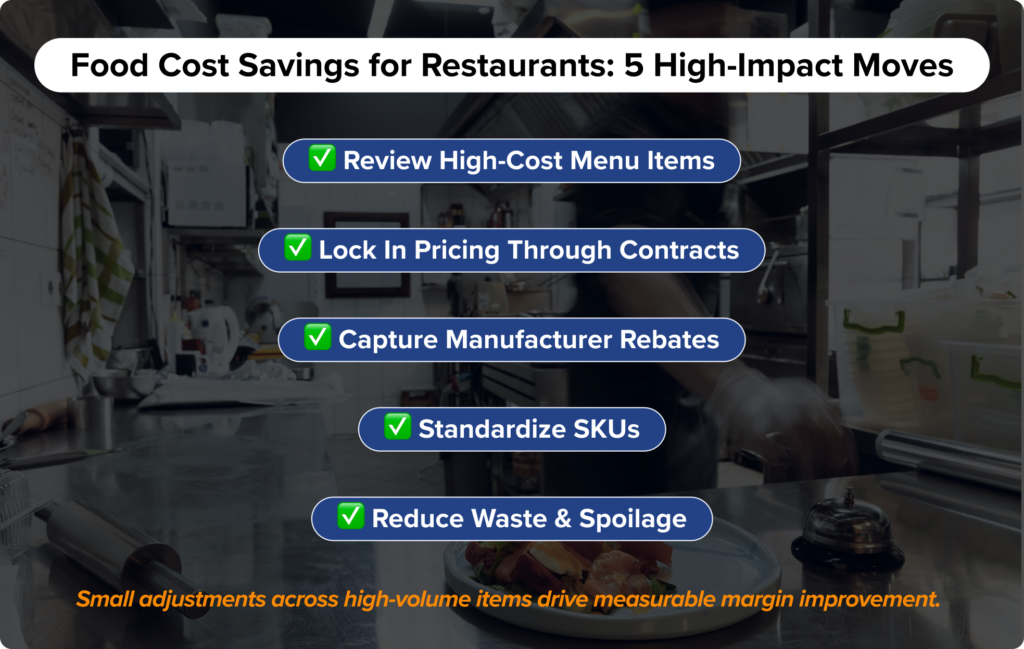
Identify High-Cost Menu Items and Improve Margins
There are always a few margin killers on every menu.
Look over the menu engineering first:
- Which items have ingredients that change a lot?
- What SKUs change every week?
- Where are the issues with portions happening?
Sometimes taking something away isn’t the best thing to do. It means changing the price of the item, the size of the portion, or using a different ingredient.
Making small changes to high-volume items over time can save restaurants a lot of money.
Manage Purchase Prices Through Contracts and Rebates
It may seem like buying on the spot market is flexible. But it’s hard to guess.
Strategic contracts help keep prices from going up and down. More powerful? Using rebate programs that give your business money back.
This is when GPO’s like Dining Alliance come in handy. Operators can get access to:
- Prices that have already been agreed upon
- Rebate programs from manufacturers
- Cashback opportunities on things you buy every day
Instead of going from vendor to vendor looking for the best deals, operators can buy everything in one place and keep track of their rebate earnings. Just being able to see that changes behavior.
Reduce Supplier Price Variations and SKU Complexity
Too many vendors and too many SKUs make things messy.
Unnecessary costs come from price differences between locations, inconsistent pack sizes, and extra items.
Standardizing the main ingredients across locations helps:
- Make sure people follow the rules in contracts
- Make predictions better
- Make ordering easier
- Get more power in negotiations
Having fewer SKUs often means better cost control.
Prevent Overstocking, Stockouts, and Spoilage
Poor inventory management quietly eats away at profits.
Ordering too much ties up money and causes things to go bad. Not ordering enough leads to last-minute purchases at higher prices.
Tight inventory systems, regular reviews of par levels, and keeping track of how often things are used can help get rid of those swings. Cutting spoilage by just 1–2% can make a big difference in annual margins.
Measure and Minimize Kitchen and Plate Waste
Waste isn’t just about losing trim. It is about:
- Too much food
- Mistakes in preparation
- Inventory that has gone bad
- Plates that were sent back
Tracking waste by type shows patterns. It could be produced trim. It could be that proteins go bad before you use them. Also, it could be uneven plating.
It’s easier to cut down on waste when you can measure it.
Labor Cost-Saving Strategies Without Hurting Service
Cutting labor without thinking is risky. Smart labor optimization is not the same.
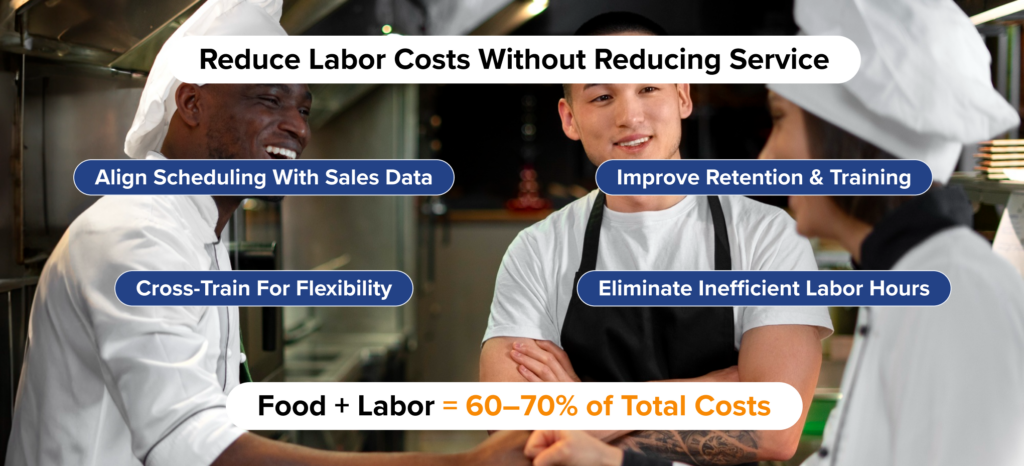
Eliminate Overstaffing and Inefficient Labor Hours
Look at how sales have changed over time and how they fit with your schedule.
Are you hiring enough people for every shift? Are slow days still getting the same level of coverage as weekends?
Aligning labor hours with real sales data helps get rid of shifts that aren’t needed without cutting service.
Reduce Turnover Through Better Training and Retention
It’s expensive to have turnover. It costs time and money to hire, onboard, and train new employees.
Ways to improve retention include:
- Clear ways to train
- Roles that are clear
- Ways to grow
- A culture of positive management
lowers the cost of hiring and makes operations more consistent.
Teams that stay the same are more productive.
Increase Productivity with Cross-Training and Flexible Roles
Cross-training lets restaurants change their coverage without hiring more people.
When team members can switch between prep, line, and expo roles, it is easier to change the schedule. That flexibility helps restaurants save money directly when business is slow.
Operational Cost-Saving Ideas for Restaurants
Operational inefficiencies often go unnoticed, except for food and labor.
Control Energy and Utility Usage Across Locations
Energy prices change depending on the season and the area.
Over time, installing programmable thermostats, keeping refrigeration seals in good shape, and keeping an eye on peak usage times can all lead to big savings.
Small changes add up in many places.
Extend Equipment Life with Preventive Maintenance
Repairs that need to be done right away cost a lot.
Preventive maintenance schedules cut down on emergency service calls and make equipment last longer. Regularly cleaning condenser coils and calibrating equipment can keep big problems from happening.
One of the most avoidable costs in food service is having to replace equipment early because it wasn’t taken care of.
Detect Losses from Theft, Waste, and Inventory Gaps
Shrink happens in small ways:
- Comps that aren’t tracked
- Overuse of portions
- Transfers that aren’t recorded
- Theft inside
Regular inventory checks and tracking purchases from the time they are made to the time they are used show differences quickly. The smaller the gaps stay, the faster they are found.
Automate Manual Processes to Improve Cost Control
Entering invoices by hand. Sheets of paper for inventory. Keeping track with a spreadsheet.
Automation tools lower the chance of human error and let you see in real time:
- Changes in the price of goods
- Following the terms of the contract
- Trends in use
- Spend by category
When operators can see cost changes every week instead of every three months, they make better decisions right away.
Building a Long-Term Cost Savings Strategy for Restaurants
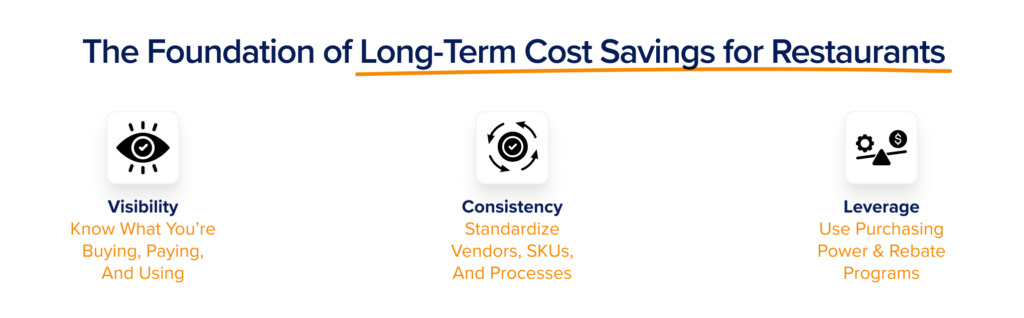
Three things make up the foundation of long-term cost savings for restaurants:
- Visibility means knowing what you’re buying, paying for, and using.
- Consistency means making sure that vendors, SKUs, and processes are all the same.
- Leverage means using your buying power and rebate programs to your advantage.
Controlling costs doesn’t mean lowering quality. It’s about making systems stronger.
Restaurants that regularly check the prices of food, labor, suppliers, and operating costs do better than those that only do so when their profits drop.
The best operators see cost management as an ongoing task, not something that needs to be fixed once a year.
A lot of the time, they don’t do it alone.
FAQs
Which Expense Areas Have the Biggest Impact on Profitability?
Food and labor usually cost between 60 and 70 percent of a restaurant’s total costs. Even small changes in these areas can have a big impact on how much money a business makes. Utilities, maintenance, and indirect spending are also important, but they are not usually the main ones.
Where Can Restaurants Cut Costs Without Affecting Quality?
Restaurants can keep quality high by focusing on things like getting the best deals on ingredients, offering rebates, reducing waste, making schedules more efficient, and keeping track of their inventory. They don’t have to cut portion sizes or the quality of the food.
How Do Purchasing Decisions Influence Overall Cost Control?
The reliability of suppliers, the consistency of prices, the compliance with contracts, and the money made from rebates all depend on what you buy. Prices are more stable and margins are easier to predict when buying plans are centralized and contracts are negotiated.
What Data and Tools Help Identify Cost Leaks Early?
You can see price increases, usage spikes, and compliance gaps early on with inventory tracking systems, purchasing dashboards, invoice auditing tools, and rebate tracking platforms. The faster operators can act, the sooner they know about changes in costs.
Rising costs cutting into your margins? Click here to see how Dining Alliance helps you unlock negotiated pricing, earn rebates, and gain better visibility into your purchasing—so you can protect profits without compromising quality.
