

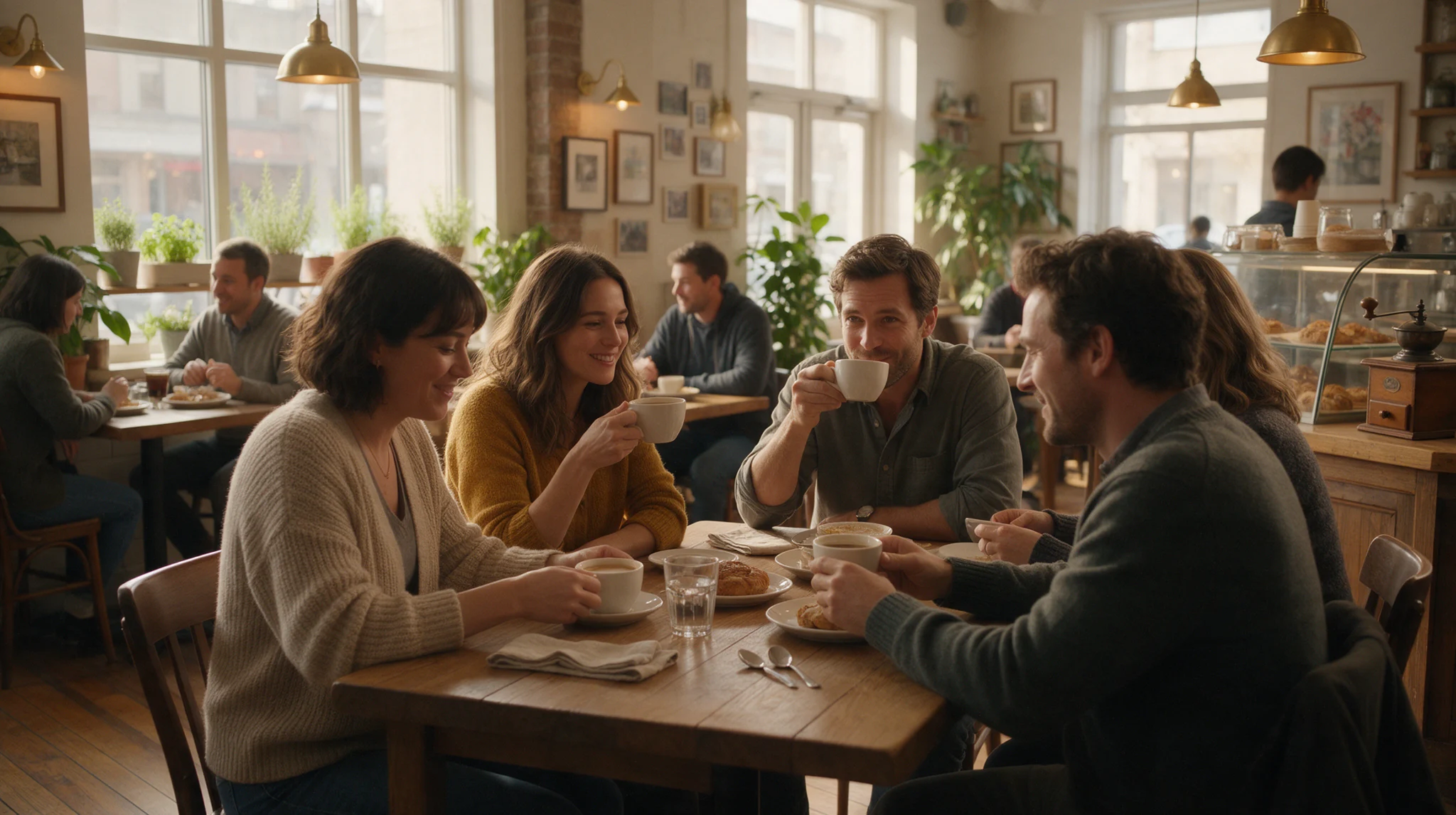
National Coffee Day is in September, but the opportunity for independent restaurants can last well beyond a single day. Coffee can help bring guests in earlier, increase beverage and dessert sales, and give operators a flexible base for seasonal limited-time offers.
Americans still love their daily cup. According to 2026 National Coffee Association findings reported by Reuters, 66% of U.S. adults drank coffee the previous day, averaging 2.8 cups per day. At the same time, 85% of coffee drinkers had coffee at home, the highest share since 2012.
That creates both a challenge and an opportunity for restaurants. Guests can brew a basic cup in their kitchens, so an away-from-home coffee order needs to offer something extra: an interesting flavor, a convenient add-on, a memorable presentation or a pairing worth leaving the house for.
Here are several ways to make coffee work harder across your menu.
Build a Coffee Promotion Around More Than a Free Cup
A giveaway can attract attention on National Coffee Day, but it is not the only way to create value. A promotion should encourage a larger visit or introduce guests to an item they may order again.
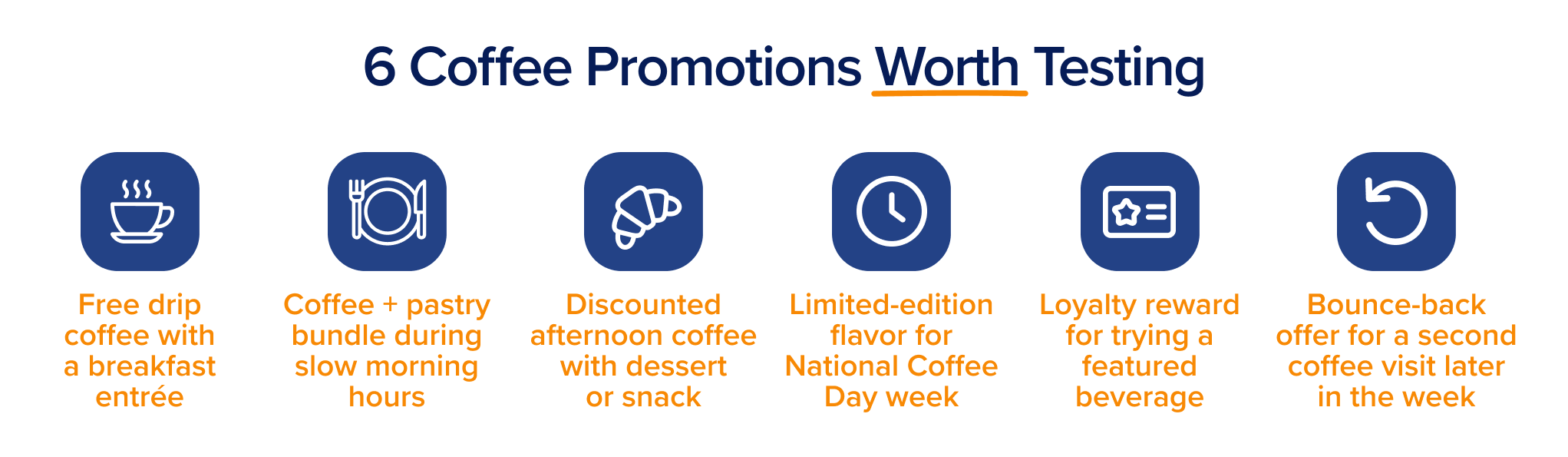
Consider promotions such as:
- A complimentary drip coffee with the purchase of a breakfast entrée
- A coffee-and-pastry bundle available during slower morning hours
- A discounted afternoon coffee paired with a dessert or snack
- A limited-edition flavor available only during National Coffee Day week
- A loyalty reward for guests who try a featured coffee beverage
- A bounce-back offer inviting guests to return for another coffee later in the week
Keep the offer easy for employees to explain and simple for guests to redeem. If the promotion requires three paragraphs of fine print, it may be too complicated for a busy shift.
Add Cold Coffee and Customization
Hot drip coffee still has a place on the menu, but cold beverages can help coffee compete across more dayparts. Iced coffee, cold brew and espresso-based drinks can feel like an afternoon treat, a meal add-on or a portable pick-me-up rather than something reserved for breakfast.
Operators do not need an enormous café menu to create variety. Start with one reliable coffee base and a focused set of add-ons, such as:
- Vanilla, caramel, mocha or a rotating seasonal syrup
- Sweet cream, flavored cold foam, or a whipped topping from suppliers like Rich’s
- Whole, skim and one or two popular nondairy options
- An extra espresso shot
- Cinnamon, cocoa or another simple finishing garnish
- A lower-sugar way to customize sweetness
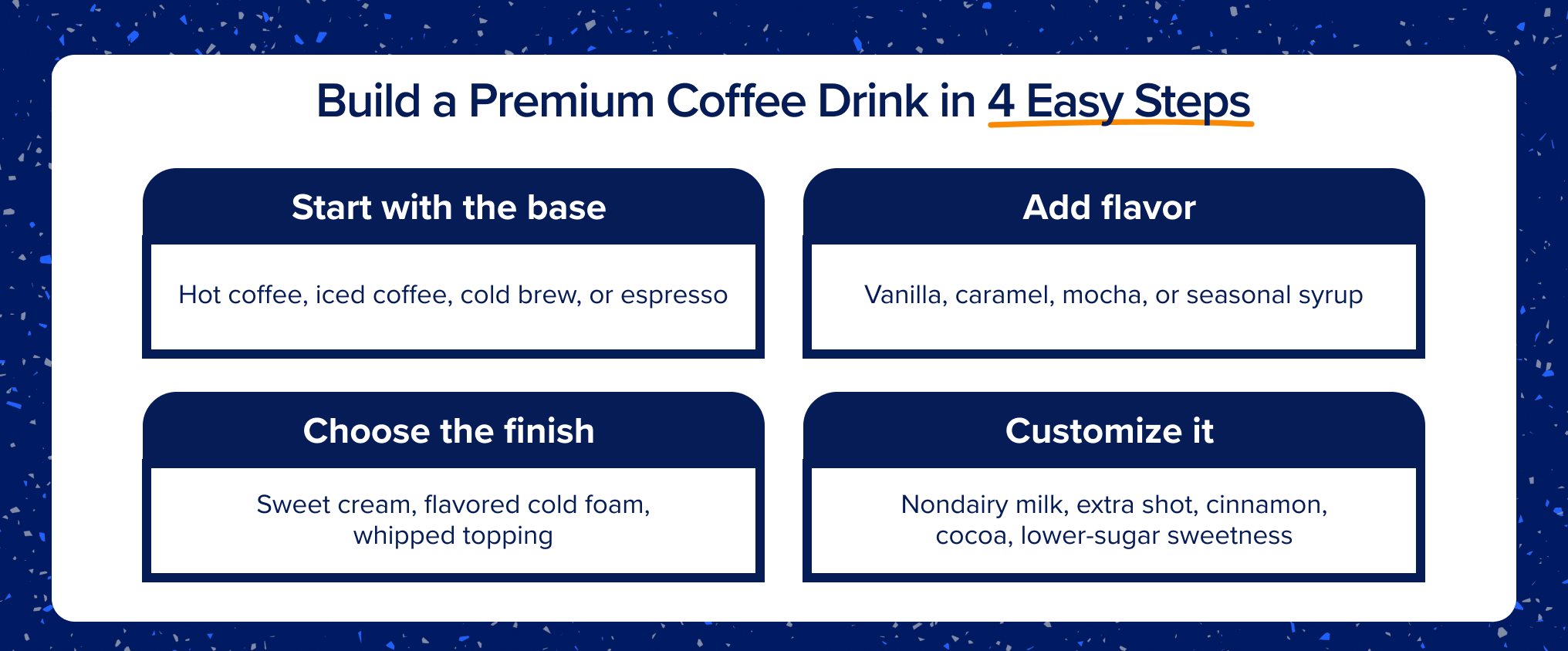
A modular setup gives guests choices without forcing the kitchen to manage a long list of single-use ingredients. It can also turn a familiar drink into a premium order with a relatively small operational lift.
Use Limited-Time Offers to Test New Flavors
National Coffee Day lands at the beginning of fall, making it a natural time to test seasonal beverages. Pumpkin spice may be the headline act, but it does not need to be the whole show.
Try flavors that complement your existing menu and brand, including:
- Maple and brown sugar
- Salted caramel or toffee
- Cinnamon and horchata-inspired flavors
- Mexican mocha with cinnamon and chile
- Honey and vanilla
- Tiramisu or toasted marshmallow
- Orange, cardamom or other globally inspired pairings
Pistachio is another flavor worth testing right now. Kerry’s Big Train Blended Crème Pistachio can help operators bring a trendy, premium-feeling beverage to the menu, especially as guests continue to respond to pistachio-forward desserts and drinks tied to the Dubai chocolate craze. Because it is nut-free from an allergen standpoint, made with natural colors, and available now, it offers an approachable way to launch a limited-time specialty beverage with broad appeal.
Choose one or two drinks your team can execute consistently, then monitor orders, modifiers and guest feedback. A successful limited-time offer can earn a permanent spot on the menu, while a slower seller can rotate out before it creates unnecessary inventory.
Make the Coffee Order Feel Worth It
In 2026, value is not limited to the lowest price. Guests may be willing to pay for a beverage that feels difficult to recreate at home, especially when it offers a distinctive flavor or experience.
Small touches can help support that value:
- Serve dine-in coffee in attractive mugs or glassware.
- Use a garnish that adds flavor instead of decoration alone.
- Give beverages clear, appealing names.
- Train employees to suggest a pastry, dessert or breakfast pairing.
- Call out roast style, origin or sourcing details when they are accurate and meaningful.
- Make takeout packaging sturdy, clean and easy to drink from with solutions from suppliers like Dart
Presentation matters, but speed and consistency matter more. A photogenic beverage that slows the line or arrives differently every time will not earn many repeat orders.
Pair Coffee With Food Across the Day
Coffee does not have to live only on the breakfast menu. Thoughtful pairings can help create add-on opportunities from morning through dessert.
For breakfast, pair a medium or dark roast with baked goods, breakfast sandwiches or richer egg dishes. In the afternoon, promote iced coffee alongside cookies, snackable desserts or grab-and-go items. After dinner, offer espresso, decaf coffee or a specialty drink with cake, chocolate desserts, tiramisu or ice cream.
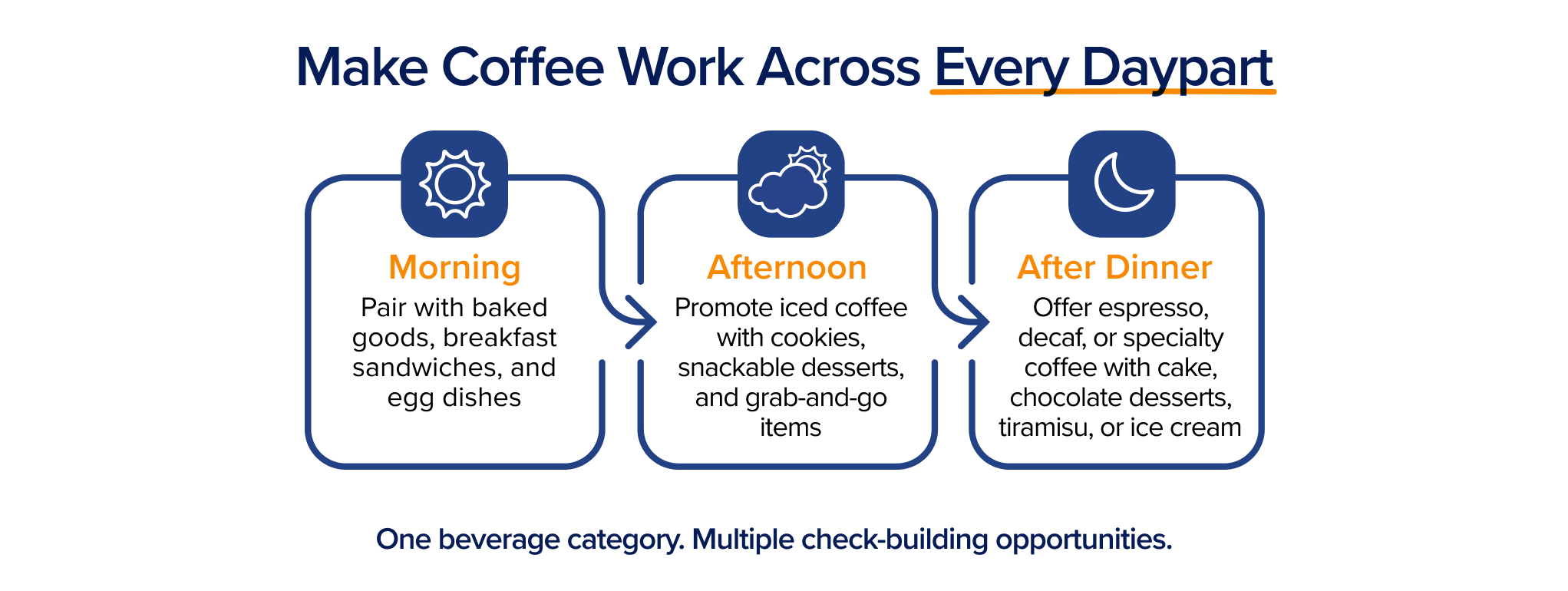
Bundles can make the decision even easier. A named pairing with one clear price gives guests a simple reason to add both items and helps employees make a natural recommendation.
Bring Coffee Into Desserts and Savory Dishes
Restaurants without a large beverage program can still use coffee as a versatile menu ingredient.
Coffee and espresso can deepen the flavor of desserts such as:
- Tiramisu
- Chocolate cake or brownies
- Coffee crème brûlée
- Affogato
- Cheesecake
- Ice cream, milkshakes or dessert cocktails
Coffee can also add roasted, slightly bitter notes to savory recipes. Consider using it in a spice rub for beef or pork, a barbecue sauce, a braising liquid or a mole-inspired sauce. Test carefully so the coffee supports the other flavors rather than overpowering them.
Cross-utilization is the goal. If a coffee product can work in a beverage, dessert and sauce, it is easier to use inventory efficiently and reduce the risk of waste.
Protect Margins as Coffee Costs Change
Coffee prices have remained a real consideration for operators. In September 2025, the average U.S. retail price for a pound of ground coffee reached $9.14, up 41% from the prior year, according to an Associated Press report on coffee inflation.
That makes recipe costing and portion control especially important. Before launching a promotion or specialty drink:
- Calculate the complete cost, including milk, syrup, toppings, cups, lids and straws.
- Standardize recipes and serving sizes.
- Track waste from brewed coffee that is not sold.
- Use sales data to set realistic batch sizes by daypart.
- Review supplier options and pack sizes before adding new ingredients.
- Price premium modifiers intentionally instead of giving away costly additions.
National Coffee Day can generate traffic, but the promotion should still support the operation’s larger goals. A high-volume offer is only helpful if the restaurant can execute it efficiently and understand what it contributes to the check.
Turn a One-Day Celebration Into a Smarter Coffee Program
National Coffee Day gives independent restaurants a timely reason to spotlight a familiar favorite. The bigger opportunity, however, is using what you learn to build a coffee program that generates sales throughout the year.
After the promotion, review:
- Which hot and cold beverages sold best
- What flavors and modifiers guests selected
- Which food pairings increased the average check
- When coffee orders peaked throughout the day
- Whether pricing supported the desired margin
- What guests and employees said about the experience
Having the right supplier relationships can make it easier to put those insights into action. Dining Alliance partners with coffee suppliers such as Peet’s Coffee, Nespresso, Kerry, Botrista, Folgers, and more, helping independent restaurants explore products and programs that align with their menus, service models and operational needs.
Ready to strengthen your coffee and beverage program beyond National Coffee Day? Click here to learn more about becoming a Dining Alliance member.