

Spend a few hours inside a processing facility or commissary kitchen and you’ll see it firsthand: there’s no such thing as a “set and steady” day. One run moves perfectly. The next one needs constant tweaks. Equipment hums along until suddenly it doesn’t. Someone calls out sick. An ingredient shipment arrives looking a little different than last week’s delivery. Food processing is controlled chaos even on the smooth days.
That’s the environment where artificial intelligence has started to earn its place. Not as a replacement for people, and definitely not as some futuristic robot takeover — but as an extra set of eyes that never gets distracted.
AI in food processing is really about monitoring. Sensors, cameras, and tracking software gather information faster than anyone ever could on their feet. They watch temperatures, production speeds, product appearance, sanitation timing, and equipment signals around the clock. Instead of waiting for a scheduled inspection or someone noticing a problem too late, issues can be flagged right as they form.
Role of AI in Food Processing
Think about how most operations run today. Supervisors rely on a mix of checklists, spot checks, and experience. That works until everything doesn’t happen neatly on schedule. AI adds a continuous layer of support.
Temperatures are logged automatically instead of being written down by hand. Cameras review products as they roll past, spotting irregularities humans might miss when the belt is moving fast. Software tracks sanitation completion times and equipment performance patterns. All of those inputs get compared against preset standards.
When something drifts — even slightly — supervisors get alerts while there’s still time to do something about it. Not at the end of the shift. Not after a full batch is finished. Immediately.
Why Food Processors Are Turning to AI
Most processors didn’t wake up wanting to experiment with new tech. They turned to AI because running a food operation has become more complicated and more expensive.
Faster Production
Small slowdowns stack up quickly. A chute that feeds unevenly, a conveyor that pauses too often — they all pull output down. AI brings attention to those small inefficiencies before they snowball into hours of lost time.
Reduced Waste
Waste comes in many quiet forms: trimming too much off proteins, making portions slightly too large, or missing small defects until finished product is already boxed. AI systems catch minor variations early so adjustments happen before shrink piles up.
Better Safety Control
Manual food safety checks are essential, but they’re limited by time and staffing. AI doesn’t have those gaps. Monitoring runs continuously, adding an always-on layer of oversight to temperature compliance, sanitation flow, and packaging integrity.
Where AI Is Making the Biggest Difference
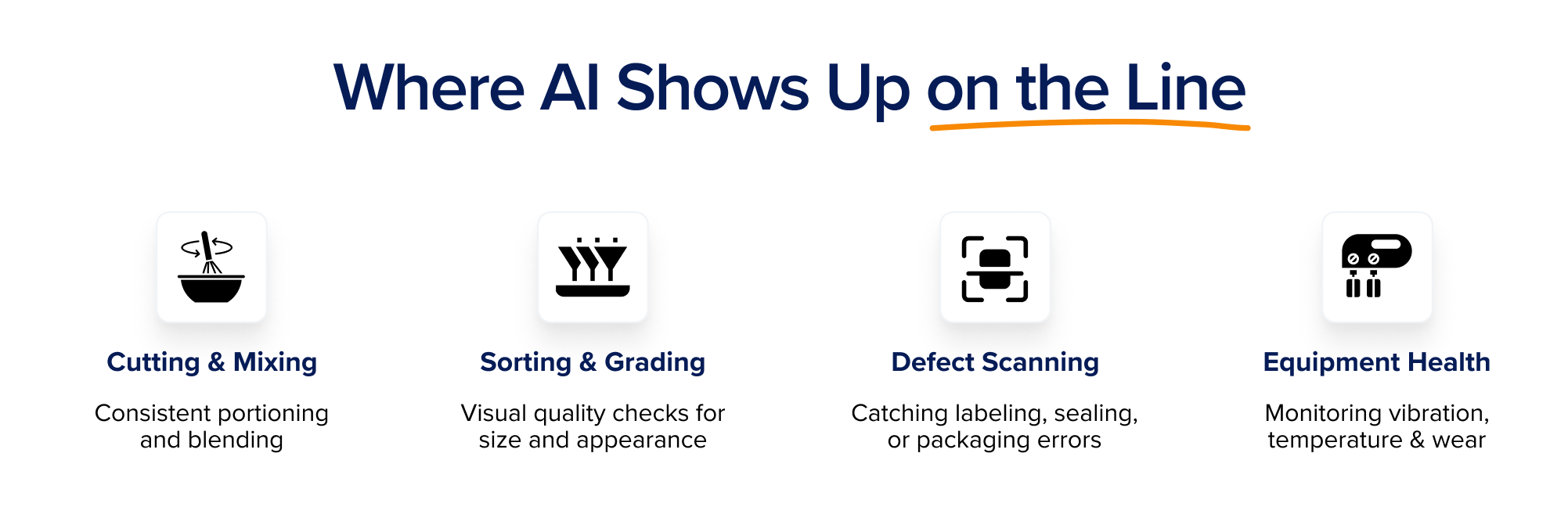
Processors aren’t using AI everywhere at once. They’re introducing it where mistakes tend to hide.
Cutting and Mixing
AI-guided calibration maintains consistent cuts and blends over the course of long shifts. That consistency keeps portioning tight and reduces ingredient overuse — an easy place for food cost creep to take hold.
Sorting and Grading
Computer vision can review quality at speeds no human crew could match. It flags subtle discoloration or size inconsistencies quickly so substandard items don’t move further down the chain.
Defect Checks
Packaging line cameras catch sealed lids that didn’t quite seal, labels that shifted, or tampering issues seconds after they happen instead of after pallets are loaded for shipping.
Machine Health
Small vibrations and heat changes signal mechanical wear long before breakdowns occur. AI identifies those patterns so maintenance can be scheduled calmly — not during a sudden shutdown.
How AI Is Improving Food Processing
The biggest shift AI has brought to food processing isn’t automation — it’s awareness.
For the first time, teams can see how all their moving parts work together. Labor patterns, machine performance, sanitation schedules, quality checks, and waste trends connect into one clearer operational picture. When something dips, operators don’t just see the impact; they see the cause.
That level of visibility means fewer rushed reactions and more controlled, confident adjustments.
Food Safety and Quality with AI
Food safety never lives in theory — it lives on the line. Inspections happen while belts move, teams hustle between stations, and pressures mount to keep orders flowing. Even excellent teams can’t watch every detail at the same time.
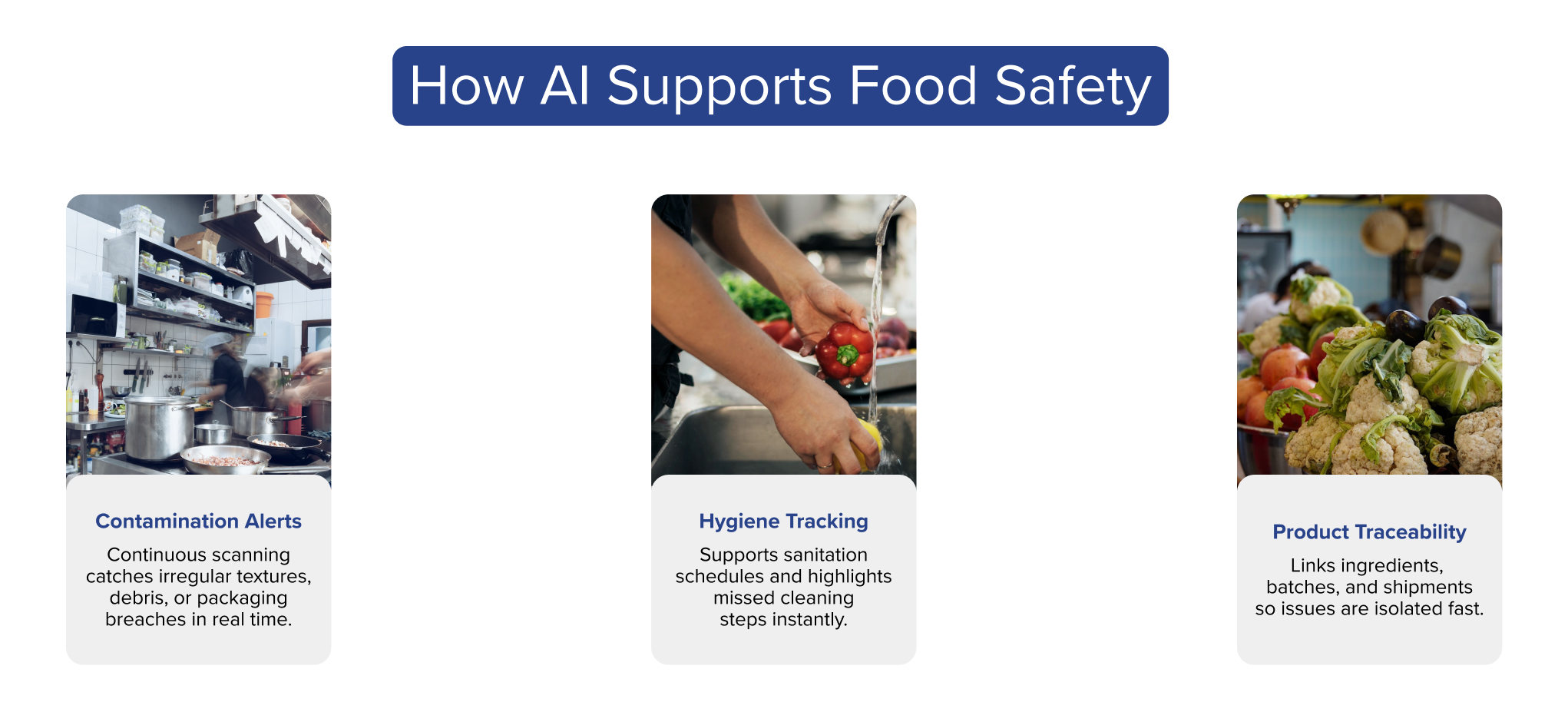
Contamination Alerts
AI systems never blink. They continuously scan for irregular textures, debris, foreign materials, or packaging seals that failed silently. When production speeds surge, these systems become particularly valuable, flagging issues that humans simply don’t have the time or angle to spot.
Hygiene Tracking
Sanitation breakdowns rarely come from neglect — they happen when tasks get rushed or accidentally skipped. AI tracking tools support crews by verifying cleaning cycles and highlighting missed steps in the moment rather than days later during paperwork checks or audits.
Product Traceability
When questions arise about specific batches, speed matters. AI connects ingredient records, batch numbers, packaging runs, and shipment logs into faster traceability systems. That tight data loop means smaller recalls, quicker responses, and less production disruption overall.
Challenges of Using AI in Food Processing
Like any big operational change, AI isn’t effortless to adopt.
High Investment
Some systems require upfront capital that must be balanced carefully against already tight budgets. The goal is starting where payoff is clearest rather than trying to automate everything at once.
System Complexity
Older equipment doesn’t always integrate easily with modern platforms. Getting machines, sensors, and software to communicate smoothly can take testing and patience.
Training Needs
Teams need time to get comfortable trusting screen data and alerts. The tools don’t replace experience — they work best when paired with it.
Data Issues
If logging practices are inconsistent or manual entries aren’t reliable, AI insights lose accuracy. Technology can’t fix poor data discipline on its own.
Getting Started with AI in Food Processing
For most facilities, progress begins modestly.
1. Find Areas Where AI Makes Sense
Look at where frustration is already highest — repeat downtime, ongoing sanitation gaps, or quality rejections.
2. Set Clear Goals and Expectations
Know what improvement actually means before investing: fewer defects, tighter yields, or reduced maintenance emergencies.
3. Select the Right Technology
Choose tools that solve everyday problems — not ones promising dramatic transformations that never materialize.
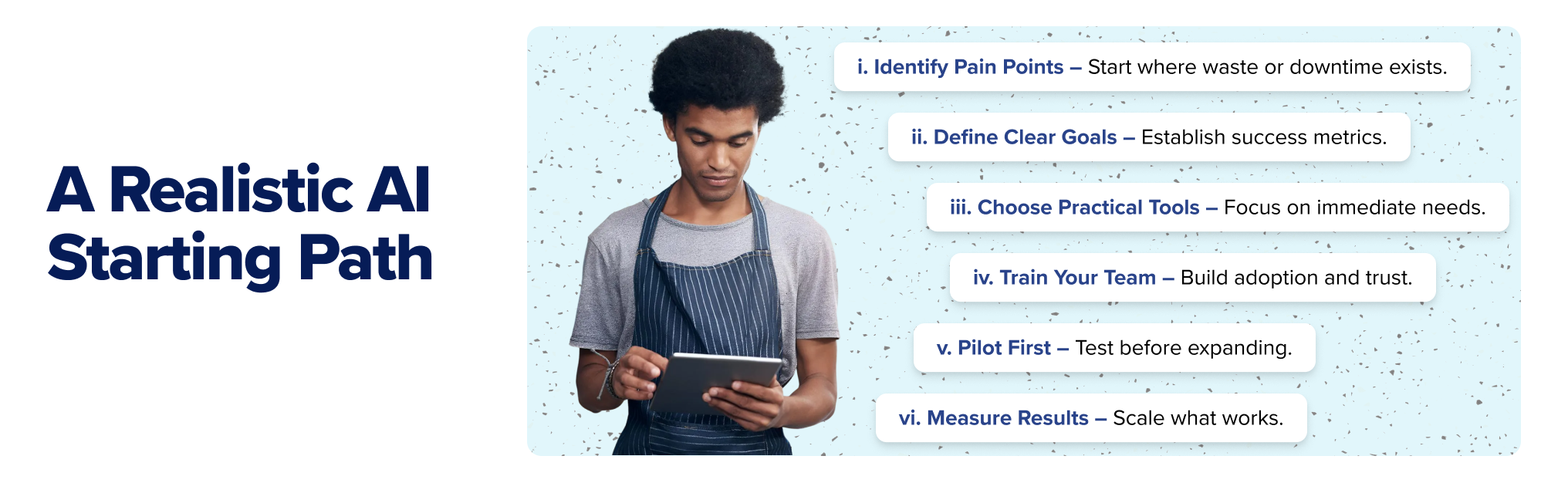
4. Prepare Your Team for Change
When staff understand that technology helps them work smarter instead of replacing jobs, gathering buy-in becomes much easier.
5. Roll Out Changes Gradually
Pilots build confidence, allow mistakes without major disruption, and give teams time to adjust workflows.
6. Measure Progress and Results
Early wins build trust and determine when expansion makes sense.
Final Words
AI isn’t removing the human side of food processing — it’s reinforcing it. Skilled people are still doing the hard work every day. AI simply gives them clearer visibility into what’s happening while production is actually running.
In an industry where mistakes cost real money and safety has zero tolerance, that clarity helps teams stay ahead of problems instead of chasing them afterward.
As operators look to modernize both production and purchasing without losing control of costs, Dining Alliance works alongside independent businesses to strengthen supplier relationships, secure better pricing programs, and create operational stability — the same fundamentals AI technology is designed to support from the processing floor to the plate. Click here to explore how Dining Alliance helps you turn everyday purchasing into real profit protection.
Frequently Asked Questions (FAQs)
How is AI used in food processing plants?
AI supports quality inspections, sanitation monitoring, equipment maintenance tracking, product traceability, and production flow analysis using sensors, cameras, and software platforms.
Is AI suitable for small food processing facilities?
Yes. Many solutions are modular, allowing smaller operations to begin with targeted projects rather than full-scale deployments.
Does AI improve safety during processing stages?
Yes. Continuous scanning and hygiene tracking add constant oversight beyond traditional spot checks.
How expensive is AI implementation in food processing?
Costs vary widely. Some facilities start with small pilots that are affordable, then expand as performance gains prove worthwhile.