

Running a restaurant takes more than good recipes — it takes a lot of juggling. One day you’re tracking deliveries, the next you’re trying to stretch your budget or fix a last-minute supplier hiccup. The food world moves fast, and lately, so does the technology behind it.
Artificial intelligence might sound like something reserved for big chains, but AI in food distribution is already shaping how smaller operations get what they need. It’s showing up in the background — predicting orders, reducing delays, and helping suppliers move ingredients more efficiently. The result? Fresher food showing up when it should, fewer surprises in pricing, and a little less chaos behind the scenes.
How AI is Revolutionizing Food Distribution
You know how food distribution goes — it’s never as simple as it looks on paper. One week you’re fully stocked, and the next you’re short a case of lettuce and calling your supplier at 6 a.m. There’s forecasting, warehouse juggling, truck delays, and food safety checks that always take longer than they should. A tiny hiccup anywhere along the line can turn into a big, expensive headache.
That’s where AI in food distribution is starting to pull its weight. It’s kind of like having a smart extra set of eyes on everything — watching orders, trucks, and timing all at once. It spots patterns, predicts demand, and helps suppliers make better calls before problems hit.
The result? Fewer surprises. Faster turns. Fresher food that actually shows up when you expect it. It’s not perfect, but it’s making the whole process feel a lot less like guesswork and a lot more like control.
Key Applications of AI in Food Distribution
AI touches almost every part of food distribution these days — sometimes in ways you wouldn’t even notice. It’s behind the scenes helping trucks run on time, keeping stock levels steady, and giving distributors a clearer picture of what operators really need.
Demand and Inventory Forecasting
- Think of it like this: instead of guessing how much product to order, AI looks at sales history, the weather, and even what’s happening around town. It learns patterns and gives a heads-up before you run short or overbuy. For independent operators, that can mean less waste sitting in the cooler and more cash staying in your pocket.
Optimized Logistics and Warehousing
- Distribution centers are using AI to make sense of the chaos — from how pallets are stacked to which route gets a driver to your door faster. It helps shave minutes off deliveries and keeps product moving instead of sitting. When routes are tighter, fuel use drops and your orders show up fresher.
Enhanced Food Safety and Traceability
- This is where it gets powerful. AI can follow every case from the supplier all the way to your kitchen, catching anything that looks off along the way. If there’s ever a recall, tracing it back takes hours instead of days. That kind of visibility keeps both operators and guests safer.
Supplier and Customer Management
- Distributors are using AI to actually understand their customers — what they order, when they order it, and what might help them run better. The result for restaurant operators? Fewer surprises, smarter suggestions, and stronger relationships with the people who keep your kitchen stocked.
Benefits of AI in Food Distribution
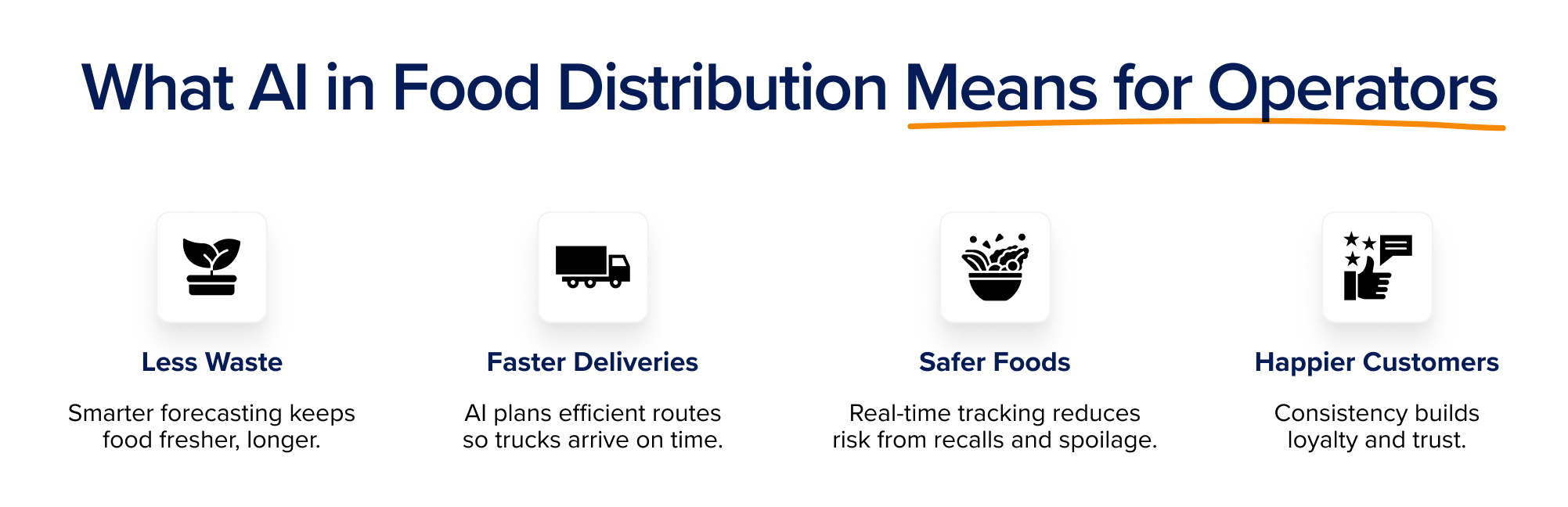
There’s a reason everyone keeps talking about AI in food distribution — it’s actually helping on the ground, not just in theory. Most operators have already felt a few of these changes, even if they didn’t realize AI was part of it.
Less Waste, More Savings
AI does a pretty good job of predicting what you’ll actually need, which means fewer boxes sitting around going bad. It also helps distributors keep products fresher by moving them faster. Less waste. Lower food costs. Win-win.
Smarter Deliveries
No one loves waiting on a late truck. AI helps plan routes and timing so deliveries hit when they’re supposed to. It’s not magic, but it does make the process smoother — and that matters when you’re counting on ingredients to show up mid-shift.
Safer Food
With all the tracking tools in place, AI can spot things like bad temperature logs or weird storage patterns before they cause a problem. If there’s ever a recall, it’s easier to trace where the issue started instead of scrambling to figure it out later.
Happier Customers
When food shows up fresh, prices stay consistent, and service feels predictable, it builds trust. Guests might not see all the work happening behind the scenes, but they feel it when their meal hits the table.
Challenges of Implementing AI in Food Distribution
Sure, AI in food distribution sounds great on paper. But rolling it out? That’s where things get tricky. It’s not plug-and-play, and most folks in the business know it takes time, money, and patience to get right.
Data’s the First Speed Bump
AI can only be as smart as the information it gets. If the data’s messy or outdated — and let’s be honest, a lot of older systems still are — the results won’t be reliable. Cleaning that up is usually the first headache before the real benefits kick in.
The Cost (and Skill) Gap
Getting AI off the ground isn’t cheap. You’ve got software costs, setup time, and training to think about. Smaller distributors or independent operators might not have tech teams waiting in the wings, so partnerships and shared resources become really important.
People and Process Changes
New tools always shake things up. Some staff might worry about being replaced or just feel uneasy about new tech. That hesitation can slow things down, especially in places where “we’ve always done it this way” is still the norm.
The Future of AI in Food Distribution
If the last few years proved anything, it’s that food distribution never stands still. And it’s pretty clear AI in food distribution isn’t slowing down anytime soon. The tools that once felt futuristic are starting to show up in everyday systems — from smarter ordering platforms to delivery dashboards that update by the minute.
Picture this: you open your phone and see supplier pricing, truck ETAs, and stock levels without making a single call. That’s the kind of visibility AI is pushing toward. It’s also helping distributors cut down on fuel use, plan greener routes, and react faster when markets shift or weather throws a wrench in things.
For restaurant operators, it’s not just about tech for tech’s sake. It’s about a smoother supply chain, fewer surprises, and a little more breathing room to focus on the food — and the guests — that make the business worth running.

Why It Matters for Your Restaurant
At this point, AI in food distribution isn’t just a buzzword. It’s becoming part of how food moves, how prices stabilize, and how kitchens stay stocked. For independent operators, it’s one of those quiet shifts that ends up making a big difference — helping you manage costs, cut down on waste, and keep ingredients coming in on time.
The truth is, this technology isn’t something to wait on. It’s already here, woven into the systems that power your orders and deliveries. The more you understand how it works, the better you can use it to your advantage — and that might just be the smartest move you make this year.