

If you’ve ever looked at a food invoice and wondered, “How did this get so expensive?” you’re not alone.
Restaurant purchasing has gotten a lot more complicated over the past few years. Prices move around, products disappear without much warning, and the supplier you bought from last month may not have the best price today. On top of that, you’re trying to keep shelves stocked without tying up cash in inventory that might never get used.
That’s why restaurant purchasing deserves more attention than simply placing the next order before you run out of product.
A good purchasing process helps you control food costs, reduce waste, and make better decisions about where your money goes. It won’t stop food prices from changing, but it can help you stay ahead of them.
In this guide, we’ll break down the restaurant purchasing process into practical steps that can help independent operators spend smarter and protect their margins.
What Is Restaurant Purchasing?
Restaurant purchasing is exactly what it sounds like. It’s everything that happens before the products arrive at your back door.
It starts with deciding what you need, figuring out how much to buy, comparing suppliers, placing orders, checking deliveries, and making sure everything gets stored correctly once it arrives. Then the cycle starts all over again.
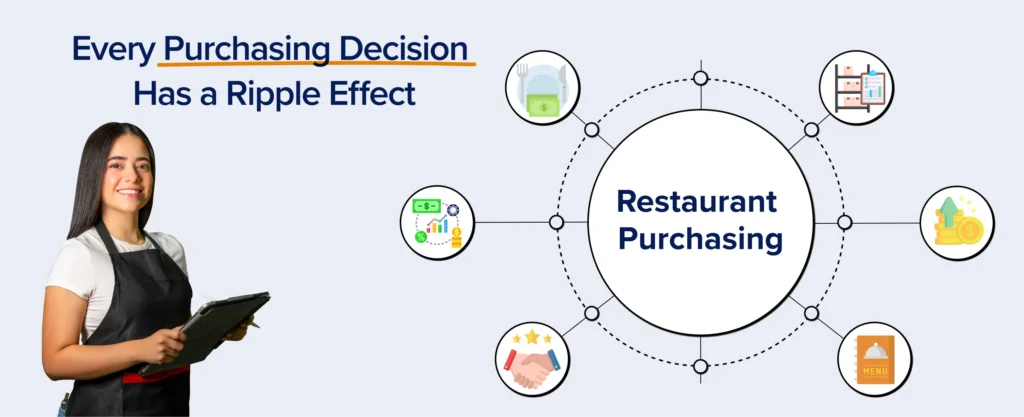
Some operators think restaurant purchasing is simply ordering food every week. In reality, it’s one of the biggest factors affecting profitability because every purchasing decision has a ripple effect. Buy too much, and you risk spoilage. Buy too little, and you may end up paying premium prices on emergency orders. Choose the wrong supplier, and inconsistent pricing or poor service can quietly chip away at your margins.
The restaurants that stay on top of purchasing usually aren’t doing anything flashy. They’ve simply built a routine. They know what they’re buying, why they’re buying it, and whether those decisions are actually paying off.
Why Restaurant Purchasing Is Critical to Restaurant Profitability
Food is one of the largest expenses for almost every restaurant, which means even small purchasing decisions can have a noticeable impact over the course of a year.
Let’s say one supplier charges an extra 30 cents per pound for chicken. That doesn’t sound like much until you multiply it across hundreds or even thousands of pounds. The same thing happens with paper products, cleaning supplies, cooking oil, produce, and just about everything else coming through your kitchen.
That’s why smart restaurant purchasing isn’t about chasing the absolute lowest price every time. It’s about understanding the total value you’re getting.
A dependable supplier that delivers on time, honors contract pricing, and consistently provides quality products can save you money in ways that don’t always show up on a single invoice.
The best operators also pay attention to the numbers after the order is placed. They review food costs, watch purchasing trends, look for opportunities to earn cash back rebates on qualifying purchases, and make adjustments before small issues become expensive ones.
At the end of the day, restaurant purchasing isn’t just an operational task. It’s one of the simplest ways independent restaurants can improve profitability without changing the guest experience.
Common Challenges in Restaurant Purchasing
No restaurant gets through a year without running into purchasing headaches. Some are easy to solve. Others seem to pop up every time you think you’ve gotten ahead.
The challenge is that purchasing problems rarely happen one at a time. A price increase might force you to switch suppliers. A delayed delivery can leave you scrambling to buy product somewhere else. Before you know it, food costs are climbing and you’re spending more time putting out fires than running your business.
Here are a few of the biggest challenges independent restaurants face with restaurant purchasing today.
Rising Food Costs
If there’s one thing restaurant operators can count on, it’s that food prices won’t stay the same for long.
One week your invoice looks normal. The next week, chicken, eggs, cooking oil, or produce have all gone up. Those increases may not seem dramatic on their own, but they add up quickly when you’re ordering every week.
You can’t control market prices, but you can control how you respond to them. Reviewing invoices, comparing supplier pricing, adjusting menus when necessary, and looking for rebate opportunities can help soften the impact instead of simply absorbing every increase.
Supplier Price Variability
Not every supplier charges the same price for the same product, and those prices can change more often than many operators realize.
It’s easy to fall into the habit of ordering from the same supplier every week because it’s familiar. The problem is that loyalty doesn’t always guarantee the best value. Prices fluctuate, contract terms change, and substitute products can show up without much notice.
That doesn’t mean you should constantly switch suppliers. It does mean it’s worth checking pricing regularly and having more than one reliable supplier available when you need options.
Inventory Waste
Every restaurant throws something away. The goal is to keep it from becoming part of your weekly routine.
Overordering, inaccurate sales forecasts, poor product rotation, or ingredients that don’t move fast enough can all lead to unnecessary waste. Once product ends up in the trash, you’ve paid for it twice: once when you bought it and again when it never generated revenue.
Keeping a close eye on inventory levels and ordering based on actual demand instead of guesswork can go a long way toward reducing waste.
Limited Purchasing Power
Independent restaurants don’t usually have the buying power of national chains, and that can make negotiating prices more difficult.
Large restaurant groups often purchase enormous volumes across hundreds of locations, giving them access to pricing that isn’t always available to smaller operators.
That doesn’t mean independents are stuck paying more for everything.
Joining a restaurant purchasing group like Dining Alliance gives independent operators access to negotiated pricing, cash back rebates, and supplier programs that would typically be reserved for much larger organizations. It allows smaller restaurants to benefit from collective purchasing power while still maintaining the flexibility to run their business their way.
Building an Effective Restaurant Purchasing Process
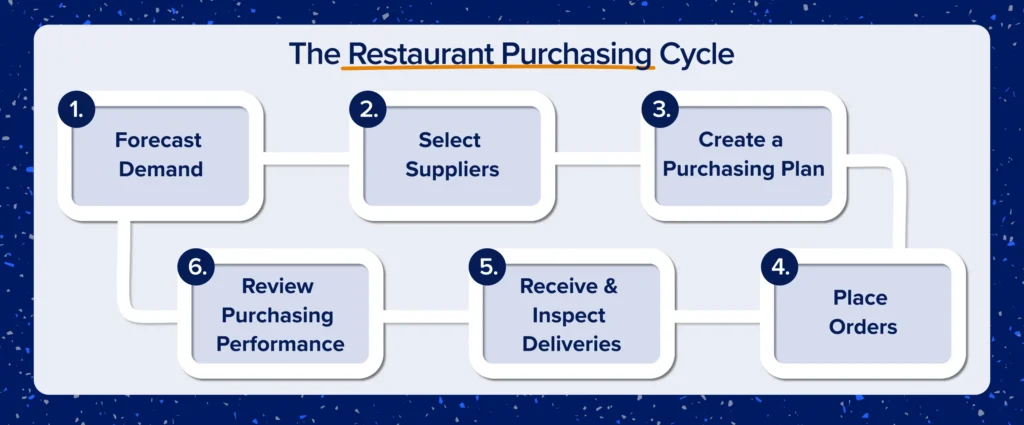
The best purchasing systems aren’t necessarily the most complicated. They’re the ones that become part of the weekly routine.
Instead of scrambling to place orders when you’re running low on product, a solid restaurant purchasing process helps you stay one step ahead. You know what you need, when you need it, and where you’re getting the best value. That means fewer surprises, less waste, and more control over your costs.
Forecast Demand and Determine Inventory Needs
Before placing an order, take a step back and look at what’s coming up.
Last week’s sales are a good starting point, but they’re only part of the picture. Holidays, local events, catering orders, weather, and seasonal menu changes can all affect how much inventory you’ll need.
No forecast is perfect, and that’s okay. The goal is to make purchasing decisions based on real information instead of instinct alone. The closer your inventory matches customer demand, the less money you’ll have sitting on the shelf or throwing in the trash.
Select the Right Restaurant Suppliers
The right supplier should make your job easier, not harder.
Price matters, but it isn’t the only thing worth comparing. Reliable deliveries, consistent product quality, responsive customer service, and transparent pricing all play a role in building a strong supplier relationship.
If you’re evaluating new vendors, take time to compare more than just what’s on the invoice. Our guide on how to find reliable and affordable restaurant suppliers walks through what to look for when comparing suppliers and how to choose partners that support your business over the long term.
Many independent restaurants also work with a group purchasing organization (GPO) like Dining Alliance to gain access to negotiated pricing, cash back rebates, and a larger network of trusted supplier partners. That allows smaller operators to benefit from purchasing programs that are often difficult to secure on their own.
Create a Purchasing Plan and Budget
A purchasing plan gives you a roadmap instead of forcing you to make every buying decision on the fly.
Start by reviewing previous purchasing trends and setting a realistic budget based on expected sales. Then build a routine around how your restaurant orders products each week.
Your purchasing plan should answer questions like:
- Which products are ordered every week?
- Which ingredients tend to fluctuate in price?
- Who is responsible for placing orders?
- Which suppliers are your primary and backup options?
- How much should you expect to spend during a typical week or month?
Having those answers ahead of time makes purchasing more consistent, especially when multiple people are involved in ordering.
Place Orders Strategically
Waiting until you’re almost out of product usually leads to rushed decisions.
Emergency orders often cost more, limit your options, and increase the chances of accepting substitute products that weren’t part of your original plan.
Instead, build a regular ordering schedule around inventory levels and supplier delivery days. Planning ahead gives you time to compare pricing, consolidate orders when it makes sense, and avoid paying extra because you’re in a hurry.
Receive, Inspect, and Store Inventory Properly
The work isn’t finished once the delivery truck pulls away.
Every shipment should be checked for accuracy, product quality, and proper temperatures before it’s accepted. Catching a mistake during delivery is much easier than discovering it later when you’re prepping for service.
Once products are put away, proper storage and a first-in, first-out (FIFO) rotation system help extend shelf life, reduce spoilage, and keep food quality consistent.
Monitor Purchasing Performance and Costs
Restaurant purchasing works best when you treat it as an ongoing process instead of a weekly task.
Set aside time each week or month to review purchasing performance. A quick review can help you spot small issues before they become expensive ones.
Keep an eye on metrics such as:
- Food cost percentage
- Price changes on high-volume ingredients
- Inventory waste and spoilage
- Supplier delivery accuracy
- Cash back rebates earned
- Emergency or last-minute purchases
Over time, those numbers tell a story. They can reveal where costs are creeping up, which suppliers are delivering the best value, and where simple adjustments can improve profitability. Many operators also use purchasing technology to gain better visibility into pricing trends and supplier performance, making it easier to make informed purchasing decisions instead of reacting to every invoice.
Common Restaurant Purchasing Mistakes to Avoid
Even experienced operators make purchasing mistakes from time to time. The difference is that successful restaurants catch those habits early and make adjustments before they start affecting profitability.
Here are four common restaurant purchasing mistakes that can quietly drive up costs if they become part of your routine.
Purchasing Without Demand Forecasting
Ordering based on what you think you’ll need instead of what your sales data tells you is an easy habit to fall into, especially during busy weeks.
The problem is that customer traffic isn’t always predictable. Maybe business slows down because of the weather, or maybe a local event brings in twice as many guests as usual. Without some level of forecasting, it’s easy to end up with too much inventory or not enough.
You don’t need to predict the future perfectly. Looking at recent sales, seasonal patterns, and upcoming events is often enough to make smarter purchasing decisions than relying on memory alone.
Relying on a Single Supplier
Working with a supplier you trust makes life easier, but depending on only one supplier can leave you with very few options when something changes.
Prices increase. Products go out of stock. Deliveries get delayed. When that happens, having a backup supplier can keep service running without forcing you into expensive last-minute purchases.
Building relationships with more than one reliable supplier gives you flexibility without requiring you to constantly shop around.
Ignoring Inventory Data
Inventory counts aren’t the most exciting part of running a restaurant, but they tell you a lot about where your money is going.
If certain ingredients are consistently being thrown away, or if you’re ordering the same products more often than expected, your inventory is trying to tell you something.
Reviewing inventory regularly helps uncover waste, purchasing patterns, and opportunities to adjust ordering before those small issues become bigger expenses.
Failing to Track Food Costs
It’s easy to notice when one invoice looks higher than usual. What’s harder to spot is the gradual increase that happens over several months.
That’s why tracking food costs consistently is so important. Instead of reacting after margins have already taken a hit, you’ll be able to identify trends much earlier.
Whether you’re reviewing costs every week or every month, paying attention to your numbers makes it easier to adjust menu pricing, evaluate suppliers, and make purchasing decisions based on real data instead of assumptions.
Restaurant Purchasing Best Practices for Independent Operators
There isn’t a finish line when it comes to restaurant purchasing.
What worked six months ago may not work today. Suppliers adjust pricing. Customer favorites change. Some products become harder to get, while others suddenly go on promotion. The restaurants that stay ahead aren’t constantly reinventing their purchasing process. They just make a habit of checking in and making small adjustments along the way.
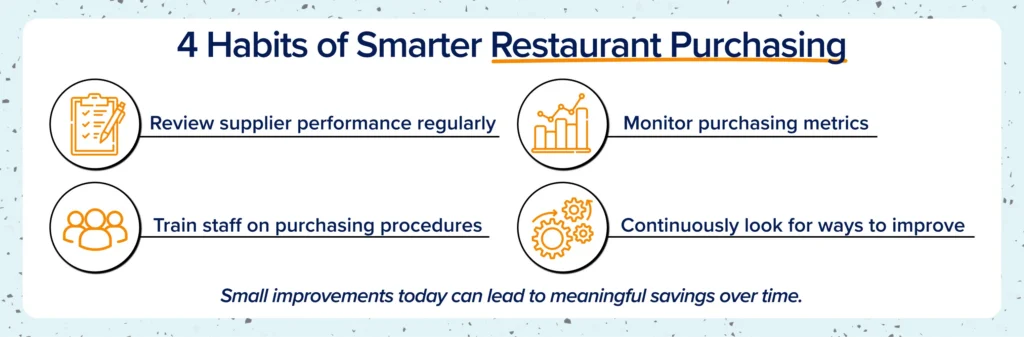
Review Supplier Performance Regularly
It’s easy to keep ordering from the same supplier simply because it’s one less thing to think about.
Every now and then, though, it’s worth asking a few simple questions. Are deliveries still arriving when they’re supposed to? Has product quality stayed consistent? Are invoice prices lining up with what you expected?
If the answer starts becoming “not always,” don’t ignore it. A supplier that’s a great fit today may not be the best fit a year from now. Checking in once in a while can help you avoid paying more or settling for service that’s gone downhill over time.
Monitor Key Purchasing Metrics
You don’t need to spend hours buried in spreadsheets, but you do need to know where your money is going.
A handful of numbers can tell you whether your purchasing decisions are helping or hurting your business.
Keep an eye on things like:
- Food cost percentage
- Spending by supplier
- Inventory waste
- Price increases on products you buy every week
- Cash back rebates you’ve earned
- Emergency purchases made outside your normal ordering schedule
When you review these consistently, it’s much easier to spot trends before they become expensive problems.
Train Staff on Purchasing Procedures
If more than one person orders products or checks in deliveries, everyone should be working from the same playbook.
One employee may accept substitutions without asking. Another might order extra “just in case.” Neither decision is necessarily wrong, but over time those small differences can throw off inventory and increase costs.
Having a simple purchasing process that everyone follows keeps things consistent, even when different people are handling the order.
Continuously Optimize Purchasing Decisions
One of the biggest mistakes operators make is assuming their purchasing process is finished.
The reality is there’s almost always something you can improve.
Maybe another supplier starts carrying the same product at a better price. Maybe you notice you’re throwing away more produce than usual. Maybe a rebate program makes one brand a better value than another.
Most cost savings don’t come from one big decision. They come from dozens of small ones that add up over the course of a year.
That’s why the best restaurant purchasing strategies aren’t built around perfection. They’re built around paying attention and making better decisions little by little.
Conclusion
Restaurant purchasing is one of those responsibilities that’s easy to put on autopilot. Orders get placed, deliveries arrive, and the cycle repeats. But taking a little time to review your purchasing process can make a noticeable difference over time.
Whether you’re improving demand forecasting, comparing suppliers more often, reducing waste, or taking advantage of rebate opportunities, small changes can lead to meaningful savings. The goal isn’t to overhaul your operation overnight. It’s to build a restaurant purchasing process that helps you spend smarter, stay organized, and protect your margins as your business grows.
Looking for more ways to improve your restaurant purchasing strategy? Sign up for Dining Alliance and learn how our free membership gives independent restaurants access to negotiated supplier pricing, cash back rebates, purchasing technology, and a network of trusted supplier partners.