


Margins are tight, vendors aren’t always consistent, and every purchasing decision shows up somewhere… on the plate, in the service, or on your bottom line.
Buying restaurant supplies isn’t just about checking items off a list. It’s about making smart, repeatable decisions that keep your kitchen running efficiently without overspending.
This guide breaks down how to plan purchases, choose the right equipment, and work with suppliers in a way that supports your operation long-term. Because when your supply strategy is dialed in, everything else gets easier.
Planning Before You Buy Restaurant Supplies
Listen, jumping the gun on buys is a fast track to regret. Taking a breath and planning it out is the first step to any solid guide to buying restaurant supplies. Good purchases start with a little homework. Take your time here and you’ll avoid returns, repairs, and wasted cash.
Define Your Menu and Service Style
Your menu is basically your restaurant’s DNA. What you serve and how you serve it directly tells you what kind of equipment, gadgets, and even front-of-house items you’ll need.
- What’s on the Menu? Your pizza spot needs a beast of an oven, while a salad bar joint wants slicers and chillers. Nail down your dishes, then list every tool from knives to plates. Match the gear to the food and service. Simple as that.
- How Do You Roll? Are you a sit-down spot, fast-casual counter service, delivery-focused, or maybe a food truck? This decision impacts everything from how many plates you need to the kind of tech you’ll be using. Fine dining needs way different plates and glassware than a casual burger joint.
Estimate Startup vs. Ongoing Supply Costs
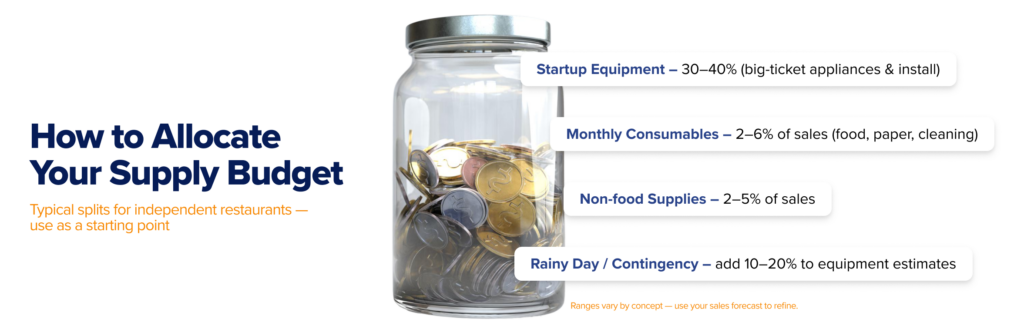
It’s super important to know the difference between the big one-time purchases and the everyday costs. Don’t mix up the big one-time hits with everyday stuff.
- Startup Chunk: This is your big-ticket stuff — ovens, fridges, ranges, walk-in coolers. For most independent restaurants, expect 30-40% of your startup budget to go toward equipment. For a mid-size independent spot, you’re often looking at tens of thousands of dollars just for the equipment, which can be a huge chunk of your initial setup costs.
- Running Tabs: These are your consumables — your food, cleaning stuff, paper goods, and the little tools that wear out. As a general rule, you’re probably looking at spending 2-6% of your sales on these consumables every month. Could be more, could be less depending on what you do.
Create a Realistic Restaurant Supply Budget
Now, let’s turn those estimates into a real budget. Be realistic and always have a little buffer for the unexpected.
- Must-Haves First: Always prioritize safety, cleanliness, and anything essential for health codes. If money’s tight, buy the essentials first and add niceties later.
- Rainy Day Fund: For equipment purchases, it’s wise to add an extra 10-20% to your budget. You never know when shipping costs might jump or installation requires a bit more than planned.
- Phase it if you need to: If your cash flow is a bit tight, maybe get the absolute essential gear ready for your soft opening and then fill in the gaps after you’re up and running.
Measure Your Kitchen Space and Workflow
You’d be surprised how often people forget this! Getting the measurements right and thinking about how your team moves around can save you a ton of headaches.
- Layout Love: Grab a tape measure and map out your kitchen precisely. Note where your power, gas, and water hookups are. Sketch a floor plan.
- Team Trajectory: Picture your staff moving from getting deliveries to storing items, prepping food, cooking, plating, and serving. Walk the layout during peak hours — where do people bump into each other? An oven might fit on paper, but if its door swings into a busy prep area, it’s going to slow everyone down. Fix the layout before you buy.
Complete Restaurant Supplies Checklist
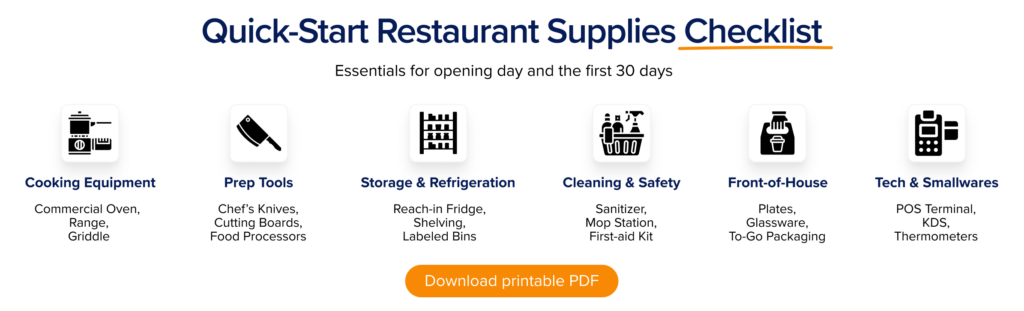
You don’t need a massive checklist. You need the right categories covered so your kitchen runs smoothly and your team isn’t fighting the setup.
Cooking Equipment That Matches Your Menu
Buy for what you actually serve. Your core equipment should support your highest-volume items and hold up during a rush. Skip the extras and focus on what keeps service moving.
Prep Tools Your Team Will Actually Use
Efficiency starts here. Reliable knives, organized boards, and simple tools that speed up prep make a bigger impact than specialty gadgets. Start with the basics, then build out.
Storage and Refrigeration That Supports Flow
Think beyond space. You need easy access, clear organization, and enough capacity to handle peak volume. Good labeling and FIFO keep waste down and prep running smoothly.
Cleaning and Safety Supplies You Can’t Cut Corners On
This isn’t optional. Your cleaning setup and safety equipment need to be consistent and easy for your team to use. It protects your operation, your staff, and your inspections.
Front-of-House Supplies That Match Your Concept
Your serviceware should reflect your concept without overcomplicating things. And if you do takeout, your packaging is part of the guest experience whether you like it or not.
Technology That Keeps Everything Moving
Your systems should simplify operations, not slow them down. POS, KDS, and inventory tools should help you stay organized and responsive. And always have a backup plan when tech fails.
How to Choose the Right Restaurant Equipment
Picking the right gear is a big deal — it’s an investment in your restaurant’s future. Keep these points in mind when you’re shopping.
NSF Certification and Health Code Compliance
This is a non-negotiable. Always make sure your equipment is NSF-listed or meets your local health department’s standards. NSF certification means it’s been tested for public health and safety. Non-compliant gear can mean hefty fines or having to replace it all over again. Always check your local rules!
Durability, Materials, and Build Quality
Restaurant kitchens are tough environments. Look for equipment made from sturdy stuff like stainless steel — it’s easy to clean and won’t rust. Check the thickness and construction, especially for things that get super hot. Reading reviews from other restaurant folks and asking for real-world feedback can tell you a lot about how long a piece of equipment will last.
Energy-Efficient Equipment for Long-Term Savings
Yeah, energy-efficient appliances might cost a bit more upfront, but they’ll seriously slash your utility bills down the road. Look for Energy Star labels and check the specs for how much power they use. Figuring out the “payback period” can show you how quickly you’ll start saving money.
Ergonomics and Staff Efficiency
Equipment that’s easy and comfortable for your staff to use can make a huge difference in how much they get done and how tired they are at the end of the day. Think about adjustable heights, simple controls, and how easy it is to clean. Sometimes, spending a little more on ergonomic gear pays off in saved labor costs.
Total Cost of Ownership and Equipment Lifecycle
Don’t just look at the sticker price! Think about installation fees, how much maintenance and repairs might cost, energy bills, and how long you expect the equipment to last. Understanding the total cost of ownership helps you make a smarter buy for the long haul. The cheapest option today may be the most expensive in three years.
Where to Buy Restaurant Supplies
As an independent operator, pooling your buying power can really help you get better prices and terms. This is a key part of any good guide to buying restaurant supplies.
GPO Supplier Networks
Group Purchasing Organizations (GPOs) bring together lots of restaurants so they can negotiate better deals with manufacturers and suppliers. Joining one can give you access to pricing and terms that would be tough to get on your own.
Pre-Negotiated Supplier Contracts
Some suppliers have ready-made contracts for certain industries or areas. These can make buying simpler and keep your costs steady, but make sure you understand all the fine print and if there are minimum purchase requirements.
Approved Vendor Programs
If you’re part of a franchise or a larger group, you might have a list of approved vendors. While this limits your choices, these vendors are often vetted for quality and have pre-set pricing.
Centralized Purchasing Across Locations
Got more than one restaurant? Setting up a central purchasing system can lead to big savings through bulk discounts, better inventory control, and less paperwork.
How to Compare Restaurant Supply Vendors
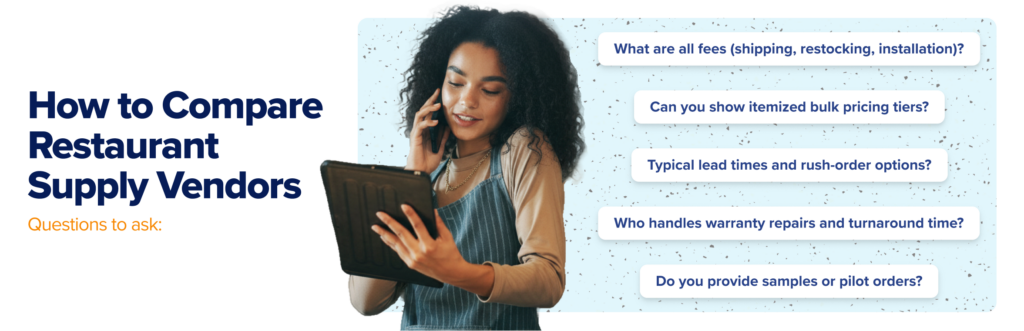
Picking the right vendor is just as important as picking the right equipment. Here’s how to size them up.
Pricing Transparency and Bulk Discounts
Look for vendors who are upfront about their prices and clearly show their bulk discount tiers. Watch out for hidden fees for shipping, handling, or other charges. Ask for itemized quotes so you can compare apples to apples.
Contract vs. One-Time Pricing
Think about whether you prefer the security of a contract with steady pricing or the flexibility of buying as needed. Contracts can offer stability and discounts, but make sure you’ll actually use enough to meet any commitments. Pick what fits your cash flow and forecast.
Delivery Speed, Availability, and Reliability
Getting your supplies on time is crucial. Ask about how long orders usually take, what happens with rush orders, and where their warehouses are located. Reliable delivery means fewer disruptions in your kitchen. A slow supplier can shut you down.
Warranties, Returns, and Customer Support
When things go wrong, having a good warranty and helpful customer service can save your life. Know who will fix things (the manufacturer, the dealer, or a third party) and how to send things back. It’s worth it to pay for good support. Find out who is in charge of warranty claims and when you can return items.
Smart Purchasing Strategies to Reduce Costs
Little tweaks in how you buy can add up to big savings.
Prioritize High-Impact Supplies First
Focus your initial budget on the gear that directly impacts your food, safety, and how well you serve customers. Buy items that affect food quality and safety first. The less critical stuff can wait.
Avoid Overbuying and Dead Inventory
Use your sales data and inventory counts to figure out exactly what you need and when. Buying too much ties up cash, eats up storage space, and can lead to food or supplies going to waste. Set par levels and stick to them. Don’t let supplies sit and expire.
Finance and Lease Restaurant Equipment
For those big equipment purchases, think about financing or leasing. Leasing can free up your cash and make it easier to upgrade later, especially for tech that changes fast. Buying outright might be cheaper in the long run. Weigh your cash flow, tax situation, and how long you’ll use the equipment.
Track Spend Across Multiple Locations
If you have several restaurants, pulling all your spending data together gives you a clear picture. You can spot differences, find potential waste, and get a stronger hand when negotiating with suppliers. Use simple accounting and inventory tools to spot where money leaks.
Negotiate Better Deals with Suppliers
Don’t be afraid to talk about price, ask for package deals, look for sales during certain times of the year, or ask for longer payment terms. Suppliers want your business, and they often treat loyal customers better. Request free shipping, longer payment terms, or discounts for buying in bulk. Don’t be shy; suppliers want steady customers.
Compliance, Safety, and Local Regulations
Staying on the right side of the law is crucial. Always chat with your local health department and fire marshal about specific rules for things like ventilation, grease disposal, and fire safety. NSF certification is usually a baseline for food equipment. Keep all your installation and service records handy for inspections. Keep inspection checklists handy and file installation and service records. Your local health department and fire marshal are the ultimate referees — follow their rules to avoid fines or closures.
Future Trends in Restaurant Supplies
The world of restaurant supplies is always changing! Keeping up can give you an edge.
Smart Kitchens and Connected Equipment
The “Internet of Things” is making its way into kitchens. Think ovens, fridges, and inventory systems that can connect, automate tasks, optimize performance, and even predict when they need service. Planning for good Wi-Fi will be key if you want to jump on board with these.
Sustainability and Waste Reduction Tools
Customers are increasingly looking for eco-friendly choices. This means looking at things like compostable packaging, energy-saving appliances, water-saving dishwashers, and systems that help track food waste. Doing this not only makes customers happy but can save you money too.
Supply Chain Stability and Vendor Diversification
Recent events have shown us how important it is to have a steady supply chain. Having different vendors for important items and backup plans can prevent big problems if one supplier has an issue. Don’t rely on one source for critical items. Backup vendors keep you open during disruptions.
Data-Driven Purchasing Decisions
Using your sales data, inventory software, and operational reports helps you order more accurately. This means less over-ordering, less waste, and better information when you’re talking to suppliers. Use sales and inventory data to buy smarter. The less guesswork, the less waste.
Final Words
Getting your supply strategy right doesn’t happen all at once. It’s something you figure out over time, usually by making a few good calls… and a few you won’t repeat. What matters is having a clear approach. Know what you actually need, keep a close eye on your numbers, and work with vendors who don’t make your life harder. When those pieces are in place, the day-to-day gets a lot more manageable. There’s always a balance between cost, quality, and what your team can realistically execute. Start with the essentials, pay attention to what’s working (and what’s not), and adjust as you go. Do that consistently, and you’re not just buying supplies… you’re building an operation that runs tighter, wastes less, and holds up when it gets busy.