

The answer to the question “Where do restaurants get their food?” is more complicated than most people think.
“Ordering from a distributor” isn’t the only thing restaurants do. They set up structured supply networks that keep costs low, quality high, encourage menu creativity, and handle risk. Finding food these days is strategic, based on data, and often different. It can come from broadline distributors, local farms, or national manufacturers.
The first step to understanding how successful operators protect their margins while keeping guests happy and consistent is to know where restaurants get their food.
How Restaurants Source Their Food
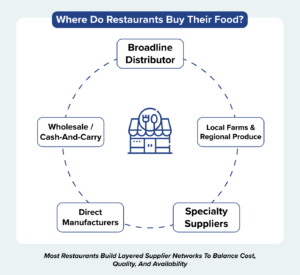
When people ask, where do restaurants buy their food, they’re really asking about sourcing strategy. Restaurants usually use a mix of:
- Distributors on a national or regional level
- Suppliers from the area and for the season
- Vendors with a specialty
- Relationships with manufacturers directly
- Wholesale clubs for extra buying
Most operators don’t depend on just one supplier; instead, they build layered supply chains. This helps them keep their prices competitive while making sure that their products are always available and their menus are flexible.
Types of Food Suppliers Restaurants Use
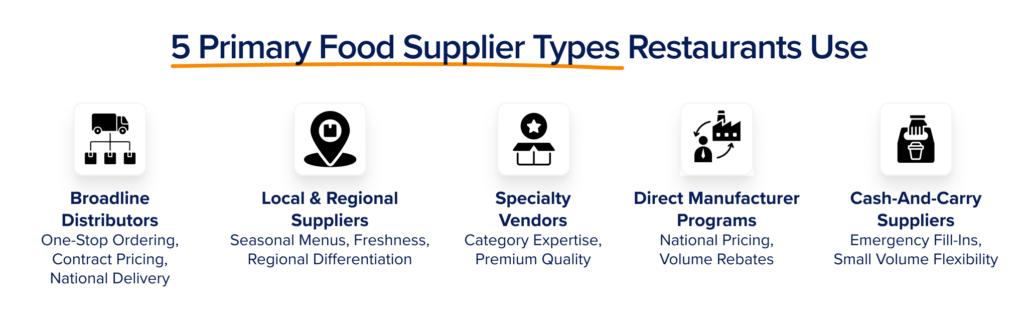
Broadline Food Distributors
Broadline distributors are a big part of how restaurants buy things. Sysco, US Foods, and Performance Food Group are some of the companies that have thousands of SKUs in different categories.
This is the main answer for many people who ask where restaurants get their food. Broadline suppliers offer:
- Ordering from all categories in one place
- Pricing programs for contracts
- Planned deliveries
- Terms of credit Ability to distribute nationally
They make buying easier, especially for people who run more than one unit.
Local Farmers and Regional Produce Suppliers
Many restaurants buy food from local farms and regional produce partners in addition to broadline suppliers.
This method helps:
- Food choices that change with the seasons
- Positioning from farm to table
- More choices of fresh produce
- Differentiation by region
So, when you think about where restaurants get their food, local sourcing is often a factor, especially for chef-driven and independent restaurants.
Specialty and Category-Specific Suppliers
Some groups need more knowledge than others. Restaurants often get their supplies from specialty vendors for:
- Seafood and high-quality meats
- Cheeses made by hand
- Baked goods
- Ingredients from different cultures
Specialty suppliers offer better quality and a narrower range of products, which is important for ideas based on a specific food or ingredient.
Direct-to-Manufacturer and Brand-Level Purchasing
Some restaurants buy directly from the people who make the food. This happens a lot for:
- Programs for national chains
- Contracts for drinks
- Partnerships with branded ingredients
- Only certain product lines
When operators ask where restaurants get their food in bulk, one answer is often that they have direct relationships with manufacturers. These deals could include volume incentives, rebate agreements, and national pricing structures.
Cash-and-Carry and Wholesale Club Suppliers
People often use cash-and-carry suppliers and warehouse clubs (like Restaurant Depot or Costco Business Centers) for:
- Fill-ins for emergencies
- Deals that only last for a short time
- Buying in small amounts
- Testing new ideas
These stores are not always the main supplier, but they do give smaller businesses more options.
Why Restaurants Use Multiple Food Suppliers
Knowing where restaurants get their food also helps you understand why they offer a variety of dishes.
Balancing Cost, Quality, and Product Availability
No one supplier has the best price and quality in every category. Restaurants carefully choose categories based on how well they do and how much they cost.
Reducing Supply Chain Risk and Disruptions
Bad weather, transportation problems, and strikes can all make things less available. Having more than one supplier lowers the risk and keeps the menu the same.
Supporting Seasonal Menus and Limited-Time Offers
Seasonal foods and LTOs often need to be sourced in a special way. Layered supplier networks let restaurants stay creative while still keeping their operations consistent.
How Restaurants Choose the Right Food Suppliers
If you’re looking into where do restaurants buy their food from a business perspective, selection criteria matter just as much as supplier type. Choosing the right partner isn’t just about who has the lowest price this week. It’s about long-term performance, consistency, and reliability.
If you’re actively evaluating options and want a deeper dive into the process, read our guide on How to Find Reliable and Affordable Restaurant Suppliers to better understand how to vet vendors, negotiate smarter, and simplify the search.
Here’s what operators typically evaluate:
Pricing, Contracts, and Rebates
Operators check:
- Prices set by contract
- Volume promises
- Payment terms and rebate structures
Controlling costs isn’t just about how much each case costs. It’s about the whole program’s value.
Product Consistency and Menu Specifications
Consistency is what keeps customers coming back. Restaurants need suppliers who can deliver:
- Exact sizes of packs
- Standards for trimming
- Consistency of yield
- SKUs for each brand
Specification discipline keeps food cost percentages safe.
Delivery Performance, Fill Rates, and Service Levels
Late trucks and short shipments mess up operations. We check reliable distributors on:
- Delivery on time
- Percentages of fill rates
- Responsiveness to communication
- Handling credit and adjustments
Food Safety, Compliance, and Traceability Requirements
There are strict rules that restaurants must follow to keep food safe. Suppliers are checked out based on:
- Following the rules
- Systems for tracking
- Rules for recalls
- Certifications from other companies
Food safety performance is not up for discussion.
Technology, Reporting, and Ordering Capabilities
Data is important for modern procurement. Leading suppliers offer:
- Platforms for ordering online
- Reporting on spending
- Clear invoices
- Checking prices
Technology visibility is becoming a bigger factor in where restaurants decide to buy their food.
Food Purchasing Approaches by Restaurant Type
Independent and Single-Location Restaurants
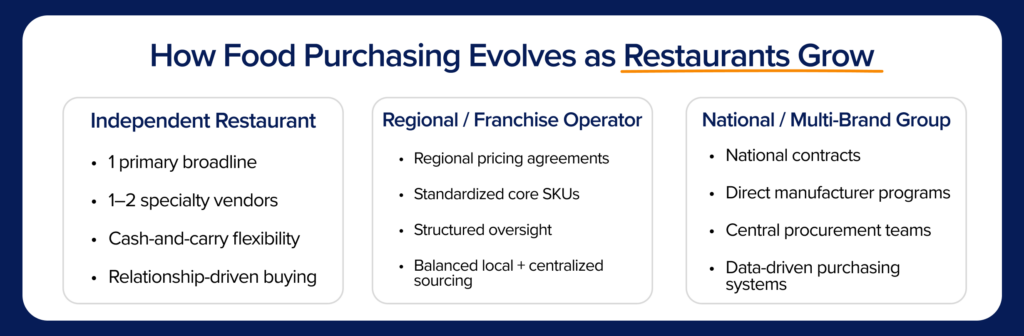
For independents, purchasing usually feels very hands-on. It’s often the owner or general manager placing orders, checking invoices, and keeping a close eye on food cost.
Most single-location restaurants work with one main broadline distributor to cover the majority of their menu. Then they’ll layer in one or two specialty vendors for items that really matter to their concept, maybe a local seafood supplier, a specialty bakery, or a regional produce partner. And yes, when something runs short or a last-minute need pops up, a cash-and-carry run happens more often than anyone likes to admit.
Flexibility is everything at this level. Relationships matter. Service matters. And having a rep who actually answers the phone can be just as important as price.
Regional Chains and Franchise Operators
Once you move into regional or franchise territory, things start to get more structured.
These operators still care about local sourcing and product quality, but now there’s scale to think about. They’re negotiating regional pricing agreements, standardizing core SKUs across locations, and trying to make sure one store isn’t paying more than another for the same case of product.
There’s a balancing act happening. They want consistency across the brand, but they also need enough flexibility to account for geography and market differences. At this stage, purchasing becomes less reactive and more strategic. It requires oversight, reporting, and tighter coordination between operations and procurement.
National and Multi-Brand Restaurant Groups
At the national level, purchasing becomes a full-scale business function.
These groups operate with national distribution contracts, direct manufacturer agreements, centralized procurement teams, and systems that track spend in real time. Decisions are rarely made location by location. They’re made based on enterprise-wide data.
Here, the question of where do restaurants buy their food is no longer just operational. It’s financial strategy. Supplier relationships, contract terms, rebate structures, and pricing protections are all directly tied to margin performance.
At this level, purchasing isn’t just about getting product in the door. It’s about protecting EBITDA, managing risk, and creating consistency across dozens or even hundreds of locations.
Managing Food Costs When Buying from Suppliers
It’s only half the picture to know where restaurants get their food. The other half is keeping costs down.
Contracted Pricing and National Supply Programs
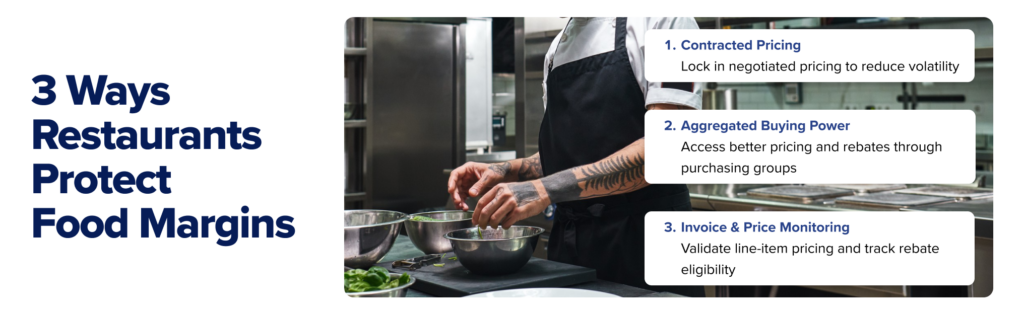
Contracts lock in prices that were agreed upon and protect operators from market fluctuations when they can.
Aggregated Buying Power Through Purchasing Groups
Independent restaurants can get pricing and rebate programs that are usually only available to larger chains through group purchasing organizations (GPOs).
Purchasing groups help level the playing field and give suppliers more access by combining the volume of thousands of operators.
Monitoring Price Changes and Invoice Accuracy
Price verification is important even when there are contracts in place. More and more restaurants use technology to:
- Check the prices of each item
- Find differences
- Keep track of who can get a rebate
- Keep an eye on trends in your category
Active oversight keeps margins safe.
Final Thoughts
So, where do they get the food for restaurants?
They don’t get their goods from just one place; they get them from networks.
Successful operators make layered supplier strategies that take into account cost, quality, availability, and risk. The right mix depends on the size of the concept, the style of the menu, the area it serves, and its growth goals.
Independent operators can greatly improve their purchasing efficiency without sacrificing quality by gaining access to larger supplier networks, lower prices, and rebate opportunities.
Ready to strengthen your food purchasing strategy? If you’re evaluating where do restaurants buy their food and looking for ways to access better pricing, expanded supplier networks, and rebate opportunities, you don’t have to navigate it alone.
Dining Alliance helps independent restaurant operators leverage aggregated buying power, improve supplier access, and gain visibility into their purchasing performance.