

Everyone loves pizza. Guests love it for the comfort, the consistency, and the fact that it always shows up when they need it most. Operators love it too… right up until ingredient costs start creeping, labor gets tighter, and that “high-margin menu item” doesn’t feel quite as forgiving as it used to.
On the surface, pizza looks simple. Dough, sauce, cheese, toppings. But behind the scenes, the true cost of a slice is shaped by ingredient volatility, labor efficiency, packaging, and purchasing discipline. National Pizza Day was a great excuse to celebrate the pie, but it’s also the perfect moment to look at what pizza really costs and how operators can protect margins without changing what guests love.
What Really Goes into the Cost of Pizza?
Pizza margins don’t disappear overnight. They erode quietly, one ingredient at a time.
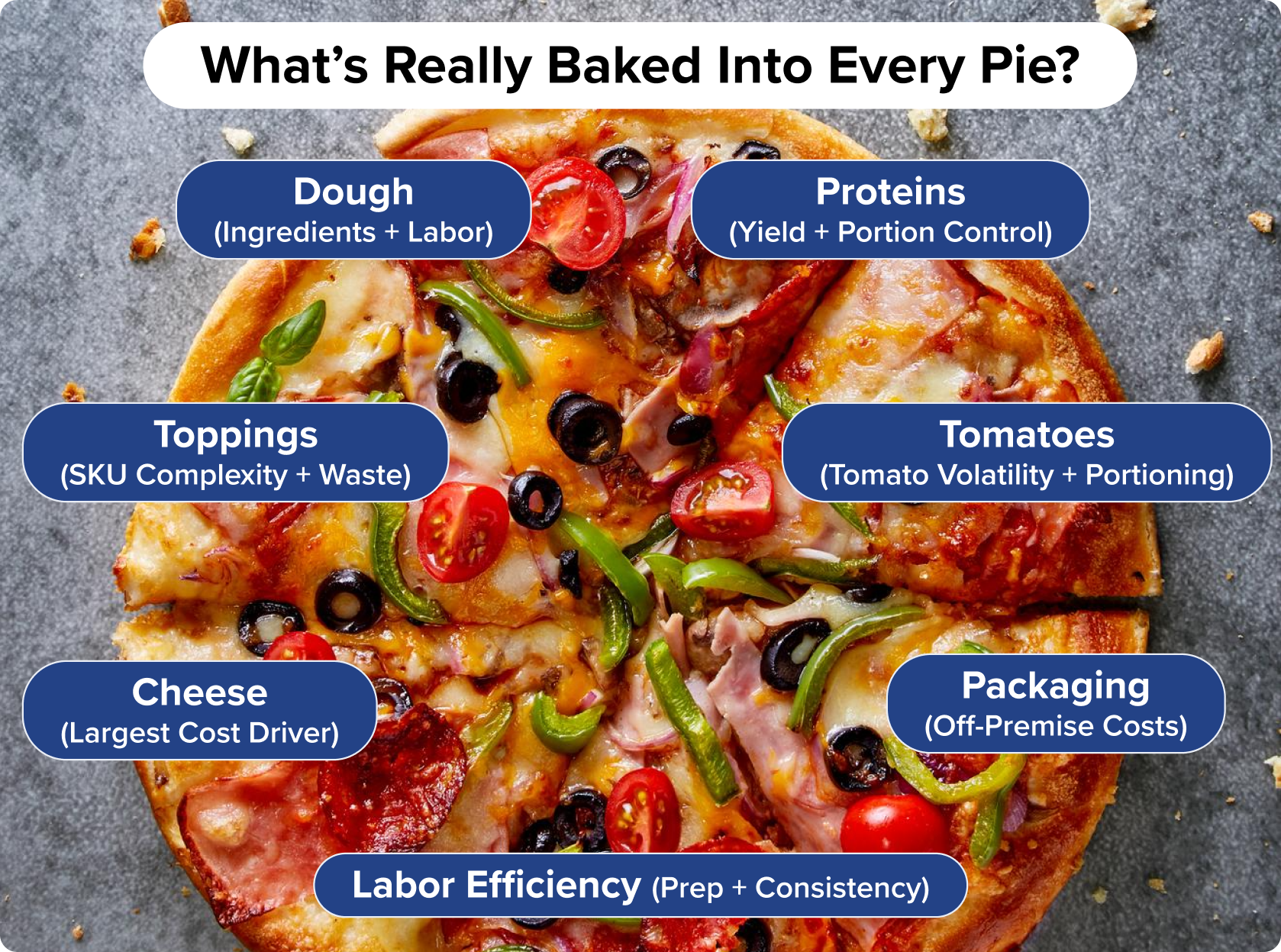
Here’s what’s actually baked into every pie:
Dough
Flour, yeast, oil, water, and labor all play a role here. Whether dough is made in-house, frozen, or par-baked, consistency and waste matter just as much as ingredient pricing.
Operators balancing scratch quality with labor efficiency often look to partners like Rich’s, General Mills, or Schwans Food Service for frozen, par-baked, or prepared crust solutions that help control prep time and improve consistency shift to shift.
Sauce
Tomatoes are famously volatile, and oil and seasoning prices don’t always cooperate either. Even small shifts here add up when volume is high.
Brands like Kraft Heinz and Conagra offer portion-controlled sauces and value-tier tomato products that help operators manage volatility while maintaining flavor standards.
Cheese (The Big One)
Cheese is typically the single largest cost driver on a pizza. Portion control, price fluctuations, and usage consistency can make or break profitability.
Sourcing matters here. Suppliers such as BelGioioso, Lactalis, and Great Lakes Cheese provide a range of mozzarella blends and specialty cheeses that allow operators to balance performance, melt quality, and cost per pound.
Proteins
Pepperoni, sausage, chicken, and specialty meats bring flavor and guest appeal—but they also bring price variability and portion creep risk.
Manufacturers like Tyson, Hormel, and Smithfield offer consistent, portion-controlled proteins that help reduce waste and manage yield more predictably.
Toppings
Vegetables, premium add-ons, and specialty ingredients may seem minor, but too many SKUs can quietly drive waste and complexity.
Strategic topping choices can also drive perceived value. Flavor-forward additions from Mr Bing, seasoning solutions from McCormick, or even cross-utilized items like fries or mozzarella sticks from McCain can elevate a pie without overcomplicating inventory.
Packaging
Boxes, liners, and delivery materials often get overlooked, even though they’re a non-negotiable cost for takeout and delivery-heavy operations.
Packaging partners like Novolex (including Bagcraft liners and single-slice containers) play a bigger role in margin protection than many teams realize, especially as off-premise continues to drive sales mix.
Prepared Pizza & Labor Efficiency
For some operations, fully prepared or partially prepared pizza solutions can help offset labor shortages and training challenges.
Suppliers such as Schwans Food Service and Conagra offer ready-to-bake or heat-and-serve options that protect consistency while easing back-of-house pressure.
The takeaway: pizza may be simple by design, but it’s layered with cost pressure behind the scenes.
The Real Cost Breakdown (High-Level)
Every operation is different, but a high-level breakdown often looks something like this:
- Dough and sauce: 15–20%
- Cheese: 25–35%
- Proteins and toppings: 20–30%
- Labor and overhead: 15–25%
- Packaging and delivery-related costs: 5–10%
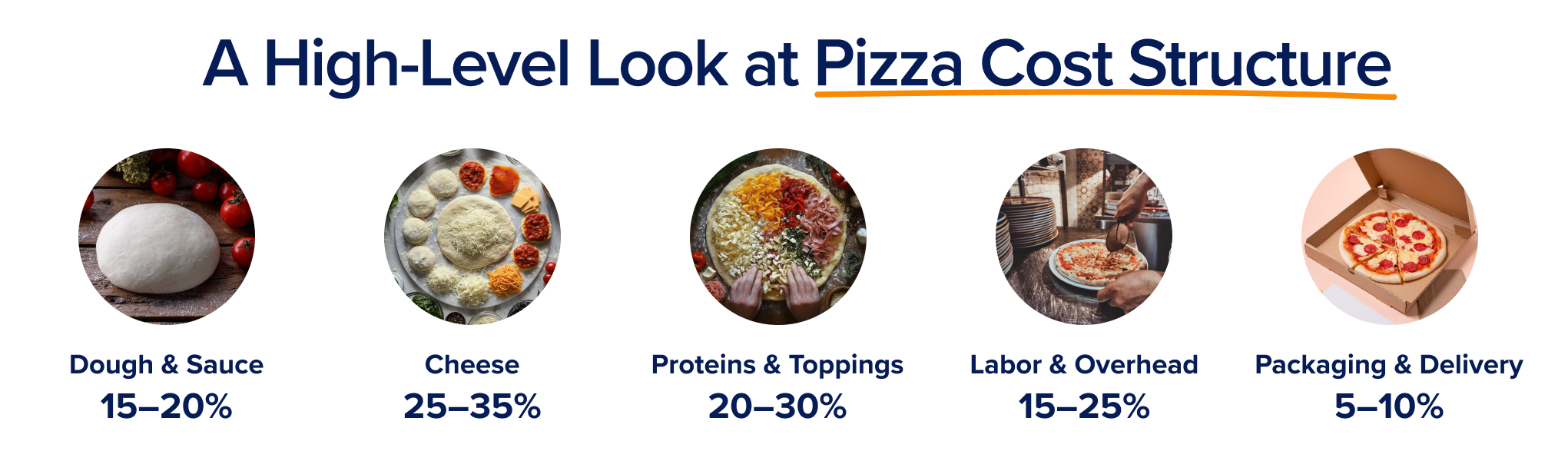
The exact percentages matter less than understanding where the pressure lives. Cheese tends to get the blame, but labor efficiency, SKU sprawl, and packaging costs are just as capable of squeezing margins.
Pizza Ingredient Trends Operators Are Seeing
Today’s pizza menus are evolving, and smart operators are using trends to support both flavor and profitability.
Premium and Specialty Cheeses
From blends to regional varieties, cheese continues to do heavy lifting on pizza menus. Operators are getting more intentional about where premium cheeses drive value and where standardization protects margins.
Click here to read why cheese is the hardest-working ingredient on your menu.
Plant-Forward and Veggie-Focused Pies
Vegetable-forward pizzas appeal to modern diners and often come with more predictable food costs than protein-heavy builds.
Hot Honey, Chili Oil, and Flavor Drizzles
High-impact flavor additions with relatively low incremental cost. These finishes boost perceived value without rebuilding the entire pie.
Frozen and Par-Baked Dough
Labor efficiency continues to matter. Many operators are turning to frozen or par-baked solutions to reduce prep time while maintaining consistency.
Simplified Menus
Fewer SKUs mean less waste, cleaner inventory, and tighter control over purchasing.
These trends aren’t just about what’s popular. They’re about building menus that work as hard as the kitchen does.
Where Pizza Margins Get Squeezed
Margins don’t disappear because of one big mistake. They get squeezed by small issues that compound over time.
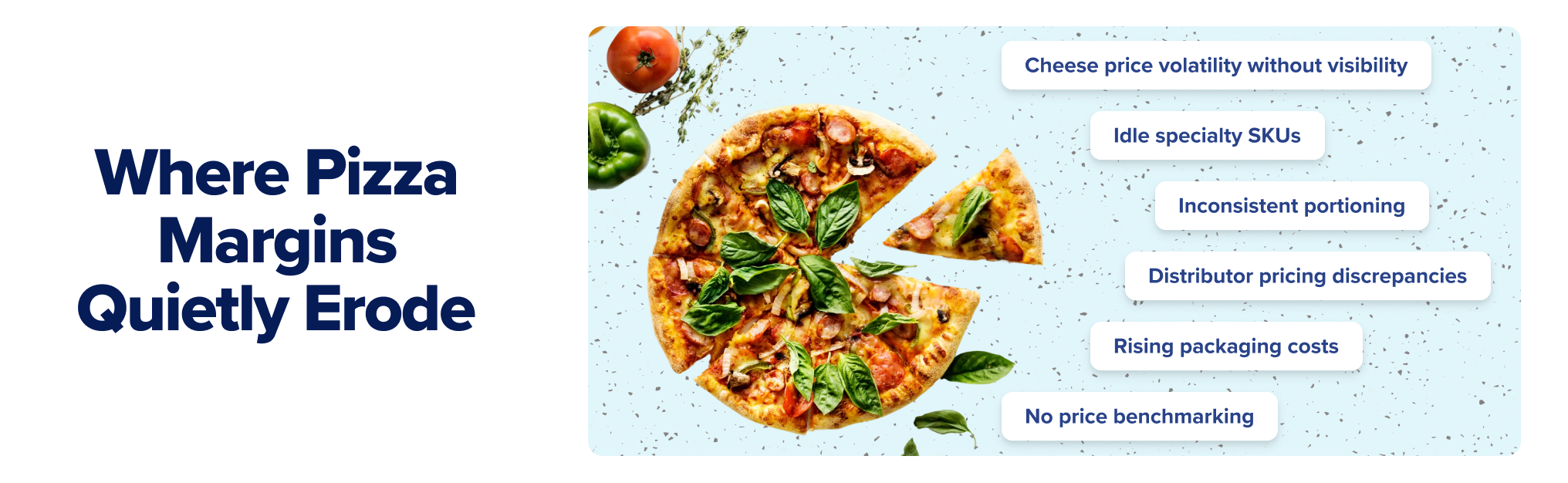
Common pressure points include:
- Cheese price volatility without visibility
- Too many specialty SKUs sitting idle
- Inconsistent portioning across shifts or locations
- Pricing discrepancies between distributors
- Packaging and delivery costs creeping upward
- Not knowing what prices should look like in the first place
Without clear visibility, these issues often go unnoticed until margins are already feeling the strain.
Smarter Ways Operators Protect Pizza Margins
Protecting margins doesn’t mean changing the pie guests love. It means tightening the systems behind it.
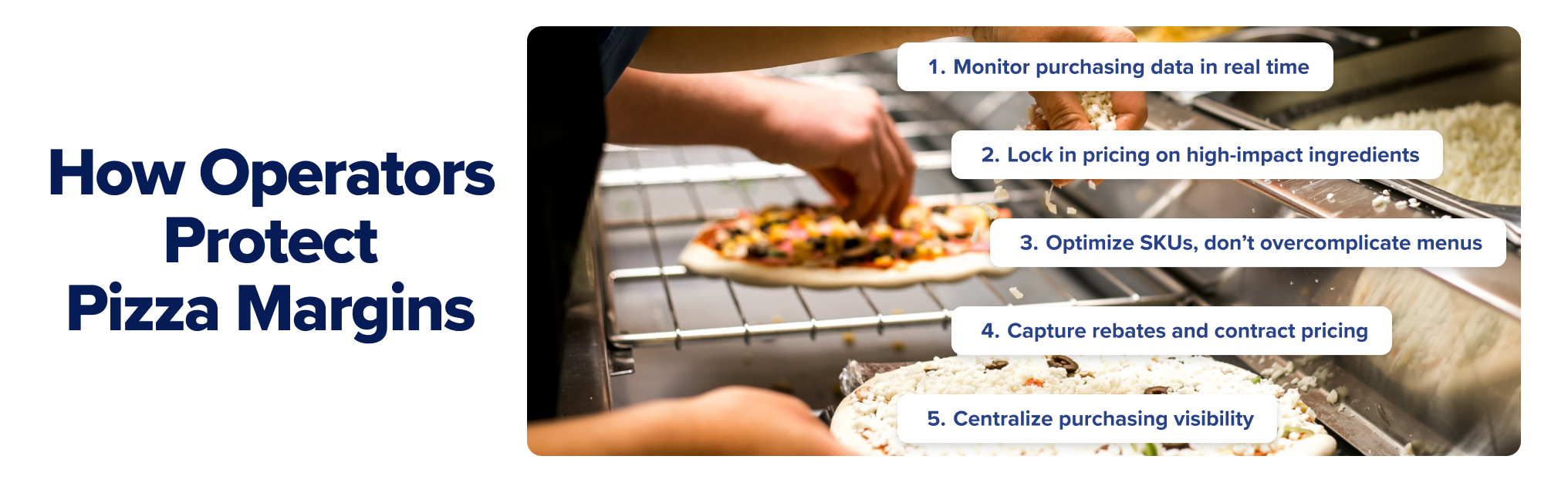
Use Purchasing Data to Spot Issues Early
Seeing price changes and usage trends quickly helps operators respond before small problems grow.
Lock in Pricing Where Possible
Especially on high-impact ingredients like cheese and proteins, stability matters.
Optimize SKUs Instead of Cutting Menu Items
The goal isn’t fewer menu options—it’s fewer underperforming ingredients.
Leverage Rebates and Contract Pricing
Many operators are already eligible for pricing advantages they’re not fully capturing.
Create Visibility Across Locations and Distributors
Consistency is easier to manage when purchasing isn’t fragmented.
With the right tools and insights, pizza margins become something operators manage proactively, not reactively.
Celebrate the Slice, Respect the Cost
Pizza will always be a menu favorite. It’s reliable, flexible, and endlessly customizable. But behind every great slice is a cost structure that deserves just as much attention as the recipe itself.
Because the best pizza decisions don’t happen at the pass—they happen behind the scenes.