


Still using spreadsheets to track expenses? Here’s how independent restaurant operators can simplify financial management.
Running a restaurant is a hands-on business. You’re on the floor, in the kitchen, and sometimes even at the host stand when things get busy. There’s no shortage of responsibilities, and most independent operators will tell you the same thing: there aren’t enough hours in the day. So when it comes to managing your restaurant’s finances, it’s not surprising that tasks like expense tracking often get pushed to the end of a very long to-do list.
If your weekly routine includes rifling through a shoebox full of receipts or cross-referencing invoices against a color-coded spreadsheet, you’re not alone. But you may also be leaving time, money, and peace of mind on the table. That’s why having a simple, reliable system for restaurant expense tracking for independent operators is key to staying profitable and stress-free.
The Reality of Manual Expense Tracking
It’s Friday night. The dinner rush is winding down. After the last table leaves, you finally sit down in the back office with a pile of receipts, two vendor invoices, and a half-finished spreadsheet open on your laptop. Somewhere between the fryer oil delivery and that emergency produce run on Wednesday, something isn’t adding up. And your latest bank statement just dropped a new surprise—an auto-renewed subscription you forgot to cancel.
Sound familiar?
This kind of end-of-week chaos isn’t just frustrating, it’s also risky. When your expense tracking depends on memory and manual entry, you increase your chances of:
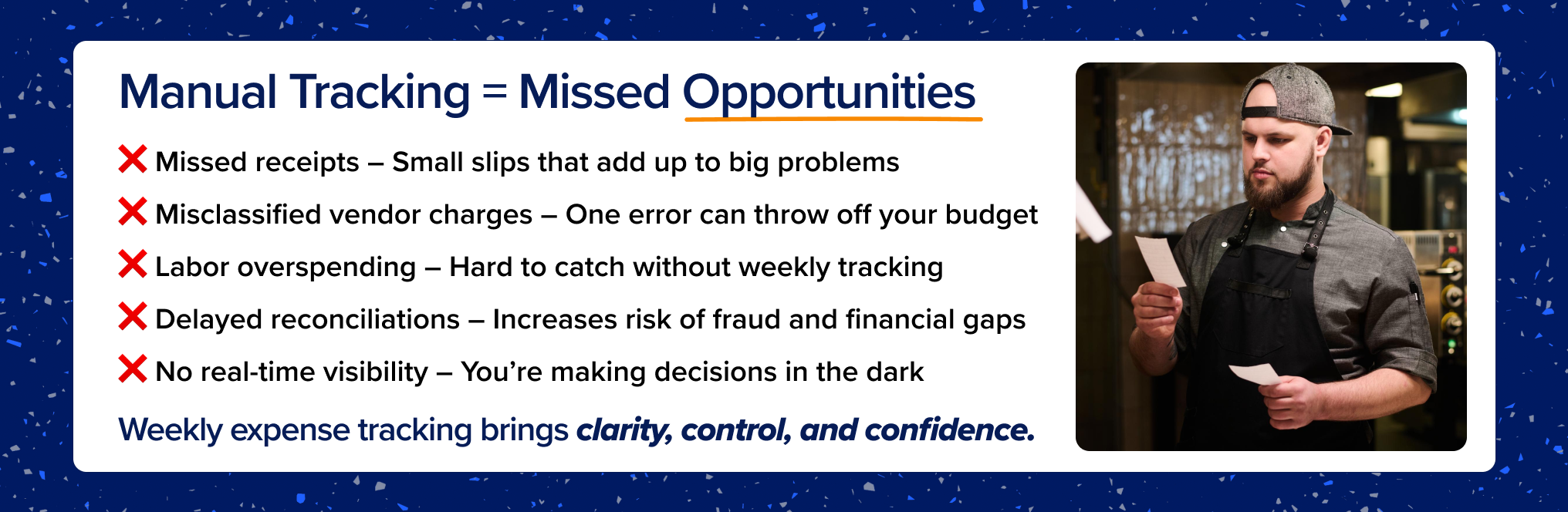
It’s not that independent operators don’t care about their numbers. It’s that the system they’re using to track them doesn’t match the reality of how restaurants run.
Why Weekly Expense Tracking Matters
Think of your finances the same way you think of food safety. You wouldn’t wait until the end of the month to check your walk-in temperatures, so why wait that long to check in on your spending?
Reviewing your expenses weekly gives you the visibility you need to make quick, informed decisions. It’s how you stay proactive instead of reactive. It’s also the first step toward building a more sustainable business model.
When done consistently, weekly expense tracking helps you:
- Catch errors before they cascade into bigger issues
- Monitor food and labor costs against sales performance
- Compare actuals to your budget in near real-time
- Stay compliant with documentation and audits
- Reduce the mental load of tracking everything manually
And yes, it absolutely helps improve your bottom line.
A Smarter Way to Stay on Top of Expenses
So what does effective weekly expense tracking actually look like? It’s not complicated, but it does require consistency.
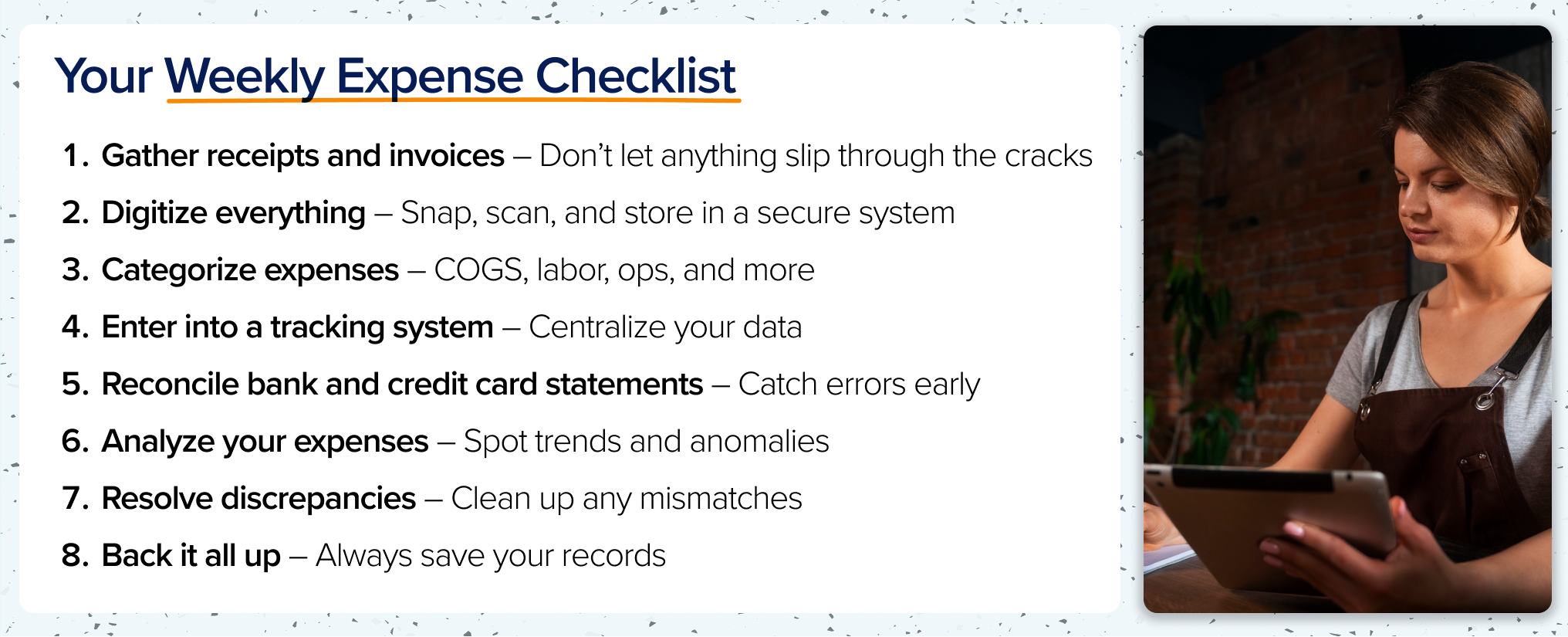
Here’s what the most successful independent operators do each week:
1. Gather receipts and invoices
Collect everything from vendor deliveries, supply runs, and POS reports. Missing one small invoice can skew your weekly totals and make reconciliation harder later.
2. Digitize documents
Take photos or scan everything into a secure system. Stop relying on paper trails that fade, spill, or get tossed out with the recyclables.
3. Categorize expenses
Break down spending into categories—COGS, labor, operating expenses, etc. This makes it easier to spot where your money is actually going.
4. Enter data into a period-tracking system
Whether it’s a restaurant accounting platform or your POS-integrated software, centralizing your data ensures it doesn’t live in a dozen different places.
5. Reconcile credit card and bank statements
Match your actual spending to what’s reflected in your accounts. If there’s a charge you don’t recognize—track it down now, not weeks later.
6. Analyze your expenses
Don’t just file the numbers away. Take 15 minutes to look at trends, spot anomalies, and ask what changed compared to last week.
7. Resolve discrepancies
Notice something off? Reach out to your vendor, update your entry, and make a note for next time. You’ll thank yourself later.
8. Back it all up
Whether cloud-based or on an external hard drive, always keep a backup of your records. Paper copies won’t save you if your office floods or a laptop crashes.
Automate What You Can Without Losing Control
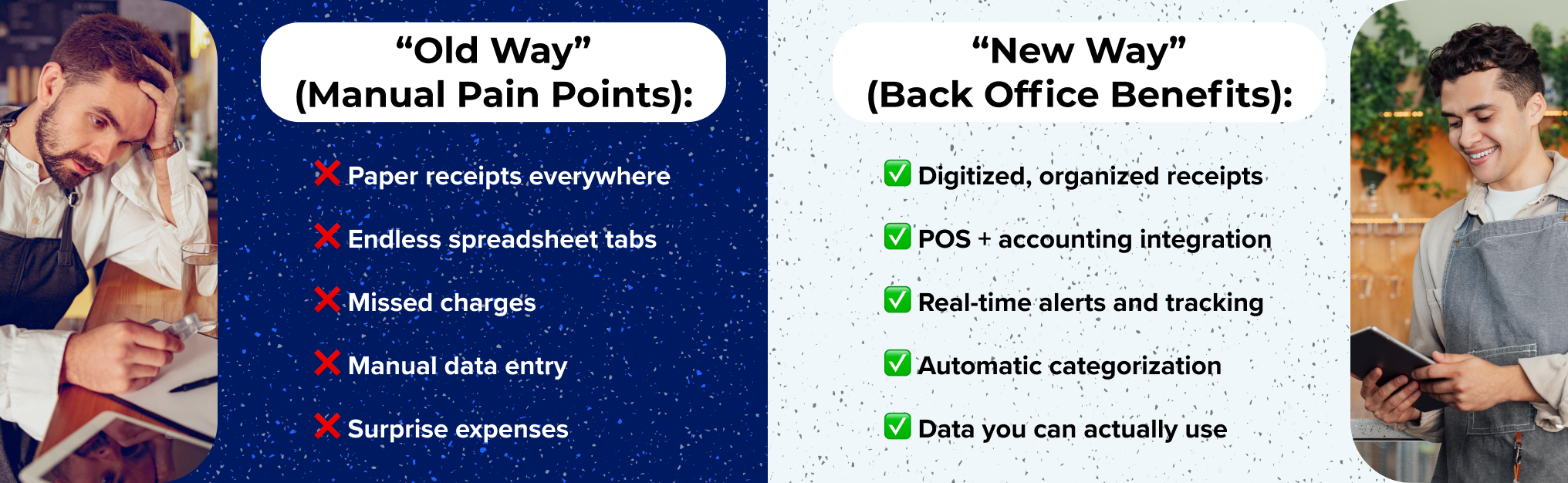
Technology doesn’t replace your intuition—but it can support it. Many independent operators hesitate to invest in restaurant accounting software because they think it’s too complex, expensive, or built for larger chains. The truth is, the right platform makes restaurant expense tracking for independent operators easier, faster, and far more accurate.
With platforms like Back Office, you can:
- Automatically digitize and categorize receipts
- Track expenses in real time
- Integrate sales data from your POS
- Set up alerts when spending exceeds your targets
- Eliminate redundant data entry and backups
In other words, you get your time back—without sacrificing control.
The Bottom Line
You didn’t open a restaurant to become a bookkeeper. But staying on top of your finances is part of building a profitable, long-lasting business. Weekly expense tracking doesn’t have to be overwhelming or time-consuming. When done right, it’s one of the most powerful habits an independent operator can develop.
And if you’re ready to make it easier? There’s a resource designed specifically for independent operators that walks you through it step by step.
Click here to simplify your weekly expense tracking and gain clarity around your financials.
It’s not about being perfect. It’s about being prepared.
Learn more about how Dining Alliance helps independent operators save time and money.