

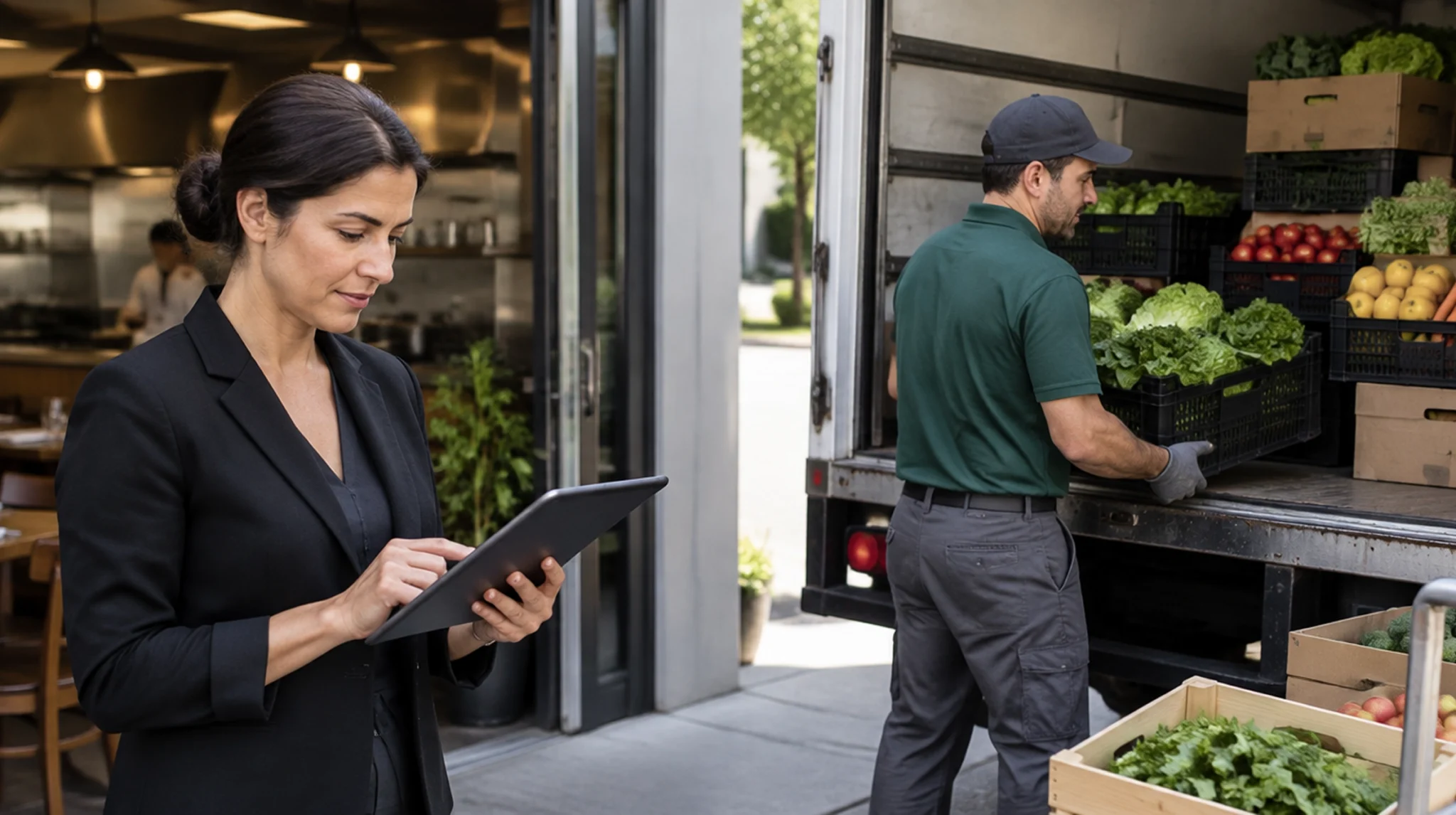
In National Restaurant Association’s 2026 reporting, 63% of full-service restaurant operators said they sought alternative suppliers as they dealt with rising costs.
Were you one of them?
Finding the ingredients your menu needs at a workable price is only one part of the challenge. Restaurants also have to manage the labor it takes to keep service running. Let’s look at the supply chain and staffing pressures operators face and ways to work through them.
Labor & Supply Chain Challenges in a Restaurant
Running a restaurant means managing two pressures at the same time: keeping the kitchen staffed and keeping the shelves stocked. When either side gets disrupted, service, food costs, and guest satisfaction all feel the impact.

Supply Chain Disruptions
Behind the scenes of every successful restaurant lies a complex web of suppliers, distributors, and logistics networks. Here are some of the key challenges and struggles you’ve probably faced along the way:
- Cost Pressures
- Procurement Predicaments
- Distribution Dilemmas
- Quality Control Quandaries
- Menu Flexibility Constraints
- Sustainability Struggles
Labor Shortages
Labor shortages cast a long shadow over the bustling kitchens of independent restaurants, where every pair of hands is essential for success. Here’s a closer look at the challenges and struggles they endure:
- Recruitment Roadblocks
- Retention Woes
- Training Troubles
- Workforce Flexibility Constraints
- Wage Pressures
Strategies to Navigate Labor & Supply Chain Challenges
Let’s explore practical strategies to navigate supply chain shortages and labor challenges, essential for independent restaurant operators aiming for success.

Leverage Speed Scratch Solutions
Prepping for the bustling morning or afternoon rush can be a marathon of chopping, mixing, and simmering. But what if there was a way to shave precious minutes off your prep time without compromising on flavor or quality?
Enter speed-scratch solutions.
Unleash Flavor with Unilever
A leader in providing speed-scratch solutions for chefs is Unilever. With its superior taste, performance, and convenience, Unilever offers menu solutions that provide easy prep and bold rich flavors, such as:
- Cream Based Soups
- Sauces
- Bases
- Liquid Seasonings
Elevate Taste and Simplify Prep with Custom Culinary
Custom Culinary pre-made bases and sauces deliver an extensive array of chef-inspired flavor systems that will simplify your operation. Enhance your signature dishes with Custom Culinary high-quality ingredients and authentic flavors that meet true convenience in their cooked-from-scratch concentrates.
Use Versatile Time-Savers like idahoan
Potatoes—a staple ingredient in countless culinary creations, yet a notorious time sink in the kitchen. Enter Idahoan, the savior of time-crunched chefs everywhere. Certified 100% Idaho Potatoes, Idahoan offers a plethora of labor-saving solutions, from crispy hash browns to velvety mashed potatoes.
Incorporate Scratch-Quality Proteins
When time is of the essence and labor is scarce, turning to pre-cooked proteins can be a game-changer for your kitchen.
Here are some top picks to elevate your dishes with minimal prep:
Hormel’s Perfectly Cooked Breakfast Sausage
Say goodbye to the hassle of grilling breakfast sausage from scratch. Hormel‘s premium breakfast sausage is fully cooked to perfection, saving you valuable prep time. With less grease, less waste, and exceptional flavor, it’s the ideal choice for a hearty breakfast without the extra effort.
Traditional Fully Cooked Meatballs from Hormel
Forget the tedious process of mixing, rolling, and frying meatballs from scratch. Hormel‘s traditional fully cooked meatballs are crafted from select cuts of beef, pork, and a blend of Italian spices. With authentic flavor and convenience in every bite, they’re a time-saving solution for your favorite meatball dishes.
Hormel’s Slow-Cooked Pork Carnitas
From tacos to omelets, pork carnitas add a burst of flavor to any dish. Hormel’s fully cooked carnitas are marinated with garlic and citrus flavors, then slow-cooked for hours in the bag for maximum tenderness and flavor. With Hormel, you can execute the perfect dish with minimal effort, leaving more time to focus on serving up culinary excellence.
SweetEN Success with Ready-to-Go Desserts
No meal is truly complete without a tantalizing dessert to satisfy every sweet tooth. But when your kitchen staff is stretched thin, finding the time to whip up homemade treats can seem like an impossible feat.
Thankfully, with ready-to-go dessert solutions, you can indulge your guests without breaking a sweat.
Sara Lee Frozen Bakery
With Sara Lee Frozen Bakery, dessert has never been more convenient or delicious. Takes the hassle out of dessert prep with their lineup of ready-to-go desserts, including:
- Individually Wrapped Pre-Sliced Cheesecakes
- Three-For-All Snack and Dessert Bars
- Pre-Baked and Pre-Sliced Pies
Simply thaw, serve, and delight your guests with premium-quality treats that require minimal labor and bring profitability to your bottom line.
Beyond the plate with technology
In the face of labor shortages, the right tech stack emerges as a hero for independent restaurant operators. With its transformative power, a well-chosen tech arsenal can streamline operations, optimize resource allocation, and mitigate the impact of staffing challenges across various facets of restaurant management.

Back Office Automation
Bid farewell to time-consuming administrative tasks with back office automation. With Back Office technology, you can streamline tasks such as:
By digitizing mundane processes, restaurant operators can free up valuable time and resources to focus on strategic decision-making and customer service.
Supply Chain Management
Navigating the complexities of the supply chain becomes infinitely more manageable with the right technology tools. Real-time tracking, inventory management, and forecasting provide invaluable insights into inventory levels, demand patterns, and supplier performance. By optimizing procurement processes and minimizing stockouts, restaurants can ensure uninterrupted operations and enhance customer satisfaction.
Spend Management
Controlling costs and maximizing profitability are paramount in the face of labor shortages. Spend management platforms offer visibility into expenses across various categories, allowing operators to identify inefficiencies and opportunities for savings.
By leveraging data-driven insights, restaurants can make informed decisions about resource allocation, vendor selection, and pricing strategies to maintain financial health in challenging times.
How Dining Alliance Can Help
In the face of these challenges, Dining Alliance stands ready to assist independent operators. We leverage the collective buying power of thousands of restaurants to negotiate deals with suppliers, passing on savings and offering solutions to alleviate supply chain strains and labor shortages.
Fill out the form below and join Dining Alliance today!
Frequently Asked Questions
How to reduce restaurant labor costs?
Start by looking for ways to make every labor hour count. Simplifying prep, cross-training staff, using products with less scratch preparation, and tightening scheduling around sales patterns can all help reduce unnecessary labor spend. The goal is not to cut corners — it is to help your team work more efficiently.
How to manage restaurant labor shortages?
Managing labor shortages starts with building flexibility into your operation. Cross-train employees, simplify menu execution where possible, and use ready-to-prepare or fully prepared items to reduce back-of-house strain. Technology can also help by improving scheduling, payroll, and communication.
How to reduce the impact of restaurant supply chain shortages?
The best way to reduce disruption is to stay flexible. Build relationships with trusted suppliers, identify acceptable product substitutes in advance, and avoid overreliance on a single item or vendor. Operators can also benefit from using versatile ingredients that work across multiple menu items.
How can speed-scratch products reduce restaurant labor?
Speed-scratch products help reduce the time and labor needed for prep without sacrificing consistency. Items like sauces, soups, bases, and side dishes can cut down on repetitive kitchen tasks, reduce training demands, and help teams execute dishes faster during busy shifts.
How can prepared foods help reduce restaurant labor costs?
Prepared foods can lower labor costs by reducing scratch cooking, shortening ticket times, and minimizing waste. Fully cooked proteins, pre-made sides, and ready-to-serve desserts help smaller teams keep up with demand while maintaining quality and consistency.
How can restaurant technology improve labor management?
Restaurant technology can make labor management more efficient by automating scheduling, payroll, inventory tracking, and back-office tasks. It also gives operators better visibility into sales, staffing needs, and food costs, making it easier to make smarter decisions day to day.
How to maintain menu flexibility during supply shortages?
Menu flexibility starts with smart planning. Build menus around ingredients that can be used in multiple dishes, keep approved substitutes in mind, and avoid overly complex offerings that depend on hard-to-source items. A more adaptable menu makes it easier to respond quickly when availability changes.